
Boxer dogs are known for their playful nature and loyalty, but how intelligent are they really? Boxers are ranked 48th in canine intelligence. This means they are quick learners and respond well to training. Their innate ability to pick up commands within 25 to 40 repetitions shows their capability in understanding and executing tasks.
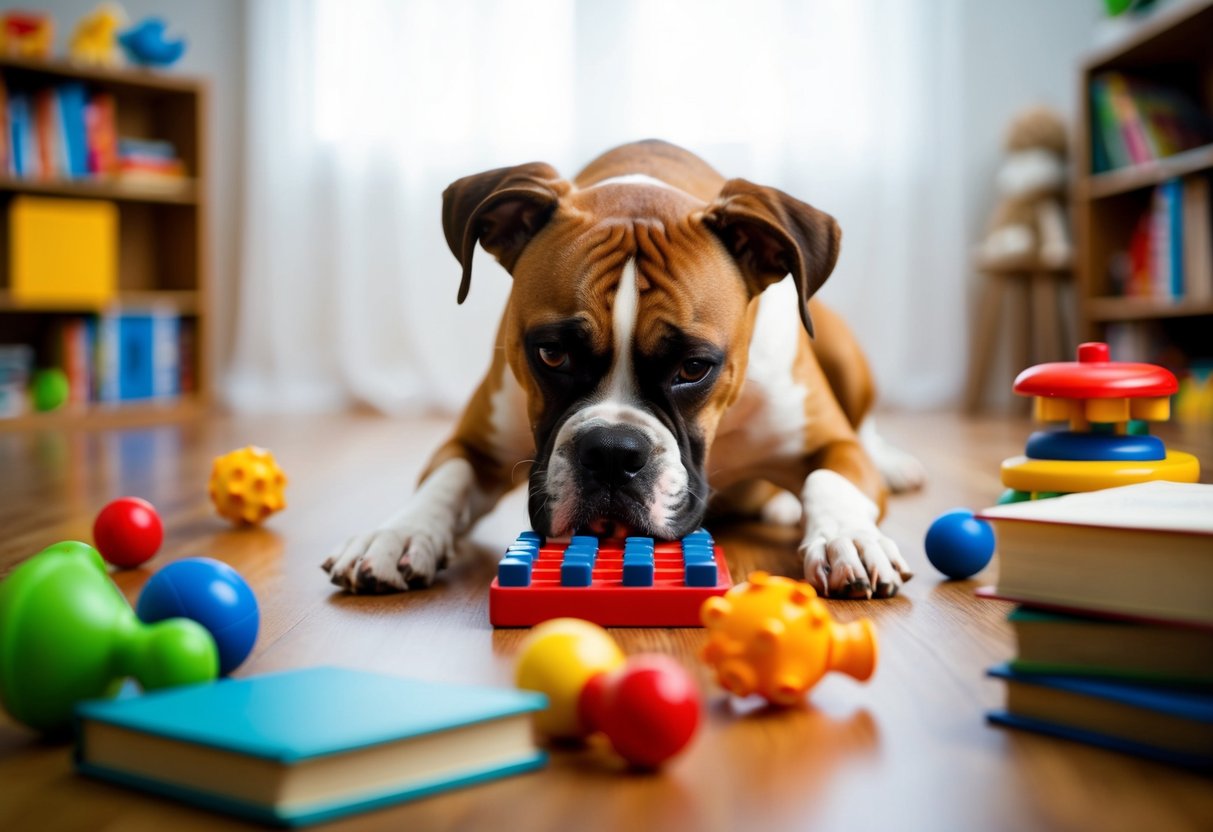
As you explore the world of Boxer dogs, you’ll find that their intelligence can be both a blessing and a challenge. These active dogs need mental stimulation to stay happy and healthy. Without it, they might resort to destructive behaviors, such as digging or chewing on your belongings, so engaging their minds is essential.
Boxers make excellent family pets due to their protective nature and sociable temperament. Their intelligence plays a key role in this, as they can learn how to interact well with children and other pets. Discover more about the specific traits that contribute to their intelligence and why they might be the perfect addition to your home.
Understanding Boxer Dog Intelligence

Boxer dogs are known for their unique blend of playfulness and intelligence. Their cognitive abilities stem from genetics and their environment, making them interesting companions for many owners.
Breed Characteristics and Cognitive Development
Boxers display a variety of traits that impact their intelligence. They are energetic, social, and eager to please. These characteristics help them learn and adapt to new environments effectively.
Genetics plays a crucial role in their cognitive abilities. Boxers have a particular genetic makeup that supports learning and understanding. Their instinctual behaviors also contribute to their intelligence.
Environmental factors, such as training and socialization, greatly affect your Boxer’s ability. Early exposure to different situations enhances their problem-solving skills. Positive reinforcement during training sessions can boost their cognitive development. A consistent routine helps keep them mentally sharp and engaged.
Studies on Intelligence: Stanley Coren’s Findings
Stanley Coren, a canine psychologist, ranks Boxers as the 90th smartest dog breed. This ranking considers their obedience and working intelligence. Boxers typically require 25 to 40 repetitions to learn a new command, showcasing their average learning ability.
In his research, Coren evaluates a breed’s intelligence based on two main factors: the number of repetitions needed to learn and how often they follow commands on the first try. Boxers are responsive to training, which means they thrive with positive reinforcement techniques.
This breed can understand up to 250 words or signals from their owners when trained consistently. These findings help you appreciate the unique intelligence of your Boxer dog, making them great companions in various activities and tasks.
Training and Mental Stimulation for Boxers
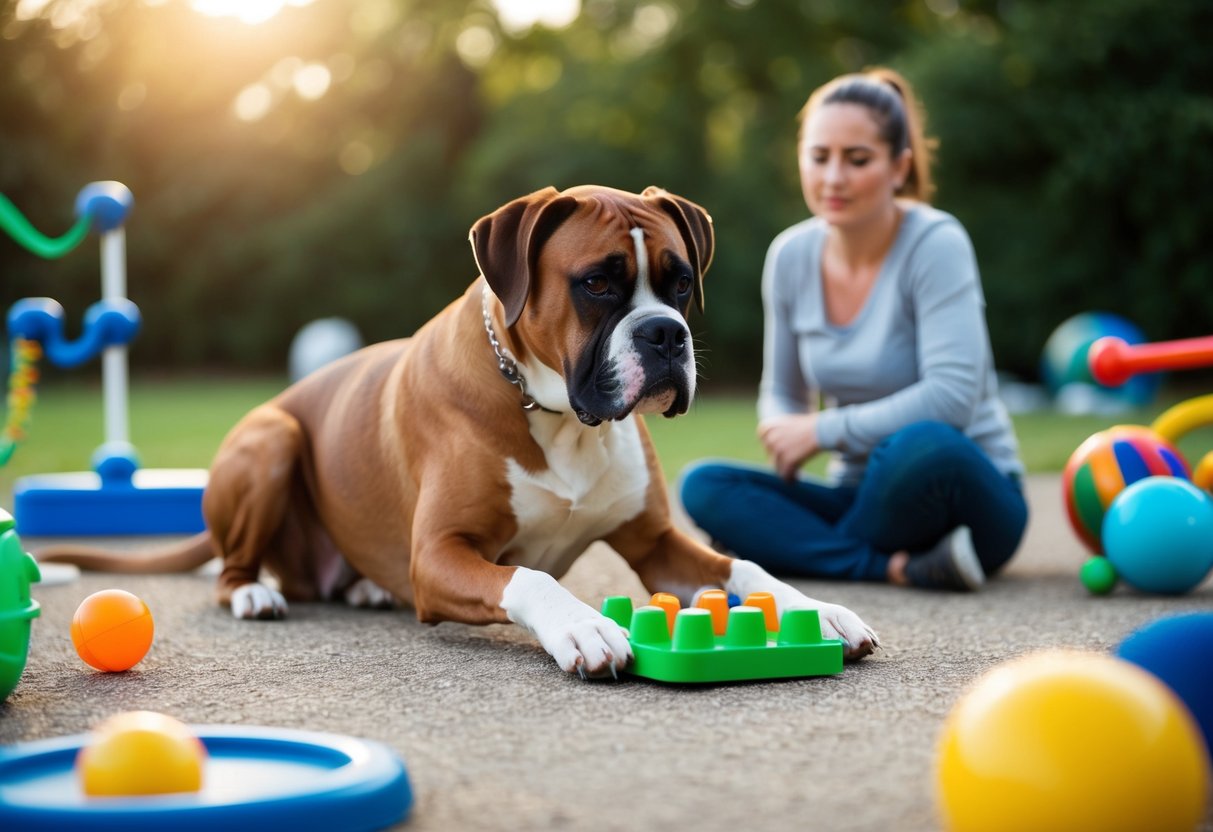
Boxers are intelligent and energetic dogs that thrive on training and mental challenges. Combining effective training techniques with mental stimulation keeps them engaged and well-behaved.
Effective Training Techniques
When training your Boxer, use positive reinforcement. This means rewarding good behavior with treats, praise, or toys. They respond best when you make training fun.
Keep sessions short, around 5-10 minutes, to maintain their focus. Start with basic commands like sit, stay, and come. Once they master these, move on to more complex tricks.
Consistency is key. Ensure everyone in your household uses the same commands and rewards to avoid confusion. Consider agility training; it’s a great way to challenge their minds and bodies while bonding with you.
Exercise and Mental Stimulation Strategies
Physical activity is essential for your Boxer. Aim for at least one hour of exercise each day. Regular walks and playtime are crucial.
Incorporate mental stimulation into their routine to prevent boredom. Puzzle toys are a fantastic option. These toys require your dog to solve a problem to get a treat, keeping their minds sharp.
Interactive games, like hide and seek, engage their instinct to search. Rotate toys to keep their interest high. Always reward them for their effort; this reinforces positive behavior and keeps them motivated.
Role of Early Socialization and Play
Early socialization is vital for your Boxer’s development. Introduce them to various people, dogs, and environments from a young age. This helps them become well-adjusted adults.
Play is an essential part of socialization. Engage in fun activities that allow your Boxer to interact with others. It boosts their confidence and provides physical exercise.
Consider puppy classes as they combine fun training with socialization. These experiences keep your Boxer mentally and physically stimulated, setting the stage for a happy, well-behaved pet.
Boxer’s Emotional Intelligence and Social Skills
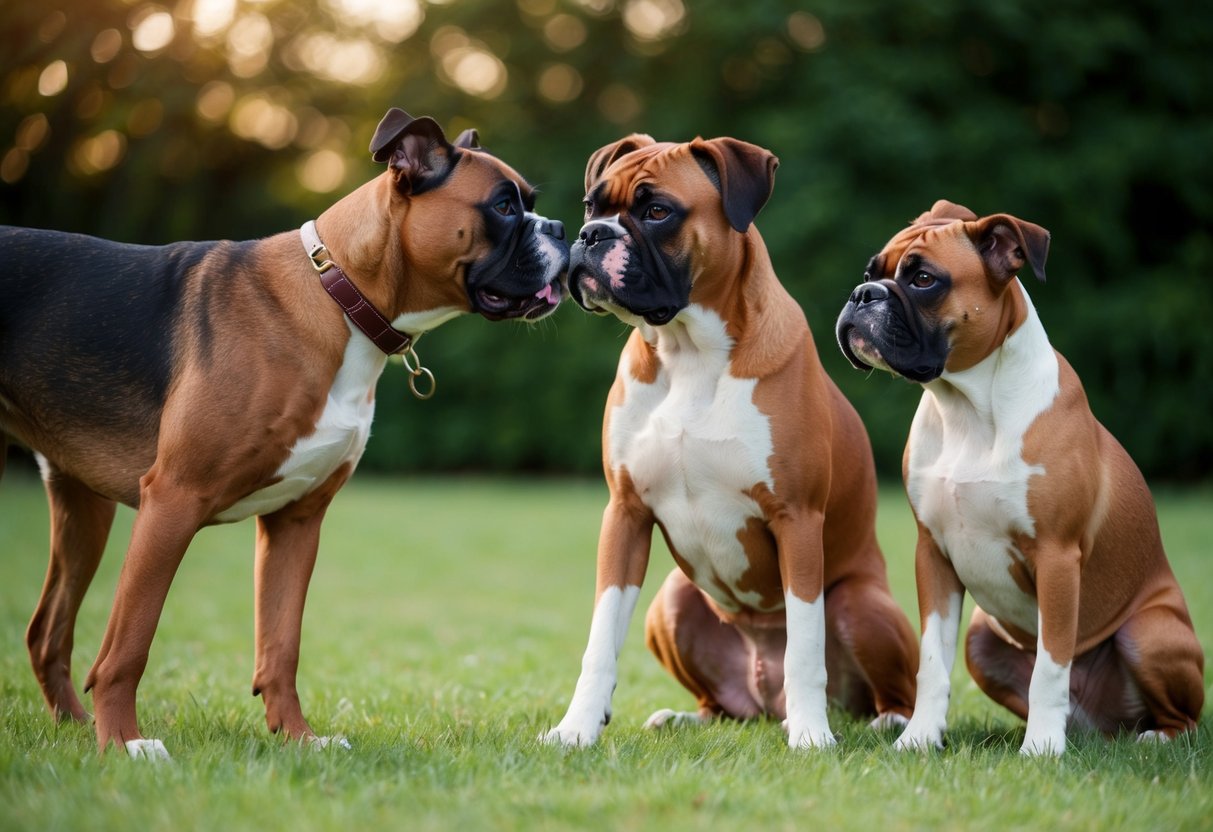
Boxers are known for their emotional intelligence and strong social skills. They can connect deeply with their human companions, displaying empathy and affection. Their ability to read and respond to human emotions helps them bond with families and other pets.
Empathy and Reading Human Emotions
Boxers have a natural gift for empathy. They can sense when you are happy, sad, or in distress. This is because they are very attuned to your emotions.
When you’re feeling joyful, your Boxer may jump around, wag their tail, and playfully nudge you. If they sense you are upset or fearful, they often become more gentle and may stay close to comfort you. This type of emotional awareness is a key part of their emotional intelligence.
Their ability to understand your feelings not only strengthens your bond but also makes them wonderful companions. They show love in various ways, from snuggling to playful antics that can lift your spirits.
Socialization and Its Effect on Intelligence
Socialization plays a big role in the development of a Boxer’s intelligence and behavior. Early exposure to various people, pets, and environments helps them learn how to interact well with others.
A well-socialized Boxer is often more confident and less fearful. These dogs tend to adjust better to new situations, whether it’s meeting new friends or visiting busy places. Their social skills also make them excellent in family settings, as they learn to navigate complex emotions and dynamics.
In contrast, lack of socialization can lead to insecurity and anxiety. To ensure your Boxer thrives, provide plenty of opportunities for positive social interactions. Activities like puppy classes, playdates, or trips to the dog park can greatly enhance their social skills and emotional intelligence.
Activities That Harness Boxer Intelligence
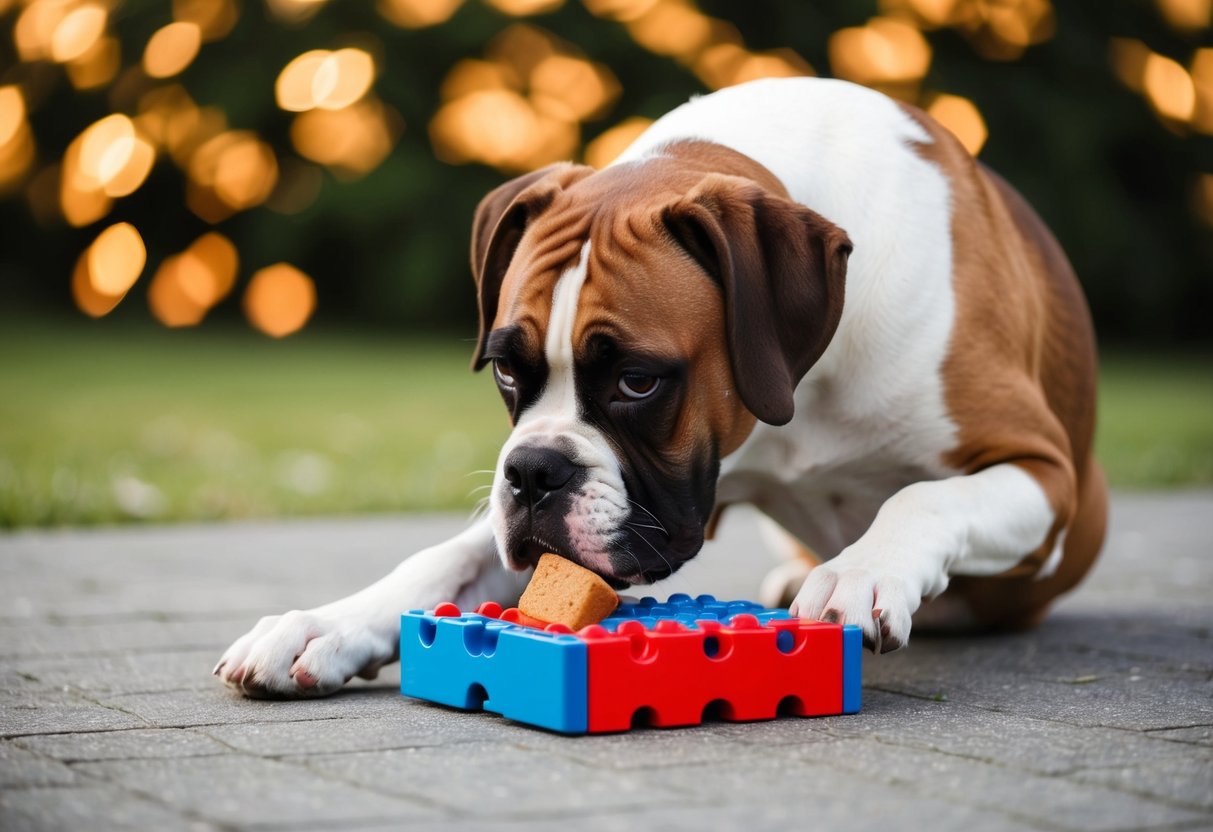
Boxer dogs thrive when engaged in activities that stimulate their minds and bodies. These intelligent dogs enjoy fun games and specialized training that not only keep them active but also tap into their problem-solving skills.
Fun and Educational Games
Interactive games are a great way for your Boxer to flex their mental muscles. Puzzle toys, which require your dog to figure out how to uncover treats, are perfect for encouraging creative problem-solving. You can also set up obstacle courses that challenge them physically and mentally, making the experience both fun and rewarding.
Consider games like hide-and-seek, where you can hide and call your Boxer to find you. This builds their search skills. Implementing retrieval games, such as fetch or frisbee, also helps channel their energy. These activities keep your Boxer engaged and prevent boredom, making them happier and healthier.
Specialized Training for Service and Search Roles
Boxers can excel in specialized training, making them suitable candidates for service and search roles. Their intelligence and eagerness to learn allow them to tackle complex tasks.
With proper guidance, you can train your Boxer for roles in service, like assisting people with disabilities.
Scent work activities are particularly beneficial. Boxers have a keen sense of smell, which means they can be trained for search and rescue operations.
Using training methods that reward their successes will motivate them and enhance their skills. You can start with simple scent games using hidden treats, gradually progressing to more complex tasks as they improve.
These activities not only build your Boxer’s abilities but also strengthen the bond you share. Regular engagement in these training methods creates a dynamic and fulfilling life for both you and your dog.


