
Boxer dogs are known for their playful and energetic nature, but many owners wonder how much is too much when it comes to their eating habits. Boxers do tend to have a hearty appetite and can eat a lot if not properly managed. It’s important to understand their nutritional needs to keep them healthy and happy.

These dogs are active and require a balanced diet to maintain their energy levels. You’ll find that feeding your Boxer the right amount at the right times may help prevent issues with weight gain. Knowing how much to feed your Boxer can lead to a happier and healthier life for your furry friend.
As you explore this blog post, you will learn more about the feeding habits of Boxers, the best dietary choices, and important tips on keeping their appetite in check. Understanding their needs can make a big difference in your Boxer’s overall health.
Understanding Boxer Dietary Needs

Boxers are energetic dogs with unique dietary needs. Your Boxer requires a balanced diet to stay healthy and active.
Key Nutritional Components:
-
Protein Content: Aim for dog food with at least 18% protein. This helps support your Boxer’s muscles and energy levels.
-
Healthy Fats: Look for foods that have healthy fats. These fats provide energy and support skin and coat health.
-
Vitamins and Minerals: Ensure your dog’s diet includes essential vitamins and minerals. These nutrients help with immune system function and overall health.
-
Carbohydrates: Good carbs from sources like brown rice or sweet potatoes can provide energy. They also aid in digestion.
-
Omega-3 Fatty Acids: These are beneficial for joint health and reducing inflammation. They are often found in fish oil or flaxseed.
Feeding your Boxer the right food can help avoid common issues like obesity and digestive problems. Remember to monitor your dog’s weight and adjust the food amount accordingly.
Providing multiple small meals instead of one large meal can also benefit Boxers. This method supports digestion and reduces the risk of bloating.
With proper nutrition, your Boxer will thrive and have the energy to keep up with their playful nature!
Feeding Guidelines for Boxer Puppies and Adults

Proper nutrition is essential for Boxers at every stage of their life. Understanding their specific needs for growth and maintenance is key to keeping them healthy and happy.
Puppy Nutrition and Growth
When you have a Boxer puppy, nutrition plays a crucial role in their growth and development. Puppies require a balanced diet that supplies the right amount of protein, fat, and calories. High-quality puppy food is vital.
The recommended feeding amount for a growing Boxer puppy is about 3% to 5% of their ideal body weight. This can mean ¾ to 4 cups of food daily, depending on their age and activity level.
During the weaning process, gradually introduce solid puppy food mixed with water to soften it. Maintain a consistent feeding schedule, offering meals three to four times a day to prevent obesity and promote steady growth.
You can refer to a Boxer puppy feeding chart to help you determine exact portions based on your puppy’s weight and age.
Adult Boxer Feeding Strategies
For adult Boxers, your feeding approach will change to ensure they maintain a healthy weight and meet their activity levels. Adults typically require a consistent diet that meets their specific caloric requirements.
A good rule of thumb is to feed your Boxer about 2 to 4 cups of quality food per day, divided into two meals. This helps stabilize their energy levels and prevent digestive issues.
Monitor their weight and adjust the amount if they become overweight. Refer to a Boxer feeding chart for guidance on portion sizes based on their activity level and current weight. Ensure your adult Boxer has access to fresh water at all times and provide plenty of exercise to keep them fit and healthy.
Recommended Food Types and Quality
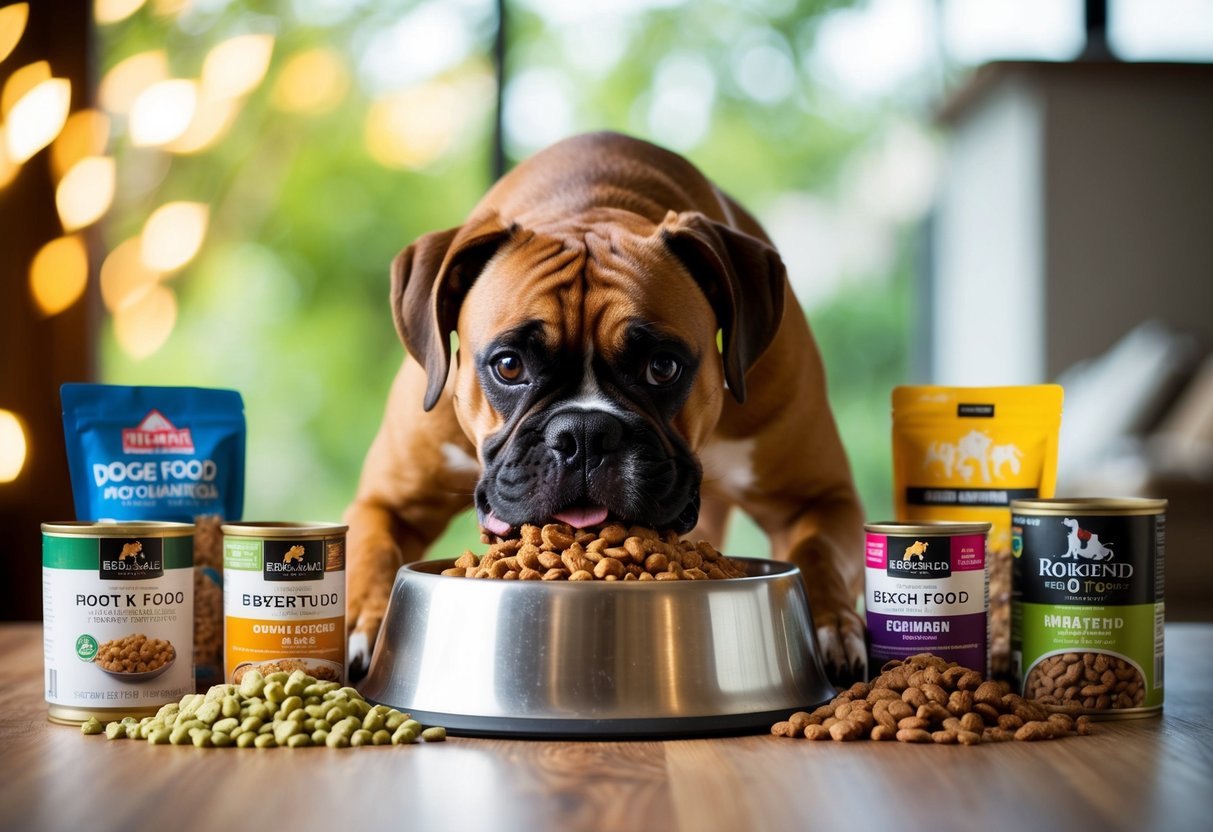
Choosing the right food for your Boxer is important for their health and well-being. You have options between commercial dog food and homemade diets. Understanding dog food labels can help you make the best choice.
Commercial Dog Food vs. Homemade Diets
When deciding on food, you can choose between commercial dog food and homemade diets. Commercial dog food is convenient and often designed to meet all nutritional needs. Look for high-quality brands that use protein-rich foods as the first ingredient.
Grain-free kibble is popular among some Boxer owners. This can be beneficial if your dog has grain allergies or sensitivities. On the other hand, a homemade diet gives you control over ingredients. You can include fresh meats and vegetables, but you must ensure a balanced diet.
Talk to your vet before switching to a homemade diet to get the right advice.
Understanding Dog Food Labels
Reading dog food labels can seem tricky, but it is essential for making informed choices. The label should list the main ingredients, and you want real meat to be at the top. Look for foods with whole food ingredients and avoid those with many fillers like corn or wheat.
Check the protein content, which is crucial for Boxers. A good kibble should have at least 25% protein. Also, pay attention to the fat content—healthy fats are necessary for a shiny coat and overall health.
If you consider wet food, it can provide extra hydration, which is important. Healthy treats can also be part of their diet, but they should be limited and nutritious. Always read labels carefully to ensure your Boxer gets the best quality food.
Health Considerations in Boxer Dogs

Boxer dogs have specific health considerations that every owner should know. Being aware of health issues such as bloat and cardiac conditions will help ensure your dog stays happy and active.
Monitoring for Bloat and Cardiac Issues
Bloat is a serious condition that can affect Boxers. It occurs when the stomach fills with gas and twists, which can be life-threatening. Watch for signs like a swollen abdomen, restlessness, or attempts to vomit without success.
To reduce the risk of bloat, consider using a slow-feeder bowl. This helps your Boxer eat slowly, which can prevent excessive air intake. Also, keep meal portions moderate and avoid strenuous exercise right after eating.
Boxers can also be prone to cardiac issues, such as boxer cardiomyopathy. Regular veterinary check-ups are vital for early detection. Signs to monitor include coughing, fatigue, and difficulty breathing. If you notice any of these, consult your vet right away.
Consulting a Canine Nutritionist
A proper diet is essential for maintaining your Boxer’s muscular build and overall health. Since Boxers are large breed dogs, their nutritional needs differ from smaller breeds. Consulting a canine nutritionist can help you choose the right food.
Focus on high-quality dog food that meets their age and activity level. Look for brands with the right balance of protein and fats to support joint health and muscular development. A nutritionist can guide you on specific dietary needs, supplements, or any weight management strategies.
Always keep an eye on weight, as obesity can lead to further health problems. With proper nutrition, you can help your Boxer live a longer, healthier life.


