
If you’ve noticed your Boxer dog displaying aggressive behavior, you’re not alone. Many Boxer owners face this challenge and wonder why their beloved pets can act out. Understanding the reasons behind aggression in Boxers is key to helping you manage their behavior effectively.

Boxers are known for their loyalty and energy, but certain factors can trigger aggression. These can include fear, poor breeding, or even health issues. Being aware of these triggers is essential for creating a safe and loving environment for your pet.
By recognizing the signs of aggression and addressing them early, you can maintain a harmonious relationship with your Boxer.
With the right approach, you can help your Boxer become more comfortable and secure. This means investing time in training and socialization, which can greatly reduce aggressive tendencies. Let’s explore the causes of aggression in Boxers and discover effective strategies to ensure peace in your home.
Understanding Boxer Aggression

Boxers can show aggressive behavior due to various reasons related to their temperament, environment, and past experiences. Recognizing these factors is crucial for addressing aggression effectively.
Temperament and Breed Characteristics
Boxers are known for their playful nature, intelligence, and high energy levels. They are loyal companions but can also display assertiveness. While not inherently aggressive, their strong instincts may lead to fear-based aggression if they feel threatened.
The breed’s high prey drive can also contribute to aggressive behavior, especially if they see smaller animals as targets. Boxers tend to be territorial and may react strongly to perceived intruders. Understanding these traits helps you manage your dog better.
Signs of Aggression in Boxer Dogs
Recognizing early signs of aggression is key to preventing serious behavior issues. Look for changes in body language, such as raised hackles, a stiff tail, or growling.
Other signs include:
- Barking excessively
- Snapping or lunging
- Showing teeth
If your Boxer exhibits these behaviors, it may be feeling threatened or anxious. Understanding these signals allows you to intervene before aggression escalates.
Common Triggers for Aggressive Behavior
Several factors can trigger aggressive behavior in Boxers. Fear is a primary cause that can lead to fear-based aggression. This happens when your dog feels cornered or unsure.
Territorial aggression can arise when Boxers perceive their home as threatened. They may react aggressively toward visitors or other pets. Similarly, same-sex aggression can occur, particularly in unaltered males who might assert dominance over other male dogs.
To reduce aggression, ensure your Boxer gets proper socialization and training early on. Creating a calm environment supports a safe and relaxed demeanor, helping to curb aggressive tendencies.
Proper Socialization and Training
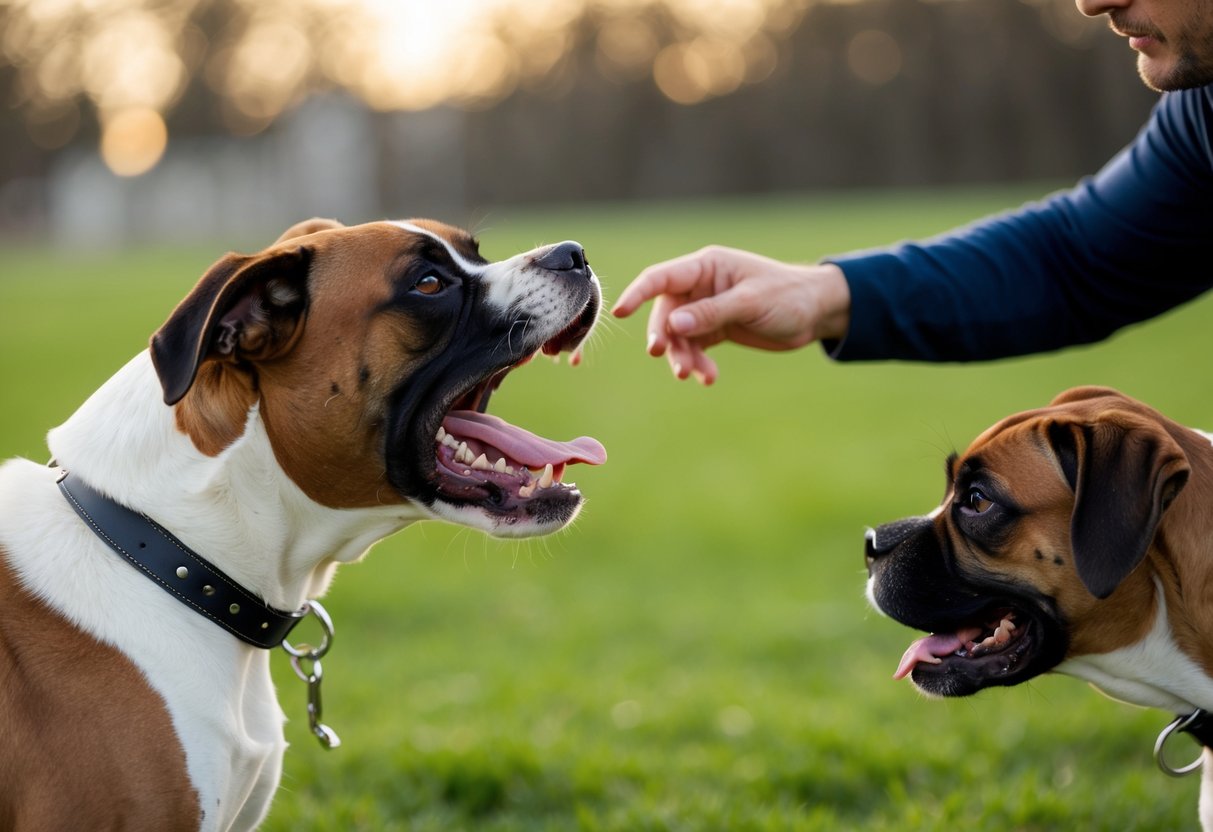
Understanding the right approach to socialization and training can make a big difference in your Boxer’s behavior. Focusing on these areas helps you build a strong bond with your dog and reduces aggressive tendencies.
The Importance of Early Socialization
Socialization is crucial for your Boxer. Start exposing them to different people, environments, and other dogs early on. Dog parks are a great place for this.
When Boxers miss out on these experiences, they may become fearful or aggressive in new situations.
Introduce your dog to various sights, sounds, and smells. This helps them feel more comfortable in their environment.
Keep interactions positive and stress-free.
Using positive reinforcement techniques—like treats and praise—can encourage good behavior during socialization sessions.
Early socialization leads to a more confident and well-adjusted dog.
Training Techniques and Obedience
Training your Boxer consistently is key to preventing aggressive behavior. Start with basic commands like “sit,” “stay,” and “come.”
Using clicker training can help reinforce good behavior. Each time your dog follows a command, click and reward them. This creates a positive association with following commands.
Be patient and consistent. Boxers are intelligent but can also be stubborn.
Enroll in classes with a professional dog trainer for personalized guidance. Group classes also provide socialization opportunities with other dogs.
Remember to make training sessions short and fun to keep your Boxer engaged. Regular training helps build your dog’s obedience and strengthens your bond.
Exercise and Mental Stimulation
A well-exercised Boxer is a happier and more manageable dog. Daily exercise is essential to burn off their energy. Aim for at least an hour of exercise each day.
Activities like walking, running, or playing fetch can satisfy their need for physical activity.
In addition to physical exercise, provide mental stimulation. Puzzle toys or interactive games can keep their minds sharp and reduce boredom-related aggression.
Combine physical and mental activities to ensure your dog is well-rounded and content. A dog that feels fulfilled is less likely to develop aggressive tendencies.
When to Seek Professional Help
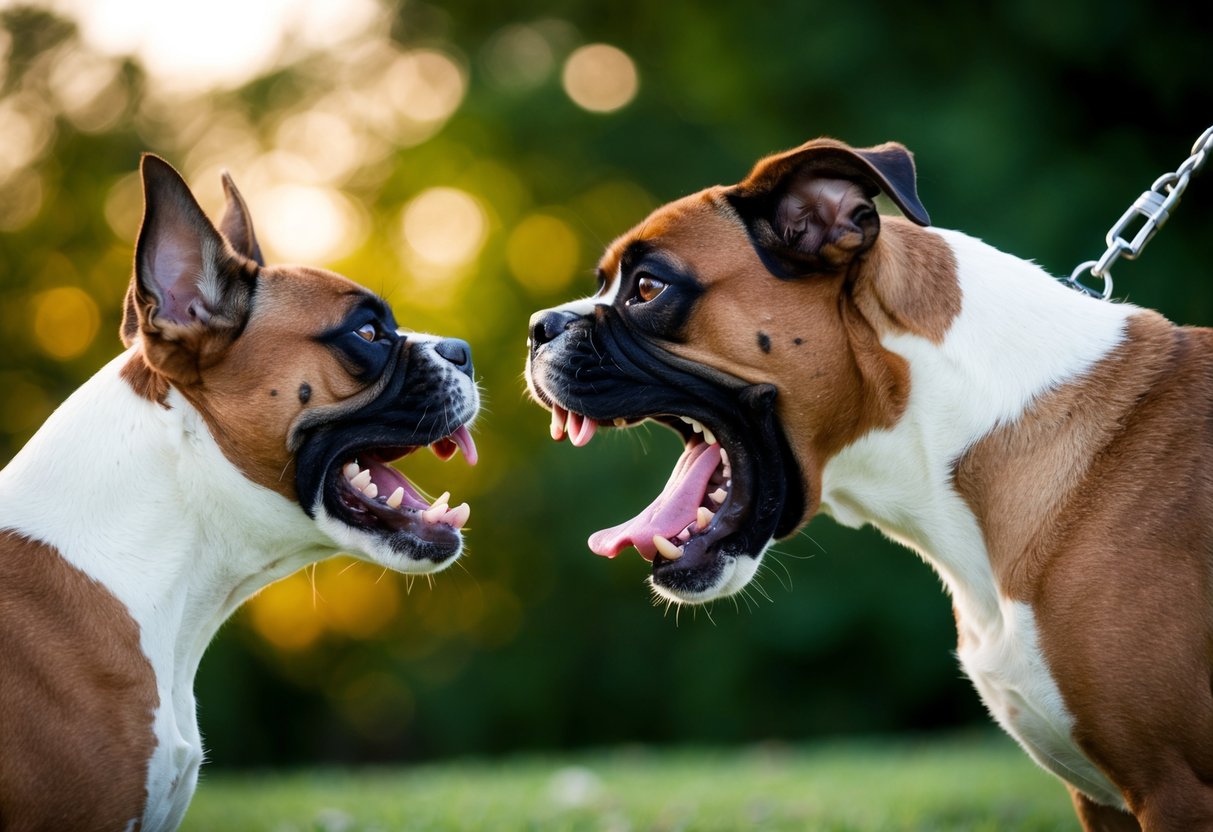
Recognizing when your Boxer dog needs professional help is important for their well-being and safety. If you see signs of serious aggression, getting expert guidance can prevent problems from getting worse.
Identifying Serious Aggressive Tendencies
Look for clear signs that your Boxer may need help. Aggression can show up in many ways, such as:
- Barking or Growling: If your dog frequently barks or growls at people or other animals, it’s a warning sign.
- Snapping or Biting: Any signs of biting or snapping should be addressed immediately.
- Fear-Based Aggression: If your dog becomes overly fearful and acts aggressively, it’s a serious issue.
These behaviors can stem from a lack of training, past trauma, or dominance issues. Ignoring them may lead to more severe problems. Seeking help early can improve your dog’s behavior and social skills.
The Role of a Professional Dog Trainer
A professional dog trainer can offer valuable support. They have experience dealing with aggression in Boxer dogs and can help you understand the root causes.
Training can include:
- Socialization Techniques: Introducing your dog to new people and environments safely.
- Behavior Correction: Strategies designed to reduce aggressive behavior.
- Customized Training Plans: Every dog is unique. A trainer can create a plan that fits your dog’s specific needs.
Investing in professional help ensures you address the aggression effectively and safely. This can prevent dangerous situations and improve overall behavior. Knowing when to seek help can make a big difference for you and your Boxer.
Boxer Care and Management

Caring for your Boxer involves creating a supportive environment that fosters good behavior. This includes understanding their needs and managing any aggressive tendencies effectively. Here are key areas to focus on.
Creating a Positive Living Environment
To ensure a happy home for your Boxer, focus on a positive living space. Start by providing a safe, comfortable area where they can relax. Use positive reinforcement to encourage good behavior. Reward your Boxer with treats or praise when they display calmness. This builds trust and promotes loyalty.
Socialize your Boxer early with other dogs and people. This helps them adjust to different environments and reduces the risk of aggressive behavior. Ensure they have plenty of exercise, as this breed is energetic and playful. Regular walks and playtime can prevent boredom and destructive behaviors.
Dealing with Destructive Behaviors
Boxers may exhibit destructive behaviors like chewing or digging when bored or anxious. To manage this, keep various toys available. Chew toys and interactive puzzles can keep their minds engaged.
Establish a routine for walks and playtime. Consistency in their daily schedule can help reduce anxiety. If your Boxer shows signs of aggression when interacting with items, redirect them to appropriate toys instead.
You should also monitor their behavior closely. If your Boxer seems overly aggressive toward people or other pets, consider professional training. This can help address specific issues related to aggression or destructive behaviors.
Understanding Canine Social Signals
Being aware of canine social signals can help you better manage your Boxer’s behavior. Pay attention to their body language.
For instance, if your Boxer growls or shows teeth, these are signs of discomfort or aggression.
Teach them to recognize signals from other dogs. This can help reduce aggression during play.
Encourage interactions that allow your Boxer to practice good social skills.
Signs to watch for include:
- Tail Position: A wagging tail often indicates happiness, while a stiff tail can mean tension.
- Ears: Relaxed ears suggest calmness, while pinned back ears may signal fear or aggression.
Understanding these signals will help you guide your Boxer in social situations, making them a better family pet.


