
If you ever ask, do you see bees in the winter, the short answer is yes, sometimes. You are most likely to spot them on mild days, near shelter, or during a quick break from the cold, while most of the colony stays tucked away and quiet. Winter bee activity is usually brief, subtle, and easy to miss unless you know exactly where to look.

What you see depends on the species, the weather, and the time of day. Honey bees may stay clustered inside the hive, while some bumblebees and solitary bees use protected places outside the hive to wait out the season. On warmer winter afternoons, you may catch movement near entrances, under leaf litter, or around sheltered stems and soil.
When Winter Bee Sightings Happen

Winter sightings usually happen during short weather windows, not during deep cold snaps. You are most likely to notice movement when the sun warms a protected spot or when a colony makes a quick trip outside.
Why Mild Days Bring Brief Activity
A few degrees of warmth can be enough to wake up movement near a hive entrance or nesting site. On those days, bees may venture out briefly to stretch, orient, or clean themselves before retreating again.
What Cleansing Flights Look Like
Honey bees sometimes make cleansing flights, short outings that help them empty their digestive systems. You may see a bee leave the hive quickly, circle once or twice, then return or head to a nearby landing spot. According to a winter behavior overview, these flights are tied to winter survival and happen during suitable weather.
Why Most Movement Stays Close To Shelter
Cold air drains energy fast, so bees avoid long flights when possible. Most activity stays near protected entrances, bark crevices, hollow stems, or other sheltered places where heat loss stays lower.
Why Some Bees Are Visible While Others Stay Hidden
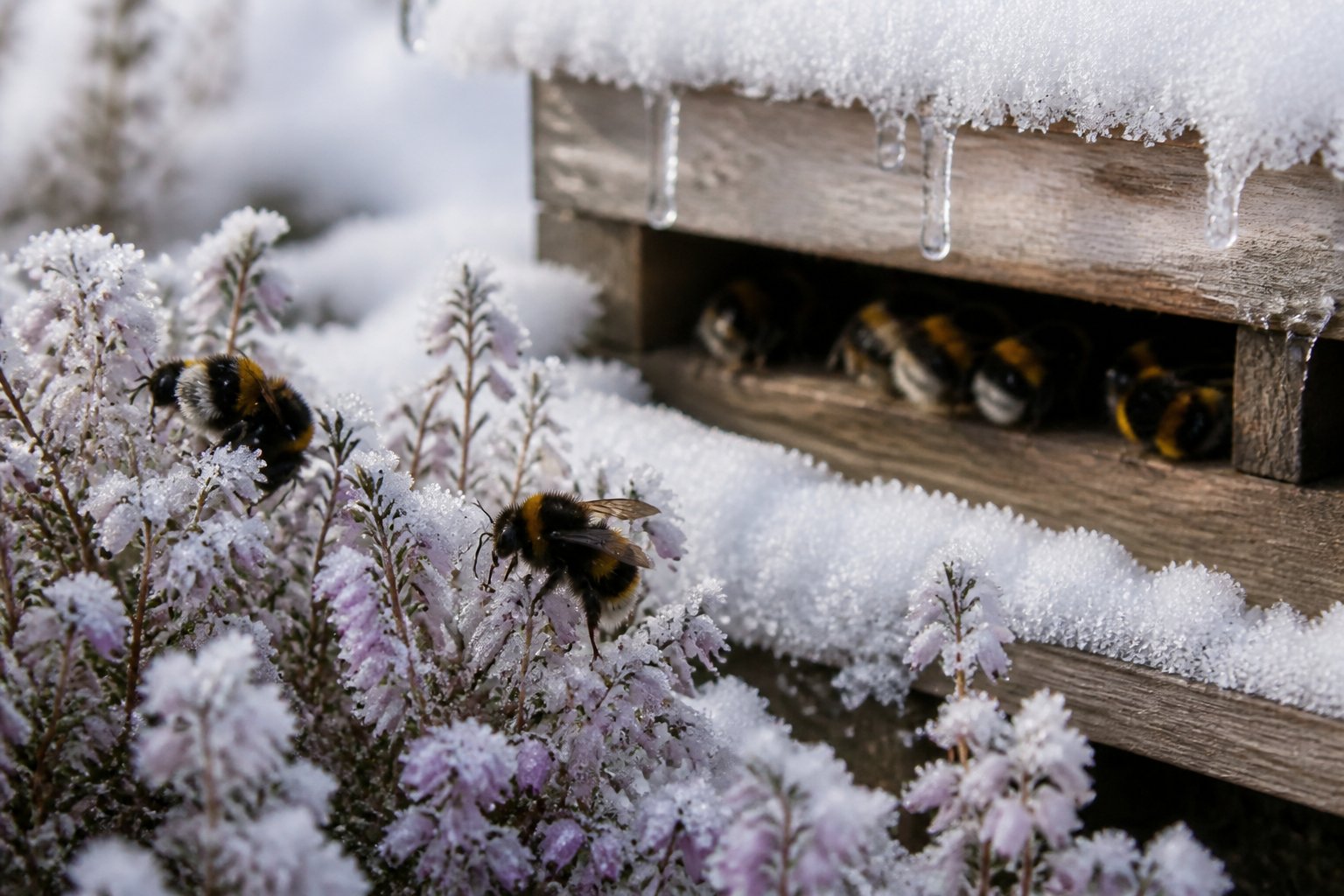
Bee visibility in winter depends on social structure and survival strategy. Social insects, such as honey bees, cluster together, while many solitary bees spend the cold season out of sight in protected nests or chambers.
How Honey Bees Survive As A Colony
Honey bees stay active inside the hive all winter, even when you do not see them outside. They cluster tightly, share heat, and rely on stored honey for energy, a pattern described by beekeeper guidance on winter hives.
How Bumblebee Queens Overwinter Alone
Many bumblebee colonies do not last through winter, so the queen survives alone in a sheltered place. She may hide underground, in leaf litter, or in another protected pocket until spring warmth returns.
Where Solitary Species Spend The Cold Season
Solitary bees often wait out winter in hollow stems, wood tunnels, soil cavities, or other sealed nesting spots. As noted by The Wildlife Trusts, many insects enter a paused state during winter, which makes them hard to spot unless you know the habitat.
Where To Look Without Disturbing Them
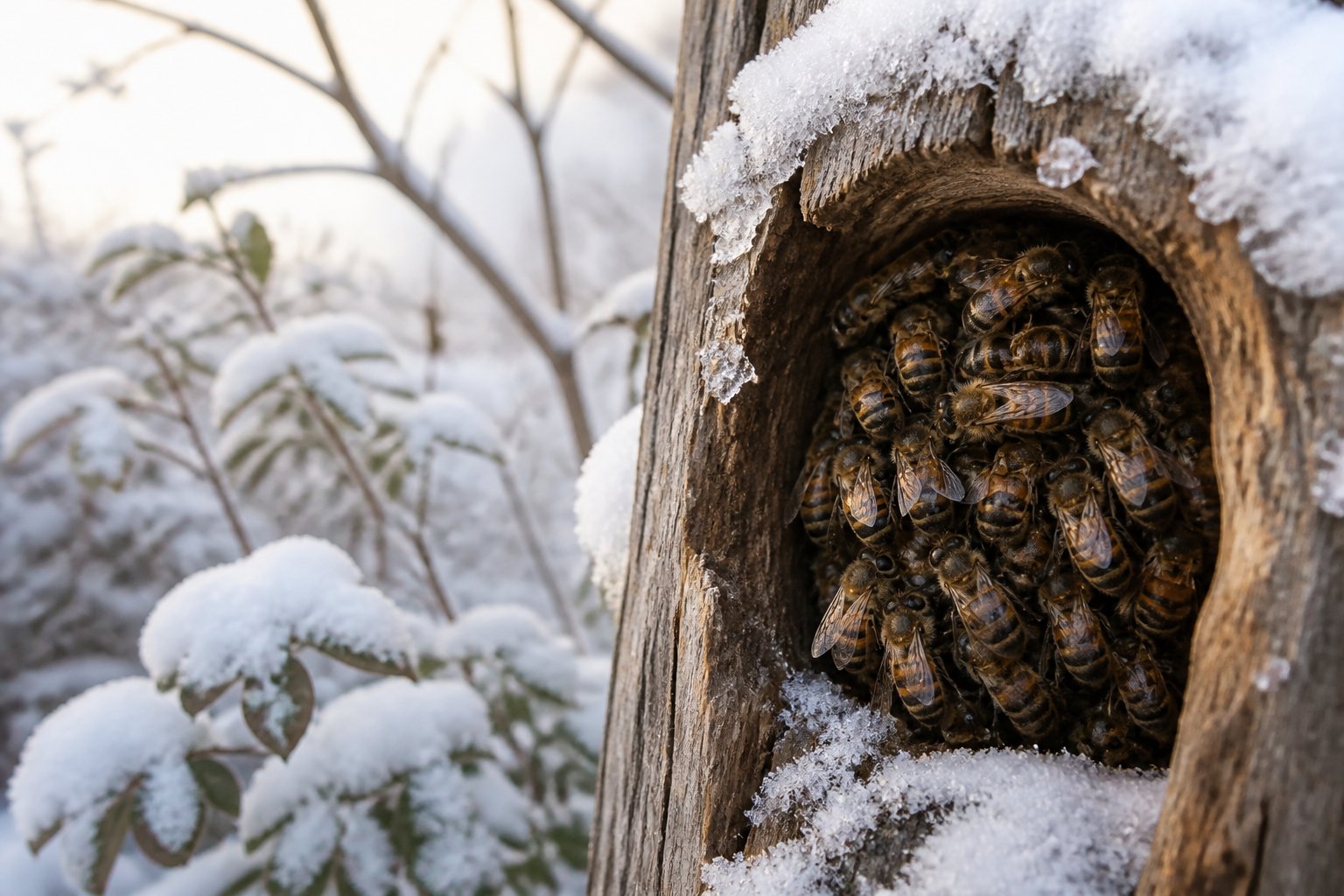
The best winter bee searches stay gentle and observational. Focus on places that offer warmth and cover, and keep your distance so you do not disrupt a resting colony or overwintering insect.
Signs Near Hive Entrances
Look for a light buzz, faint movement, or a few bees near the entrance on mild days. A little debris, frosting, or condensation near the opening can also suggest an active hive, though you should not pry into it.
Clues In Leaf Litter, Hollow Stems, And Soil
Leaf litter can hide overwintering bumblebee queens and solitary bees. Hollow stems, old plant stalks, loose bark, and undisturbed soil are also worth a quiet look because they often serve as winter shelter.
How To Watch Safely In Cold Weather
Stay still, keep your distance, and avoid tapping, lifting, or shaking anything that could be sheltering bees. A pair of binoculars or a zoom lens helps you observe activity without adding stress, especially when temperatures are low and the insects are conserving energy.


