
If you’ve set up a bee house in your garden, you might be wondering if it’s really worth the effort to clean it out. Well, yeah—you should clean your bee house regularly if you want your bees to stay healthy and safe.
Mold, pests, and diseases can pile up over time, turning the bee house into a risky spot for your pollinators.
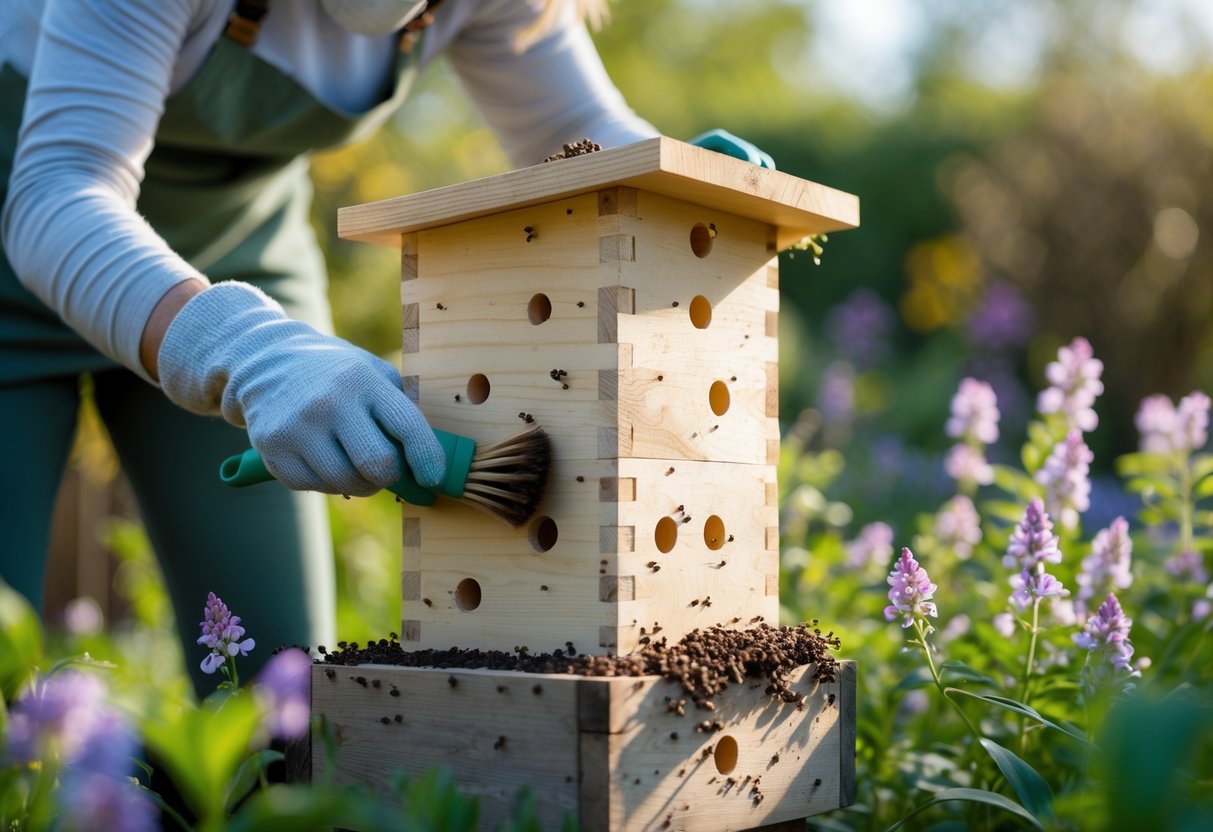
Cleaning your bee house gives bees a fresh start every season. When you take care of their home, they’re way more likely to return next year and keep up their important work.
If you want your bee house to be a real safe haven, keeping it tidy matters more than you might think.
Why Cleaning Out Bee Houses Matters

When you keep your bee house clean, you help protect the bees and support a healthy pollinator environment. It also stops problems that can mess with the bee population and the plants they help.
Understanding what cleaning actually does for your bees? That can change everything.
Health Benefits for Mason Bees and Native Pollinators
Cleaning your bee house means you get rid of old debris like mud, pollen, and leftover cocoons. This keeps mold and bacteria from taking over.
Mold and bacteria can make mason bees and other native pollinators sick. By giving bees a clean place to live and raise their young, you help them come back stronger in spring.
Bees with a clean home usually survive winter better and show up healthier next season.
Impact on Pollination and Bee Population
A tidy bee house helps your bee population grow and stay healthy. More bees means more pollination for your flowers, fruits, and veggies.
Pollination is huge for plant growth and getting food on your table. When you keep bee houses clean, bees can focus on gathering nectar and pollen instead of dealing with illness.
That keeps pollination going strong in your garden all season.
Risks of Parasites, Pests, and Diseases
If you skip cleaning, your bee house could turn into a hotspot for mites and other parasites. These pests attack your bees or spread diseases.
Dirty bee houses let diseases spread fast. That puts your entire bee population at risk and can even wipe out local bees.
Cleaning knocks out these threats and keeps your pollinators safe so they can keep doing their thing.
Want more tips on protecting your bees? Check out this guide on how to maintain a mason bee house.
Best Practices for Maintaining Bee Houses
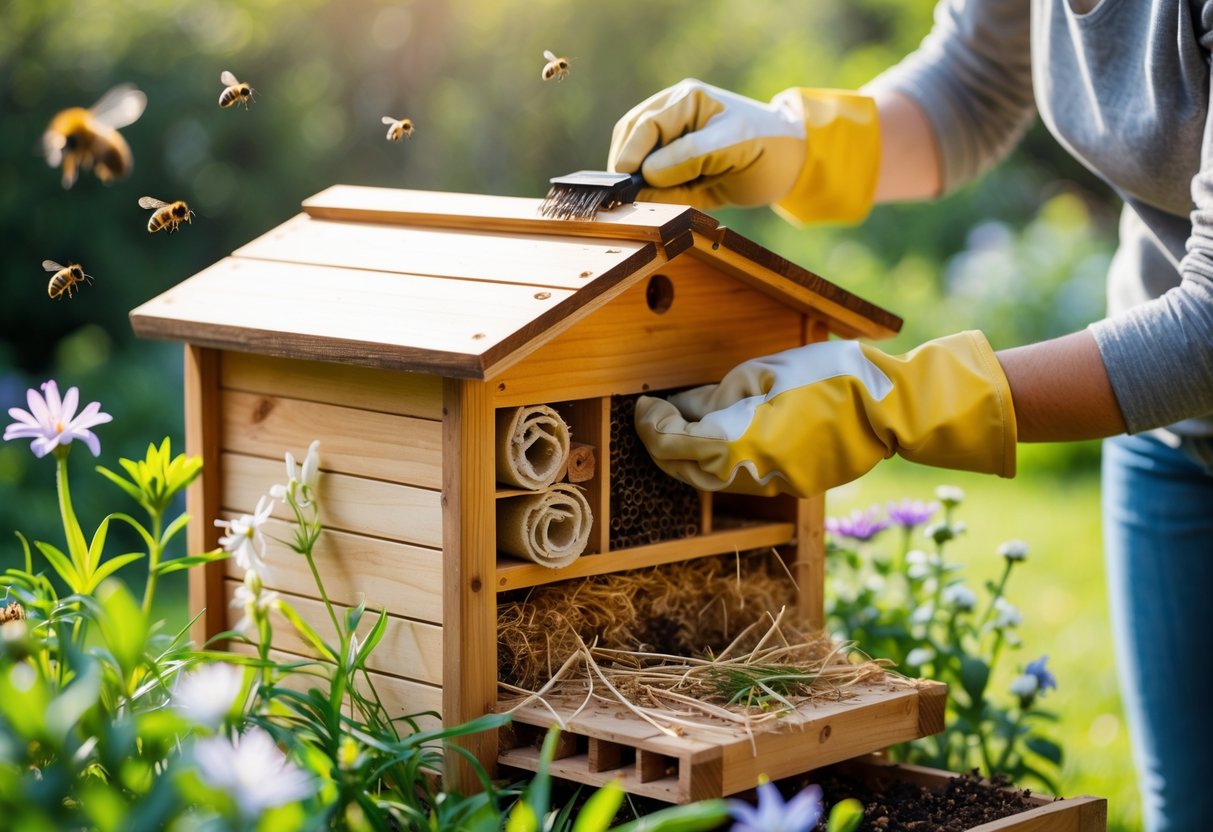
If you want your mason bee house to stay healthy and productive, focus on a few key steps. Think about when to swap out nesting tubes, what materials and locations work best, and how to avoid harmful chemicals.
These choices really do make a difference for your bees and their pollination.
When and How to Replace Nesting Tubes
Swap out the nesting tubes every spring after the bees have emerged. Check for tubes that look cracked, moldy, or packed with old mud.
Those tubes can hide pests and diseases that hurt the next batch of bees. Take out the old tubes gently and toss them.
Slide in new, clean tubes—aim for ones about 6-8 mm wide. Make sure they’re smooth and sturdy so bees can build their cells.
This simple routine keeps mites and other parasites from moving in. Your mason bees will thank you for it.
Choosing Suitable Materials and Locations
Stick with untreated, natural materials for your bee house—think wood or bamboo. Skip plastics or treated wood, since those can be bad news for bees or fall apart too fast.
Smooth surfaces help bees build their nests without hassle. Place your bee house somewhere sunny, ideally facing southeast to catch the morning light.
Keep it out of strong wind and rain. Try to set it near flowers or fruit trees, so bees don’t have to travel far for pollen and nectar.
Make sure there’s good airflow, but don’t put it somewhere damp. The right spot helps your bees settle in and use the house year after year.
Minimizing Pesticide Exposure
Pesticides can really mess up mason bees. If you want to protect your pollinators, don’t set up your bee house near places where chemical sprays or herbicides get used.
If you absolutely need to use pesticides in your garden, try to do it early in the morning or later in the evening. Bees usually aren’t buzzing around much then. Honestly, using natural pest control feels safer for everyone—your bees included.
When you keep pesticide exposure low, your bees get to gather clean pollen. That helps them stay healthy.
For more tips on taking care of mason bee houses, check out Best Bee Brothers on carpenter & mason bee house maintenance.


