
Ever notice bees buzzing around you more than anyone else? It’s not just your imagination. Bees mostly go for sweet smells, bright colors, and sometimes even your natural scent. Things like floral perfumes, scented lotions, sweat, and bright clothes can really make you pop on their radar.
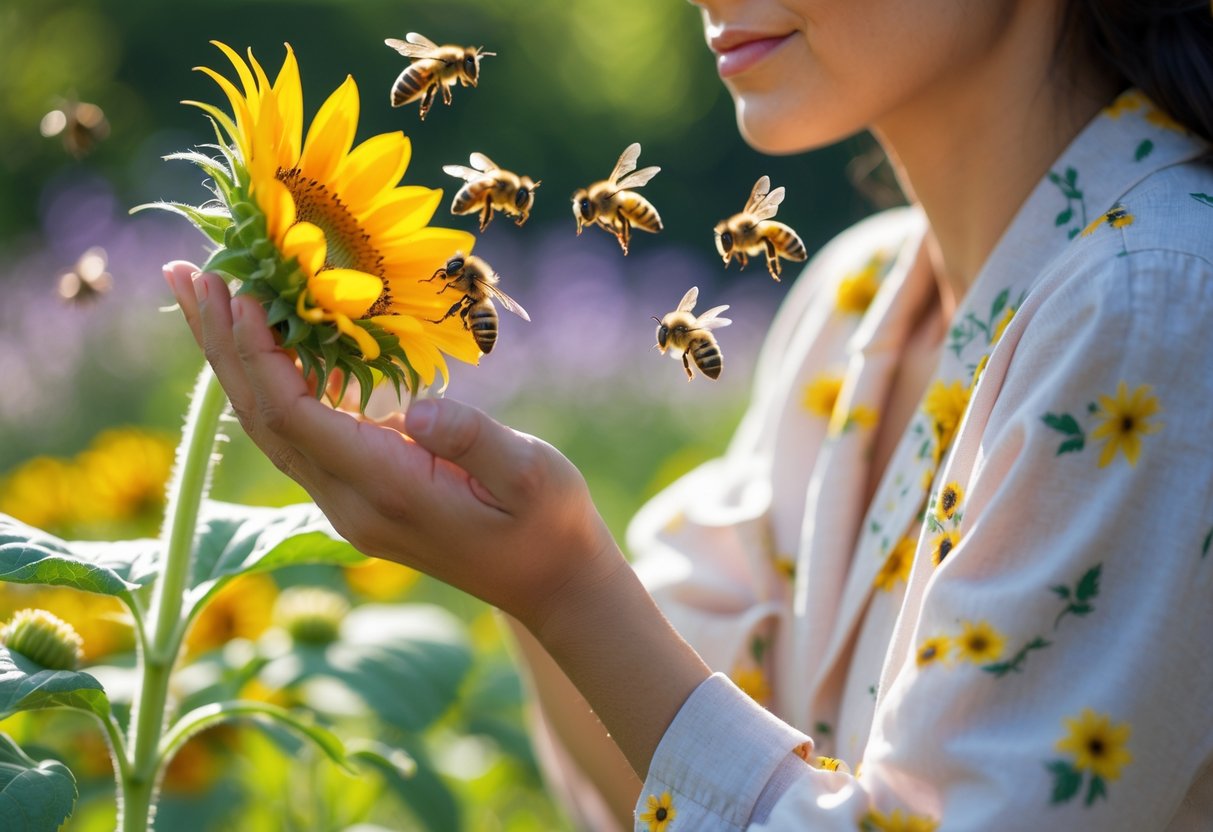
How you move and your body odor matter too. Bees look for food like nectar, so they sometimes mistake these scents and colors for flowers.
Knowing what draws bees in can help you avoid those unwanted close encounters. Curious why bees find some people irresistible? Let’s break it down.
Key Factors That Attract Bees to People
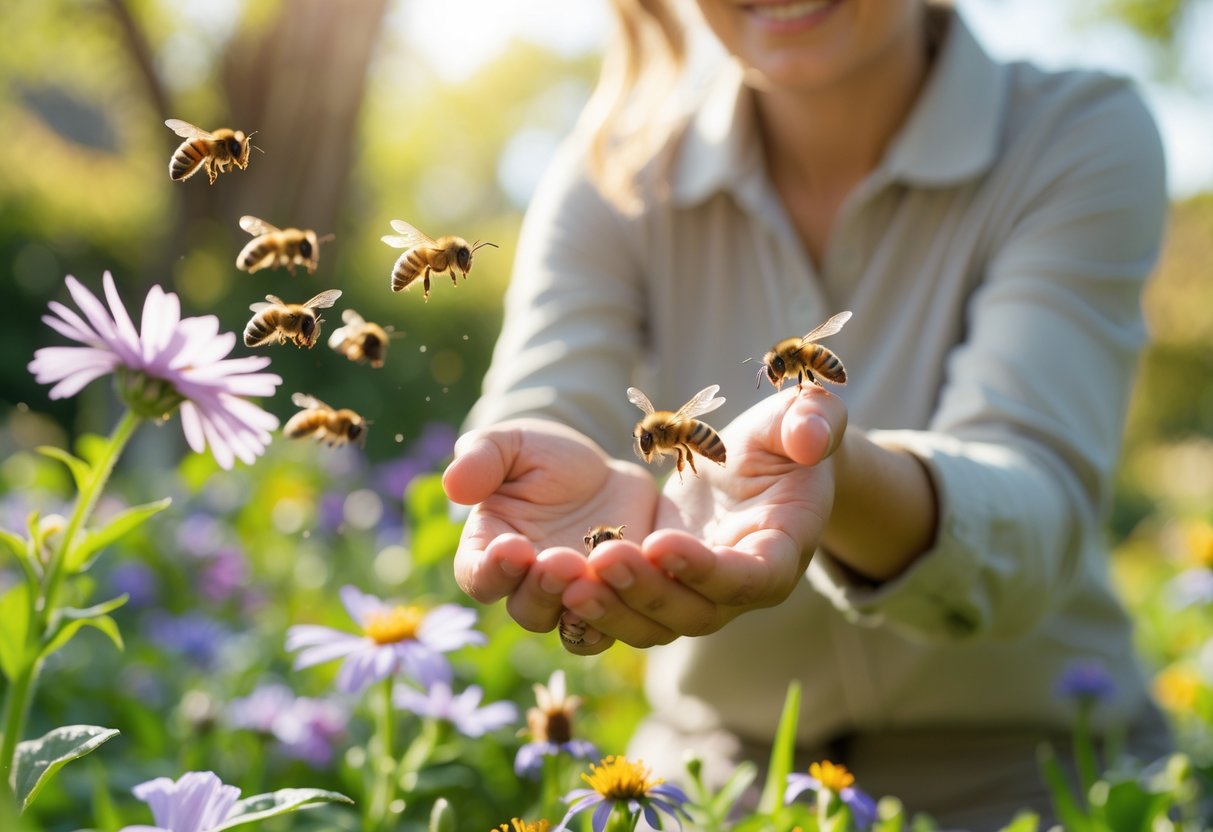
Bees pick up on certain things that pull them toward you. Your scent, your clothes, even what you eat—it all adds up.
Let’s get into the details.
Scented Products and Floral Fragrances
Bees use their sense of smell to hunt for nectar and pollen. If you’re wearing perfume, lotion, or hair products with sweet or floral scents, you might catch their attention.
Even the natural floral smell from some shampoos or sprays can draw them in. Want to avoid bees? Try switching to unscented or lightly scented products.
This way, you won’t stand out as much to bees that are busy working nearby.
Bright Colors and Clothing Patterns
Wearing bright colors like yellow, orange, or red? Bees notice. These shades look a lot like the flowers they visit for food.
Bold patterns or high-contrast outfits can also grab their attention. They kind of mimic the shapes and colors of real flowers.
Darker or neutral colors—think white, beige, or brown—don’t attract bees as much. If you spend a lot of time outside, maybe pick those.
It’s a simple way to keep bees from getting too curious.
Sweat, Natural Body Odor, and Body Chemistry
Bees can actually pick up on sweat and natural body odors, especially when you’re hot or moving around. Sweat contains salts and minerals that some bees, like sweat bees, really go for.
Your unique body chemistry might make you more appealing to bees. If you notice bees following you, your sweat or natural scent could be the reason.
Try to stay cool and wear moisture-wicking clothes. Bathing regularly and using deodorants without strong floral scents can help too.
Sugary Foods and Drinks
Bees love sugar—it’s a big energy source for them. If you’re eating or drinking sweet stuff outside, like soda or candy, you might attract more bees.
Sugary scents travel fast and can pull bees right to you. Keep drinks covered and clean up spills quickly.
If you want bees to leave you alone, it really helps to skip open sugary snacks and drinks outdoors.
Other Influences on Bee Attraction
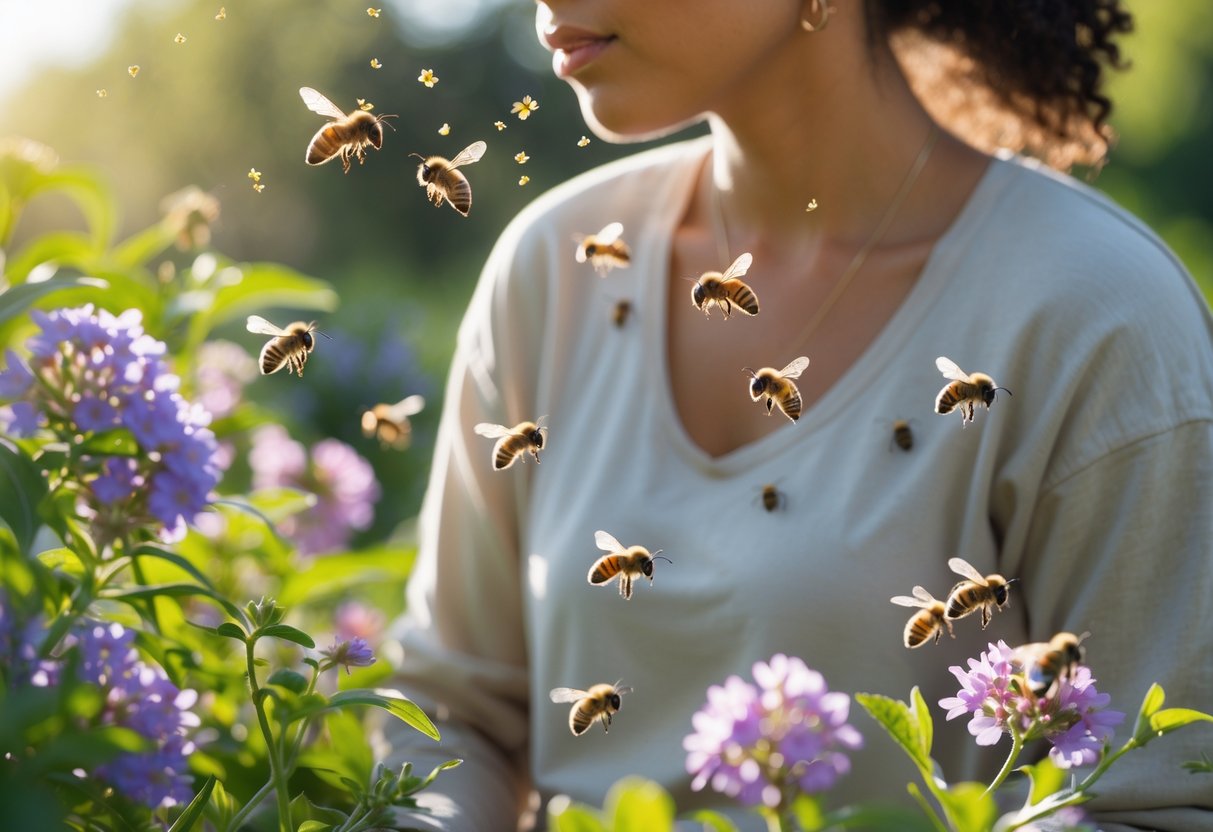
There’s more to it than just scent and color. How you move, the plants around you, and even other insects nearby can all make a difference.
It’s not always easy to predict, but a little awareness goes a long way.
Movements and Behavior Around Bees
Bees notice how you move. Quick, jerky movements can make them nervous or feel threatened.
If you stay calm and move slowly, bees usually keep their distance. When bees feel threatened, they might buzz loudly or fly close to warn you.
Swatting at them? Not a great idea—it can make them defensive. Calm, steady behavior keeps things safer for everyone.
Nearby Wildflowers and Environmental Factors
Wildflowers or fruit plants nearby will naturally attract bees. If you’re close to blooming flowers, expect a few bees looking for nectar to wander near you.
Bees also get more active in warm, sunny weather. If you’re carrying honey or sugary drinks, that’s another magnet for them.
Paying attention to your surroundings can help you avoid bee-heavy spots.
Distinguishing Bees, Wasps, and Bumblebees
It helps to know what’s buzzing around you. Honeybees have fuzzy bodies, usually brown or black with some yellow.
Bumblebees look bigger and fuzzier, and you’ll probably hear them buzzing loudly. Wasps, on the other hand, are slimmer and have shiny, smooth bodies with bright stripes.
Wasps tend to be more aggressive and can sting more than once. Bees usually only sting once.
If you can tell these insects apart, you’ll know better how to react and stay safe.
Risks and Reactions: Bee Stings
Most of the time, a bee will sting you because it feels threatened. Honeybees actually leave their stinger behind, and that stinger keeps pumping venom in until you pull it out.
So, you’ll want to remove the stinger as soon as possible—gently, if you can—to help with the pain.
People react to bee stings in different ways. For most, there’s just some swelling and redness.
But sometimes, an allergic reaction hits, and that’s when you need medical help. If you spend a lot of time around bees or you’ve had a bad reaction before, it’s smart to keep an allergy kit nearby or at least know how to get help quickly.


