
Ever wondered if that bumblebee buzzing by is a boy or a girl? You’re definitely not the only one. The quickest trick is to check out their hind legs and antennae.
Female bumblebees show off pollen baskets on their back legs. These baskets look flat and shiny. Males don’t have them, so if you spot a bee with bare legs, you’re probably looking at a male.
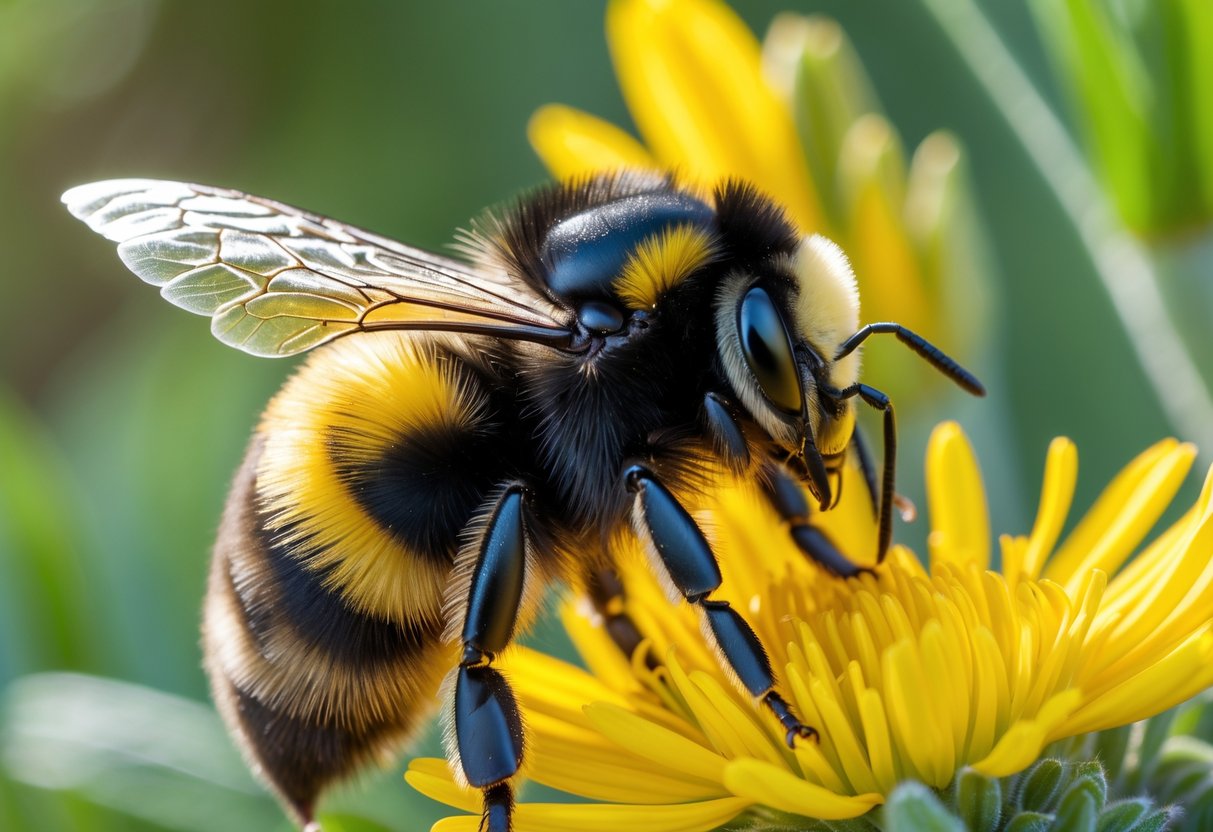
You’ll also spot differences in their antennae. Males have longer antennae with more segments. Once you know what to look for, watching bees gets a lot more interesting.
Sometimes, you’ll see males with a small orange or red tail and extra yellow markings. Females usually don’t have these. There’s a lot more to these details than you might think, and they actually matter in the busy, wild world of bumblebees.
Key Physical Differences Between Male and Female Bumble Bees

You can spot male and female bumble bees by checking out their body parts up close. Look at their antennae, their size, and whether they have stingers or pollen baskets.
Antennae Segment Counts
A really clear sign is the antennae. Males have longer antennae with 13 segments. Females have 12 segments.
That extra segment makes the male’s antennae look a bit longer and more bendy. The antennae help bees smell and find each other. Males need to pick up on female scent, so their antennae are a bit more sensitive.
If you look closely at the tips, you’ll see the difference. Counting the segments is a pretty solid way to tell them apart.
Body Size and Shape Variations
Females are usually bigger and bulkier. Their bodies look round and solid, which makes sense since they do most of the work like building nests and gathering pollen.
Males look slimmer, sometimes even longer. They don’t need those big bodies since they don’t do hive chores.
Both have the classic yellow and black stripes, but the size difference stands out if you catch them together.
Stingers and Pollen Baskets
Females come with stingers. Males? Nope, they can’t sting at all. So if a bumble bee stings you, it’s definitely a female.
Females also have a pollen basket on their back legs. It’s shiny and flat, and sometimes you’ll see it packed with yellow pollen.
Males don’t have pollen baskets since they don’t collect pollen. It’s a quick way to tell who’s who when you watch them on flowers.
If you want more details about legs and antennae, check out How To Tell If A Bumble Bee Is Male Or Female.
Behavioral and Biological Roles

Bumble bees act pretty differently depending on whether they’re male or female. Their jobs and habits shape how they fit into the colony.
Colony Responsibilities
Females do most of the work and defend the nest. They fly from flower to flower collecting nectar and pollen to feed everyone.
They also protect the nest. If you mess with their home, they’ll sting to defend it.
Male bumble bees, or drones, skip the chores. They spend almost all their time flying around, hoping to find a mate.
Since males don’t have stingers, they don’t guard the colony. You’ll see them with different flight patterns, often patrolling or scent marking.
Reproductive Characteristics
Female bumble bees come in two types: queens and workers. The queen lays eggs and keeps the colony going. Workers feed the larvae and help raise the young.
Only females have stingers. They mostly use them to defend the queen or the nest.
Male bumble bees? Their main job is to mate with new queens. After that, they usually die since they don’t come back to the colony.
Males look a bit different—you’ll notice their longer antennae and that they don’t have stingers. They focus on finding queens to mate with, not colony chores, which honestly seems pretty important for keeping the species going.
Curious about more details? Check out this guide on male and female bumble bee behavior.


