
If you’re trying to spot a virgin honey bee queen, you really need to know what makes her stand out.
A virgin queen is smaller than a mated queen, with a shorter and slimmer abdomen. She moves quickly across the comb, and honestly, worker bees don’t pay her much attention.
She’s more active than a mature queen. You won’t see that long, trailing body that a mated queen has.

You might catch her climbing over other bees or even taking flight if you disturb her. That makes her a bit tricky to catch, at least at first.
If you pick up on these signs, you’ll have a much easier time spotting her during hive inspections. You won’t confuse her with a worker or overlook her. For more tips, check out this guide on how to identify a virgin queen bee.
Physical Appearance of a Virgin Honey Bee Queen

A virgin honey bee queen stands out from both worker bees and mated queens. You’ll see differences in her size, shape, and a few key body features.
Size and Body Shape
Virgin queens usually look smaller than mated queens, but a bit bigger than the workers.
She’s got more of a stubby, compact shape. You won’t see the long, elegant curves you’d expect from a mature queen.
Her body doesn’t stretch out as much. She almost looks like a cross between a queen and a worker bee.
Honestly, that makes her easier to mistake for a large worker if you’re not careful.
Abdomen and Wing Length
One of the easiest ways to tell is by looking at her abdomen. A virgin queen’s abdomen is short and doesn’t stick out past her wings much.
Her abdomen might even be almost the same length as her wings, so she just seems smaller overall compared to a mated queen.
Mated queens, on the other hand, have noticeably longer abdomens—sometimes 1.5 times the length of their wings.
Their abdomens hang lower and even drag a bit over the comb. Virgin queens don’t have that weight, and they move around much more freely and quickly.
Coloration and Markings
Virgin queens often look a little duller or lighter in color than mated queens. Their abdomens might be thinner and paler, sometimes looking a lot like the worker bees.
You might notice she doesn’t have many distinct markings. She blends in more, honestly.
Worker bees don’t treat her like royalty yet either, since she doesn’t have the strong pheromone scent of a mature queen. You won’t see that tight group of attendants following her around.
If you want more details about these features, check out this guide on how to identify a virgin queen honey bee.
How to Identify a Virgin Queen in the Hive
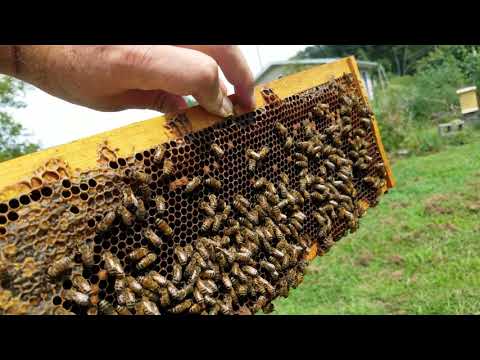
Spotting a virgin queen really comes down to watching her behavior, seeing where she hangs out, and noticing how the other bees react to her.
If you know what to look for, you’ll find her a lot faster when you’re checking your hive.
Behavioral Traits and Movement
A virgin queen moves fast and almost nervously across the honeycomb. You won’t see her moving with the slow, steady pace of a mated queen.
She darts around, sometimes pausing before taking off again. You won’t see a steady group of workers following her yet.
She just runs freely, without the usual respect the bees give a mature queen.
Her smaller body and shorter abdomen make her movement quick and agile. She looks a bit like a big worker, but with a longer, slimmer look.
Location on the Honeycomb Frame
Virgin queens often stick close to queen cells or hang out near newly hatched larva. You’ll spot these cells easily during inspections.
She doesn’t stay in the center of the brood nest like a mated queen laying eggs. Instead, she explores the edges of the frame or moves between combs, probably searching for mates or getting ready for mating flights.
Look for her in busier areas, but not where you’d see a tight cluster of workers around a single bee.
Virgin Queen and Worker Bees Interaction
Worker bees act differently around virgin queens than they do with mated queens. You probably won’t see workers forming a tight retinue or protective circle around her.
Instead, workers inspect her and might even chase her a bit. The colony seems unsure about whether she’ll become their main queen.
Virgin queens don’t give off the same pheromones as mated queens, so workers act less attentive. These chemical signals usually keep the hive calm and focused, but with a virgin queen, things feel a bit unsettled.
If you notice these patterns, you can get a pretty good idea if the queen you spot during your beekeeping checks is still a virgin or already mated.
For more details, check out this beekeeping guide on identifying a virgin queen.


