
Want to enjoy your backyard without bees constantly buzzing around? Knowing what scares bees away can make a big difference.
Bees really dislike strong smells like peppermint, eucalyptus, citronella, and cinnamon. If you use these scents, you’ll probably notice they just don’t want to stick around. Little tricks like putting out cucumber peels or dabbing some essential oils can make your patio or garden a lot more comfortable.
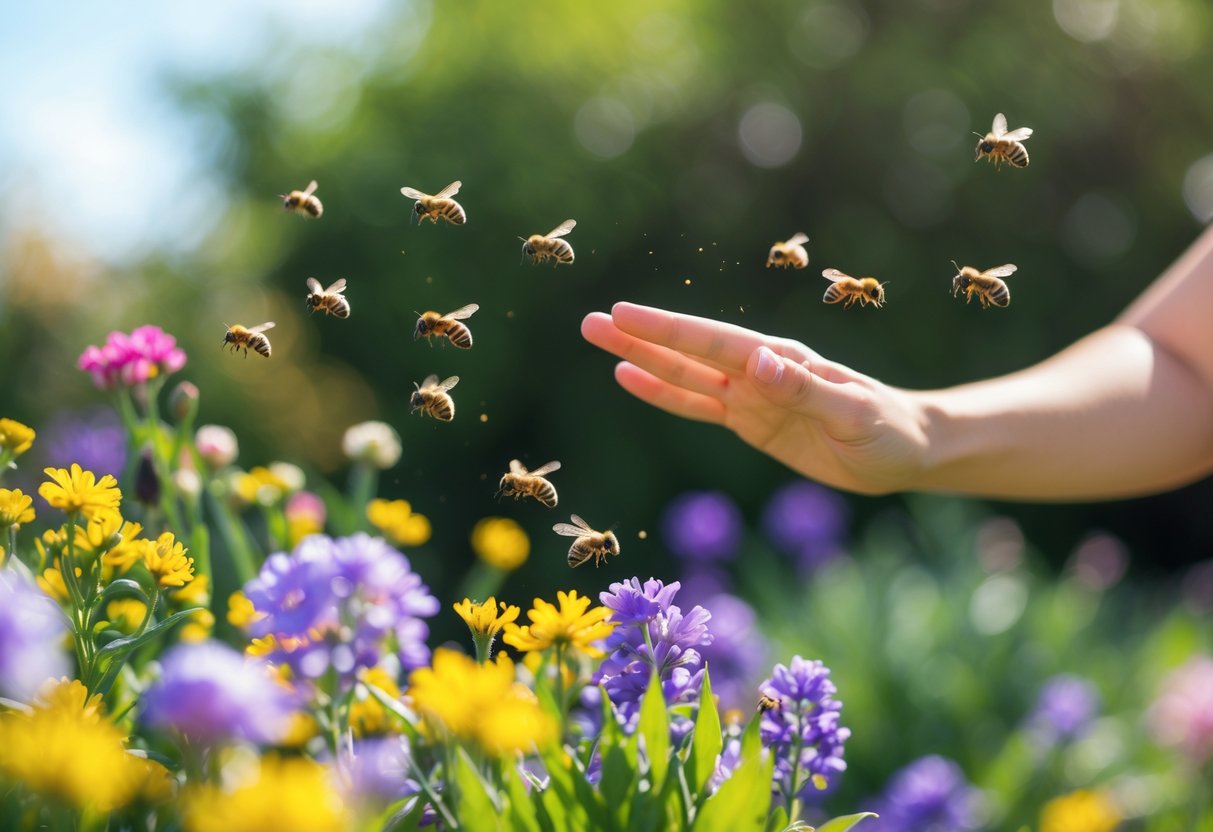
You don’t need to hurt bees to keep them at bay. Natural repellents scare bees off but don’t harm them, which feels like the best of both worlds.
If you figure out which sounds, colors, and smells bees avoid, you can make your space peaceful for you and safe for them. It’s kind of a win-win.
Scents and Ingredients That Scare Bees Away

Some smells and plants can keep bees from bothering you. Strong scents either confuse or irritate bees, so they tend to stay away.
Natural oils, herbs, and even a few things from your kitchen can help repel bees. You don’t need fancy chemicals.
Essential Oils Bees Dislike
Bees really can’t stand strong-smelling oils like peppermint, eucalyptus, and citronella. These scents overwhelm their senses.
You can put a few drops on cotton balls or mix the oils with water to spray around your porch or picnic table. That’s usually enough to keep most bees at a distance.
Cinnamon and clove oils work too. Their spicy smells act as natural repellents.
If you use these oils regularly, you’ll probably notice fewer bees hanging out in your garden or on your patio.
Plants and Herbs That Repel Bees
Some plants make it tough for bees to settle in your yard. Peppermint and other types of mint have scents that bees avoid.
If you plant these around your home, you create a sort of natural barrier.
Marigolds are another solid choice. Their strong odor seems to keep bees away from garden beds.
You could also try eucalyptus plants or herbs like garlic—they help too.
Household Items and Foods as Bee Deterrents
You might already have stuff at home that works against bees. Vinegar sprayed around your sitting area can keep them away because of its sharp smell.
Putting cucumber peels on the table is another easy trick—bees just don’t like the scent.
Mothballs can also repel bees, but you have to be careful since they’re not safe for pets or kids. I wouldn’t use them unless you have to.
Some people use vanilla as a deterrent. It confuses bees, though it doesn’t work as well as strong oils or herbs.
If you use these items the right way, you can avoid most bee run-ins naturally.
For more ideas, check out this list of scents that bees hate.
Effective Ways to Keep Bees Away Safely
You can keep bees from hanging around without hurting them. Simple, gentle methods usually work best.
Try making your space less tempting or use natural plants to keep them away, both inside and outside.
Non-Harmful Bee Removal Methods
If you spot bees near your home or garden, you can nudge them to leave safely. Strong smells like citronella, cinnamon, or vinegar usually do the trick.
These scents bother bees—whether they’re honeybees, carpenter bees, or wasps—so they’ll move on without anyone getting hurt.
You could also set out a sweet bowl of juice or soda a few yards away from where you’re hanging out. That pulls bees away from your table and guests.
If you find a hive close to your house, call a beekeeper to remove it. They know how to handle bees safely and keep everyone sting-free.
Some folks stuff dryer sheets in their pockets or shirts. The smell puts bees off, so it’s a handy little hack.
Try to avoid loud noises or wearing bright colors—bees seem to prefer calm, less flashy places anyway.
Using Bee-Repelling Plants Indoors and Outdoors
Some plants just naturally keep bees away. If you plant honeysuckle or herbs like mint, eucalyptus, and citronella near your patios or windows, you’ll probably notice fewer bees hanging around.
Bees really don’t like the smell of these plants. That’s a win if you want to relax outside without any buzzing interruptions.
Inside, try putting pots of these herbs near your doors or windows. It’s a simple trick, but you might be surprised how much it helps.
You can also plant bee-repelling herbs in your garden, just keep them away from spots where you spend a lot of time. This way, you sort of nudge the bees toward other areas.
These plants don’t just bother bees—they’ll also keep hornets and other noisy insects from building nests too close.
Honestly, adding bee-repelling plants is a safe, non-toxic way to make your yard less appealing to bees, and you still get to protect your garden. If you’re curious, check out more natural ways to keep bees away.


