
Ever watched a bumblebee buzzing around your garden and wondered if it’ll come back to the same nest next year? You might be surprised by the answer. Bumblebees don’t return to the same nest each year—their nests last just one season.
Every spring, a new queen sets out to find a fresh spot for her colony. Sure, your yard might seem to attract bumblebees every year, but they’re always picking new places to build. Once the colony’s life cycle wraps up, the old nests just sit there, empty and forgotten.
Curious about why bumblebees move on? Understanding their reasons helps you appreciate these quirky pollinators even more. Want to know where they actually nest and what happens to those old homes? Let’s dig in.
Do Bumble Bees Return to the Same Nest Every Year?

Bumble bees abandon their nests after a single season, so you won’t find them using the same spot twice. Still, new queens sometimes pick nest sites close to where old colonies lived. You’ll see bumble bees returning to the same general area, but never the exact nest.
Annual Lifecycle of Bumblebee Nests
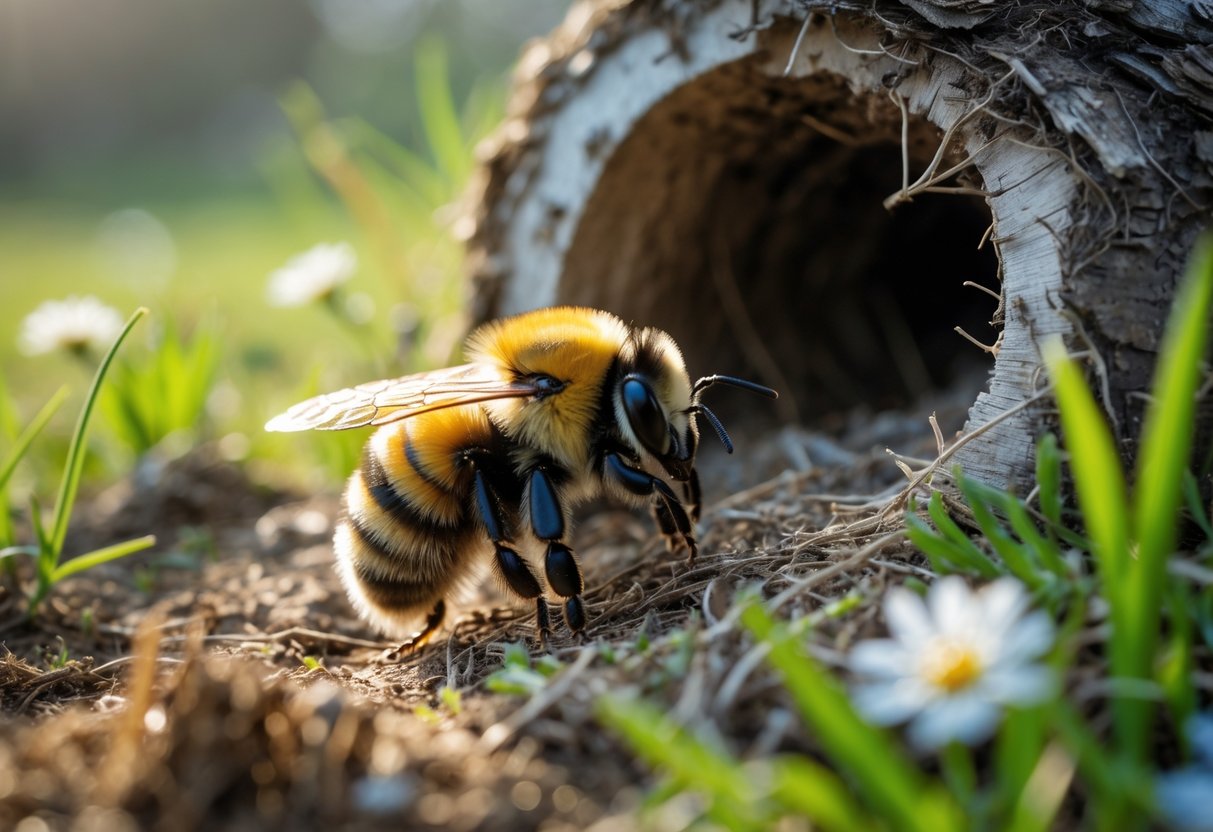
Every year, a lone queen starts a new nest in the spring. She usually finds a hidden spot, maybe underground or in an old rodent burrow.
The colony grows through summer, with workers and more queens joining in. By late summer or early fall, the nest runs out of resources. All the workers and drones die off as winter approaches. Only the new queens survive by hibernating through the cold months.
Since the old nest gets abandoned, it doesn’t make it to the next year.
Why Old Bumblebee Nests Are Not Reused
Bumblebee nests just aren’t built to last more than one season. They’re made from soft stuff like grass or fur, and that all breaks down pretty fast.
The nest can also get messy and full of waste, which makes it a bad place to live again. New queens want fresh, clean sites to build safer homes for their colonies. That keeps the bees healthier and helps avoid disease.
Colony Location vs. Nest Reuse
You might notice bumble bees hanging around the same part of your yard year after year. Queens like familiar places with plenty of flowers and shelter.
Sometimes, new queens use holes or spaces near last year’s nest, but they always build a brand new structure. So, bumble bees stick to the neighborhood, not the exact address.
If you want to dive deeper into bumble bee nesting, check out Do Bumble Bees Return To The Same Nest Every Year.
How Bumblebee Nesting Differs from Bees and Wasps
Bumblebees don’t nest like other bees or wasps. You’ll notice differences in where they build, how they do it, and what makes them choose a spot.
Comparing Nesting Behaviors of Bees, Wasps, and Bumble Bees
Honey bees usually gather in big colonies inside hives. Sometimes these hives are man-made, or you’ll find them tucked inside hollow trees.
Wasps prefer to build papery nests that hang from eaves, branches, or maybe even your attic. Bumble bees, though, like smaller, temporary nests. They start a fresh colony in spring and use it for just one season.
Bumble bees almost never reuse the same nest. Wasps, on the other hand, can get pretty territorial about nest sites and sometimes build new nests right next to old ones.
Common Nest Locations and Construction
Bumble bees usually pick underground spots or thick grass for their nests. They often take over old rodent burrows or use natural holes near the ground. If you look closely, you might spot their nests as small holes with fuzzy bees coming and going.
Wasps build their nests above ground, using chewed wood to make a papery shell. You’ll find these attached to tree branches or tucked into the corners of houses.
Honey bees create neat hives out of wax and keep them safe inside cavities. Bumble bee nests look messier and use soft materials like moss or grass, not wax.
Factors Affecting Nest Site Selection
Bumble bees pick nest sites with safety and shelter in mind. They usually search for quiet, hidden places that keep out bad weather and hungry predators.
Since their nests last just one season, bumble bees care more about finding easy flower access than long-term security. I guess that makes sense—why worry about the future if you’re not sticking around?
Wasps want spots where they can build quickly and stay protected, but they don’t seem too picky. Their strong paper nests let them be more flexible about location.
Honey bees, though, really need big cavities and good temperature control. Their colonies stick around for years, so they don’t mess around when it comes to picking a home.
If your garden or yard has old rodent burrows or thick plants, you might attract bumble bees. Wasps tend to show up where there’s wood nearby for nest building.
It helps to know these little details if you’re trying to figure out which insect is living close by. Want to dive deeper? Check out Bumble bee nesting 101 to see how bumble bees nest in grass or underground.


