
Ever wonder where all the bees vanish to when it starts raining? Bees usually head back inside their hive to stay safe and dry during rainy weather. They really can’t fly well in the rain, so the hive becomes their cozy shelter.
Inside the hive, bees work together to keep things running. They manage the temperature, guard their honey, and just wait for the rain to stop before heading out again.
If you’ve ever spotted a bee resting somewhere dry during a storm, it’s probably just waiting for better weather.
Learning where bees hide in the rain gives you a peek at how they survive storms. It might even help you figure out how to support bees during those rainy spells.
For more details, check out where bees go when it rains.
Where Do Bees Go When It Rains?

Bees stop flying as soon as rain starts. They quickly find shelter in their hives or other protected spots.
When they’re outside, bees change their behavior to keep safe and dry. If rain catches them off guard, they look for nearby cover fast.
How Bees Detect Incoming Rain
Bees sense changes in humidity, temperature, and air pressure before rain arrives. These little weather cues signal them to change their plans and rush for shelter.
Their bodies pick up on weather shifts, so they usually avoid getting caught in storms. Inside the hive, bees share info with each other by moving and signaling, helping the others know when to stop foraging.
If you pay attention, you might notice bees getting less active as the sky darkens or the air feels damper.
Foraging Bees and Rain-Related Behavior
Foraging bees rarely fly during rain. Raindrops are huge compared to their bodies, and flying gets dangerous and tricky.
If you see bees out just before a shower, they’re probably hurrying back to the hive. Some bees get stranded if rain starts suddenly.
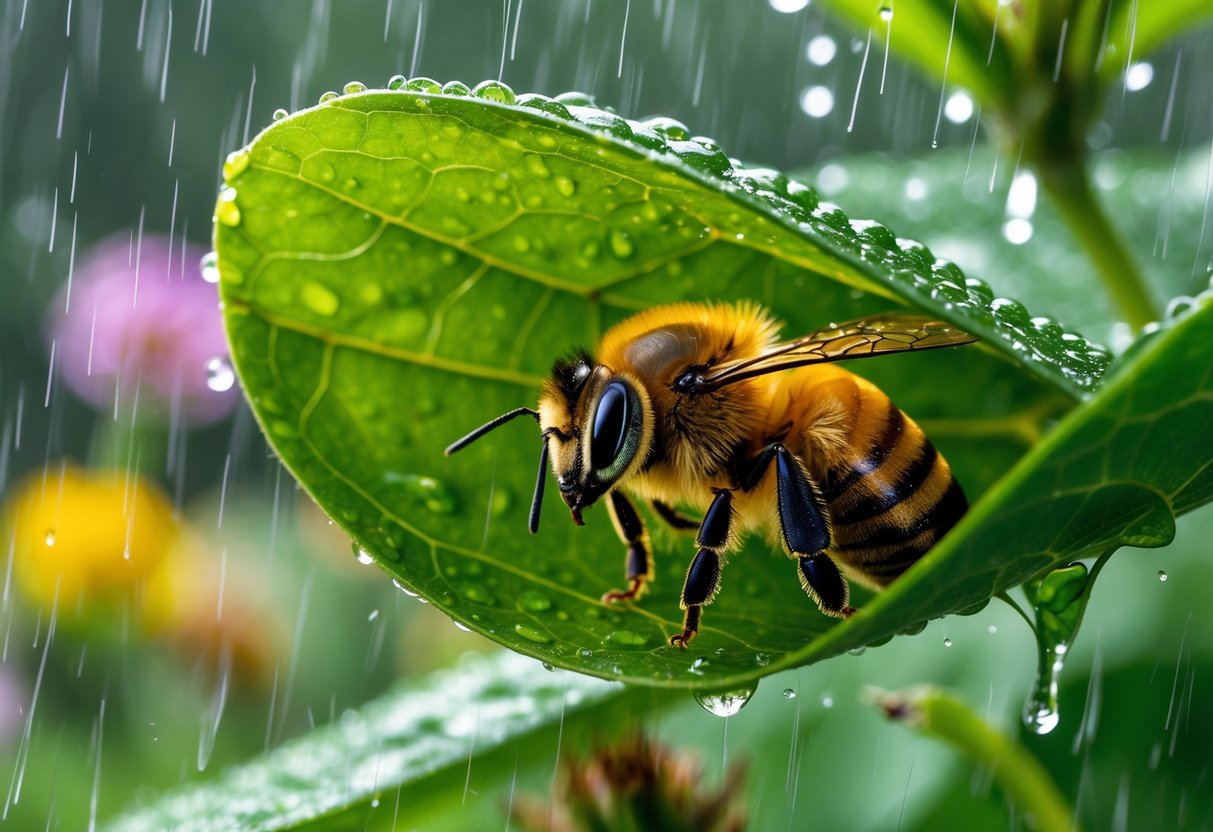
They’ll look for leaves, flower petals, or any little shelter to wait out the storm. Your garden can help by offering safe spots for bees to rest until the rain passes.
What Happens When Bees Get Wet
Bees really don’t like getting wet. Water makes flying tough, and raindrops can weigh them down or chill them, which isn’t great for their tiny bodies.
Wet bees can’t keep warm as easily, and water can dilute the nectar they carry, which isn’t ideal for making honey. If bees get soaked, they dry off by staying inside the hive or under whatever cover they find.
You might want to put out little spots for bees to rest on rainy days. It helps them recover and keeps your local bees ready to get back to work once the sun comes out.
Learn more about where bees seek shelter during wet weather from the article on Where Do Bees Go When It Rains? – A-Z Animals.
Life Inside the Hive During Rain

When rain keeps bees from flying, the hive turns into a busy place. Bees focus on tasks that keep the colony strong and safe.
They care for young bees, protect the hive, and manage honey and other resources.
Hive Activities of Worker Bees
Worker bees switch up their routine when it rains. Since they can’t go out to collect nectar or pollen, they spend more time feeding larvae.
This helps the young bees grow up healthy. Workers also build and repair the wax combs inside the hive.
These combs store honey and hold the growing larvae. The job needs constant attention to keep the colony organized.
By moving and fanning their wings, worker bees keep the hive at the right temperature. That’s super important for the brood, since being too hot or cold can cause problems for the baby bees.
Guard Bees and Hive Protection
Guard bees watch the hive entrance all day. During rain, their job gets a bit more intense.
They stay extra alert to keep water or pests out. These bees use propolis, a sticky resin from plants, to seal up cracks and small openings.
That helps block moisture and keeps the inside dry. Guard bees also defend the queen and the whole colony.
When the weather gets rough, protecting the hive from threats matters even more, since all the bees stay huddled together inside.
Honey Storage and Resource Management
Rainy days really slow down foraging, so bees shift their focus to managing honey stores. Worker bees take nectar they’ve collected earlier and turn it into honey.
They watch over the honeycomb cells and seal them with wax to keep the honey from spoiling. Since honey is their main food source during bad weather, saving it becomes a top priority.
You might see bees checking and reorganizing their supplies. They want to make sure the colony has enough energy to get through until the sun finally returns.
If you’re curious about how bees handle rainy weather, check out where bees go when it rains and how they manage in such conditions.


