
Getting stung by a bee hurts—a lot—and it usually catches you off guard. If you get stung, you should focus on removing the stinger as quickly as possible so you can stop more venom from getting into your skin.
After you get the stinger out, wash the area with soap and water. Grab some ice or a cold pack to bring down the swelling. Keep an eye out for any weird reactions, too, because those can sneak up on you.
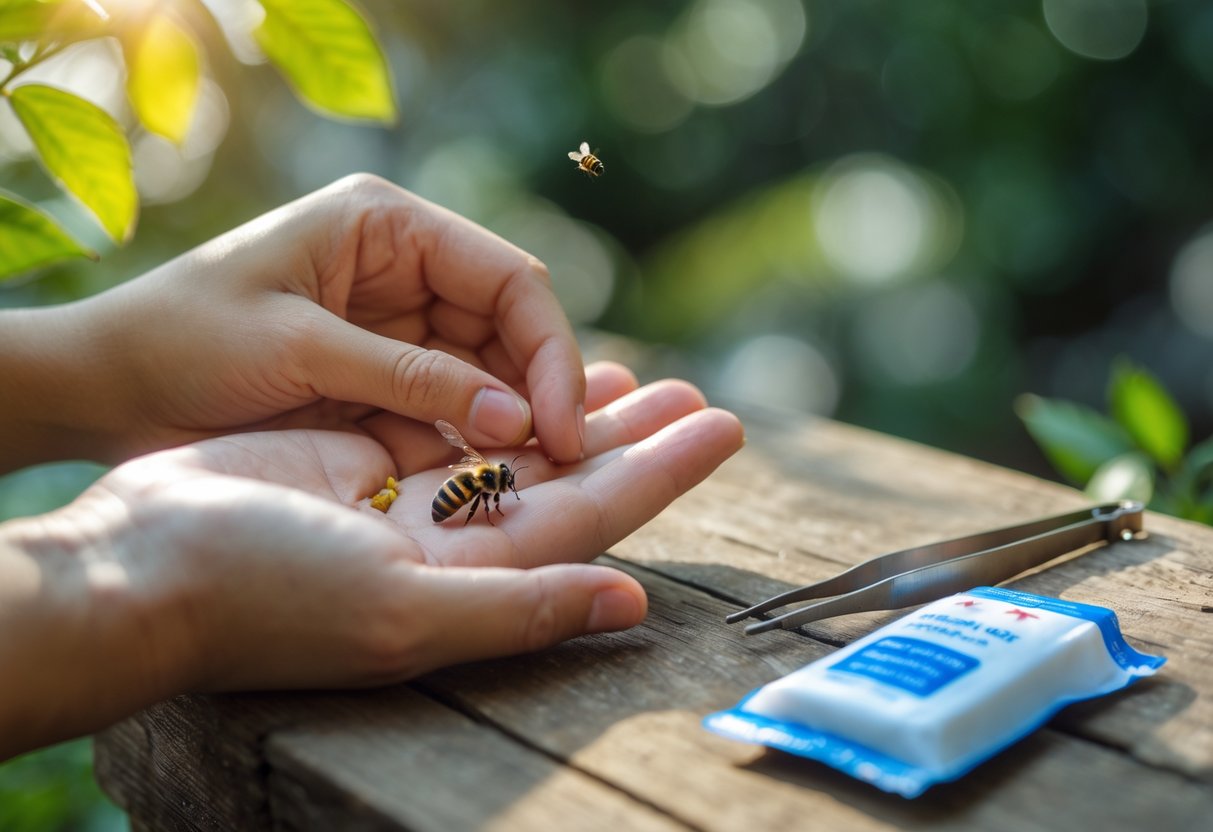
Most bee stings just cause some pain and swelling, and honestly, you’ll probably feel better in a few hours. But some folks react badly and need medical help fast.
If you know what to do, you can heal faster and maybe avoid a lot of discomfort.
Immediate Steps to Take After a Bee Sting

Right after a bee sting, act fast to manage pain and swelling. Take care of the stinger, clean the area, and use whatever you have on hand for relief.
Remove the Stinger Quickly
Try to get the stinger out as soon as you notice it. The longer it stays in, the more venom it pumps into your skin, making things worse.
Use something like a credit card or even your fingernail to scrape it out gently. Don’t grab it with tweezers or pinch it—doing that can actually squeeze more venom in.
If you can, get it out in just a few minutes. Once it’s gone, wash your hands to avoid spreading germs.
Clean the Sting Site
After removing the stinger, clean the area with soap and water. This helps prevent infection.
Pat the skin dry with a clean towel. You might see some redness or swelling right away.
Try not to scratch, even if it itches. Scratching just makes it angrier.
Wrap some ice or a cold pack in a cloth and hold it on the spot for 10 or 15 minutes. That usually helps calm things down.
Ease Swelling and Pain
Take something like ibuprofen (Advil) or acetaminophen (Tylenol) if you need to. These can help with pain and swelling.
If the sting itches or looks red, dab on a bit of hydrocortisone cream or calamine lotion. They usually help cool the skin and stop irritation.
Let the area breathe—don’t cover it up too tight.
If things get worse or you notice signs of a bad reaction, like trouble breathing or a rash spreading, you should get medical help right away.
Recognizing and Responding to Severe Reactions

After a bee sting, pay attention to how you feel. Watch for serious symptoms like trouble breathing, swelling that spreads, or feeling faint.
If you or someone else starts to look or feel worse, act quickly.
Symptoms of Anaphylaxis
Anaphylaxis is a scary, severe allergic reaction that can hit just minutes after a sting. You might notice you can’t breathe well, or your throat feels tight.
Look for hives or swelling that spreads past the sting. Dizziness, nausea, vomiting, or even diarrhea can show up too.
Your pulse might race or feel weak. In the worst cases, someone might faint or pass out. If this happens, it means the body is reacting badly and needs help now.
When to Use an Epipen
If you’ve had bad reactions before or spot anaphylaxis signs after a sting, grab your Epipen and use it right away. Inject it into the outer thigh muscle.
Don’t wait to see if things get better first. The Epipen delivers epinephrine, which helps open your airways and brings down swelling.
After using it, try to stay as calm as possible. Sit down or lie back to avoid fainting.
When to Seek Emergency Help
Call 911 or your local emergency number right away if you or someone else shows any symptoms of anaphylaxis.
Even if you use the Epipen, you still need emergency care for follow-up treatment.
Don’t wait around to see if symptoms improve. Severe reactions can get much worse in less than 30 minutes and might turn life-threatening fast.
If someone struggles to breathe, breaks out in severe hives, feels dizzy, or loses consciousness, get help immediately. Taking quick action really can save a life.
For more advice on spotting symptoms, check out Understanding Bee Sting Allergic Reactions: Timing is Everything and Anaphylaxis: First aid – Mayo Clinic.


