
If you don’t remove a bee sting quickly, the stinger keeps pumping venom into your skin. That extra venom just makes the pain and swelling worse.
The longer a stinger stays put, the more venom gets released. You’ll probably feel more discomfort, and there’s a higher chance you’ll have a stronger reaction.
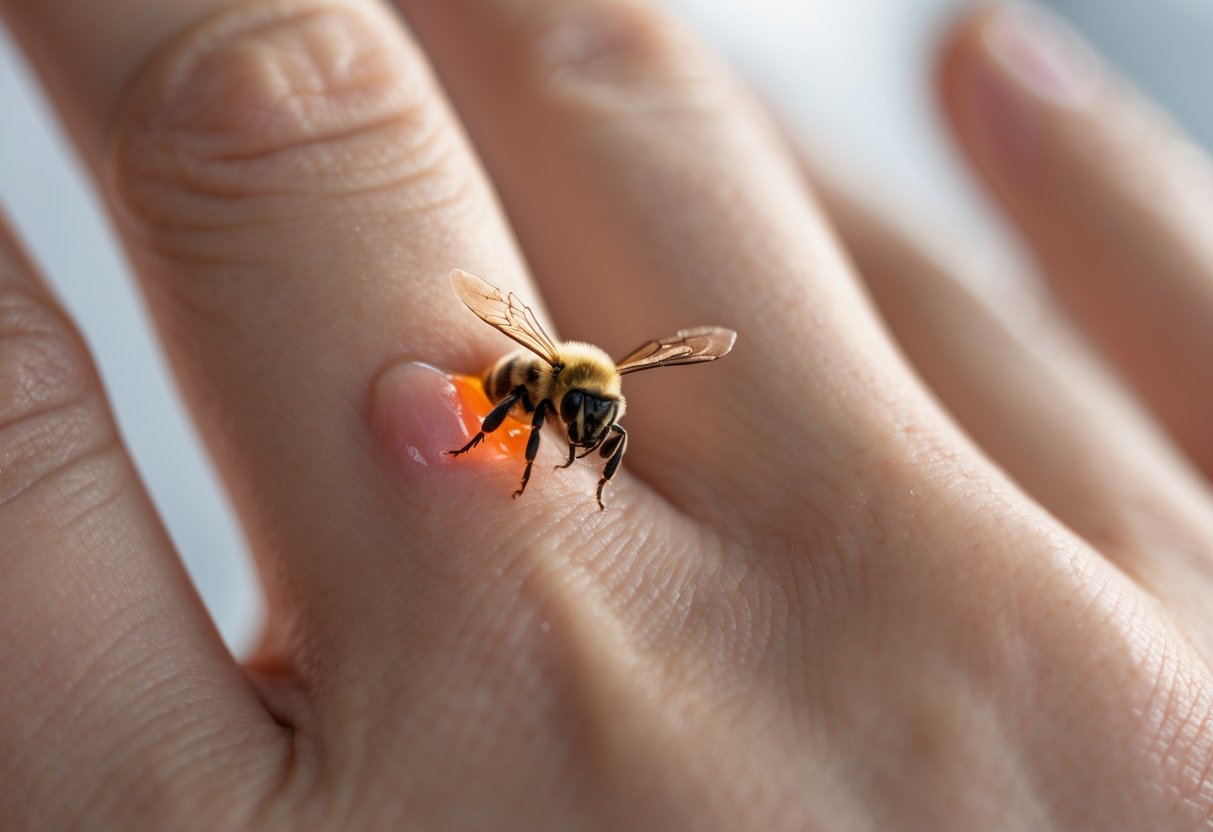
You might not even notice the stinger at first, but leaving it in can do more than just hurt. It can actually raise your risk of infection, or even spark a bad allergic reaction if you’re sensitive.
Getting why it matters to remove the stinger fast can help you dodge extra trouble. It’s not as hard as it sounds, and if you do it right, you’ll cut down on how much venom gets into your body.
What Happens If a Bee Sting Is Not Removed?

When a bee stings you, the stinger can get stuck in your skin. If you leave it there, it keeps pumping venom into your body.
You’ll notice more pain and swelling. There’s also a risk of infection or an allergic reaction.
Bee Venom Release and Its Effects
The stinger keeps releasing venom as long as it’s stuck in your skin. That venom can cause pain, itching, and swelling.
You’ll probably see redness and inflammation around the sting. The area might get bigger and feel more uncomfortable over time.
If you pull the stinger out quickly, you lower how much venom gets in. But if you don’t, the pain and swelling could get pretty intense and last for days.
You can check MedicineNet for more details on what happens if you leave a bee sting in.
Complications From a Retained Bee Stinger
Leaving the stinger in your skin just makes things worse. Your skin can stay red, swollen, and sore longer than it should.
Some people get a rash or small bumps near the sting. And if you’re allergic, things can get serious fast.
Allergic reactions can be mild, like itching and hives, or severe—think anaphylaxis. That means trouble breathing, a swollen tongue, or a tight chest.
If you see any of these signs, you need medical help right away. Don’t wait around.
irescuebees.com has more info on allergic reactions if you’re curious.
Infection Risks and Warning Signs
A bee sting can get infected if bacteria sneak in around the stinger. The risk goes up if you leave the stinger in or scratch the area.
Watch out for these signs:
- More redness or swelling than before
- Pus or fluid coming out
- The area feels warm or tender
- You get a fever or chills
If any of that shows up, see a doctor. Infections need treatment so they don’t spread.
Keep the area clean and get the stinger out as soon as you can. That helps lower your risk of infection.
You can read more about when to get help at pollenpaths.com.
Long-Term Consequences
Most bee stings heal up fine if you treat them quickly. But if you leave the stinger in, you might have a longer recovery.
Swelling can stick around for several days. If you get an infection, you could end up with scarring or skin discoloration.
If you keep getting stung and don’t take care of it, you might become more sensitive to bee venom over time. That means you could have worse reactions in the future.
If you pull the stinger out fast and watch for symptoms, you’ll avoid most of these problems. It’s really just about taking care of things early.
You’ll find more about the risks from stingers at knowanimals.com.
How to Safely Respond to a Bee Sting

If a bee stings you, try to act fast. Pulling the stinger out quickly can cut down on how much venom gets in.
After that, treat the area and keep an eye out for anything serious. Knowing when to get medical help is important.
Proper Bee Stinger Removal Techniques
As soon as you spot the sting, look for the stinger. Bees leave behind a barbed stinger, and it keeps releasing venom if you don’t get it out.
Use something flat and firm—like a credit card or your fingernail—to scrape it out sideways. Don’t pinch or squeeze, or you might push more venom in.
Try not to use tweezers unless you have to, since squeezing the stinger can make things worse. Once it’s out, wash the area with soap and water.
First Aid for Bee Sting Symptoms
After you remove the stinger, clean the spot well. A cold compress or ice wrapped in a cloth can help with swelling and pain.
You might want to use a hydrocortisone cream or take an antihistamine for itching and redness. If the sting is on your arm or leg, keep it elevated to help with swelling.
Pay attention to any red rash, serious swelling, or pain that keeps getting worse. If you notice these, keep a close eye on things.
When to Seek Medical Attention
Most bee stings just hurt and swell up a bit, but you really should get help if you notice any signs of an allergic reaction or anaphylaxis.
If you start having trouble breathing, your face or throat swells, you feel dizzy, or your heart races, head to the emergency room right away.
People who’ve had bad reactions to bee stings before should call their doctor immediately—even if the symptoms seem pretty mild.
If you notice swelling and redness spreading far from the sting site, or you get a fever, reach out to a healthcare provider. That might mean you’ve got an infection or a delayed reaction that needs attention.


