
If you get stung by a bee or a wasp, you might reach for vinegar as a quick home remedy. Dabbing vinegar on bee or wasp stings can sometimes help with pain, swelling, and itching. It’s a simple trick that can bring a bit of relief while you figure out if you need more care.
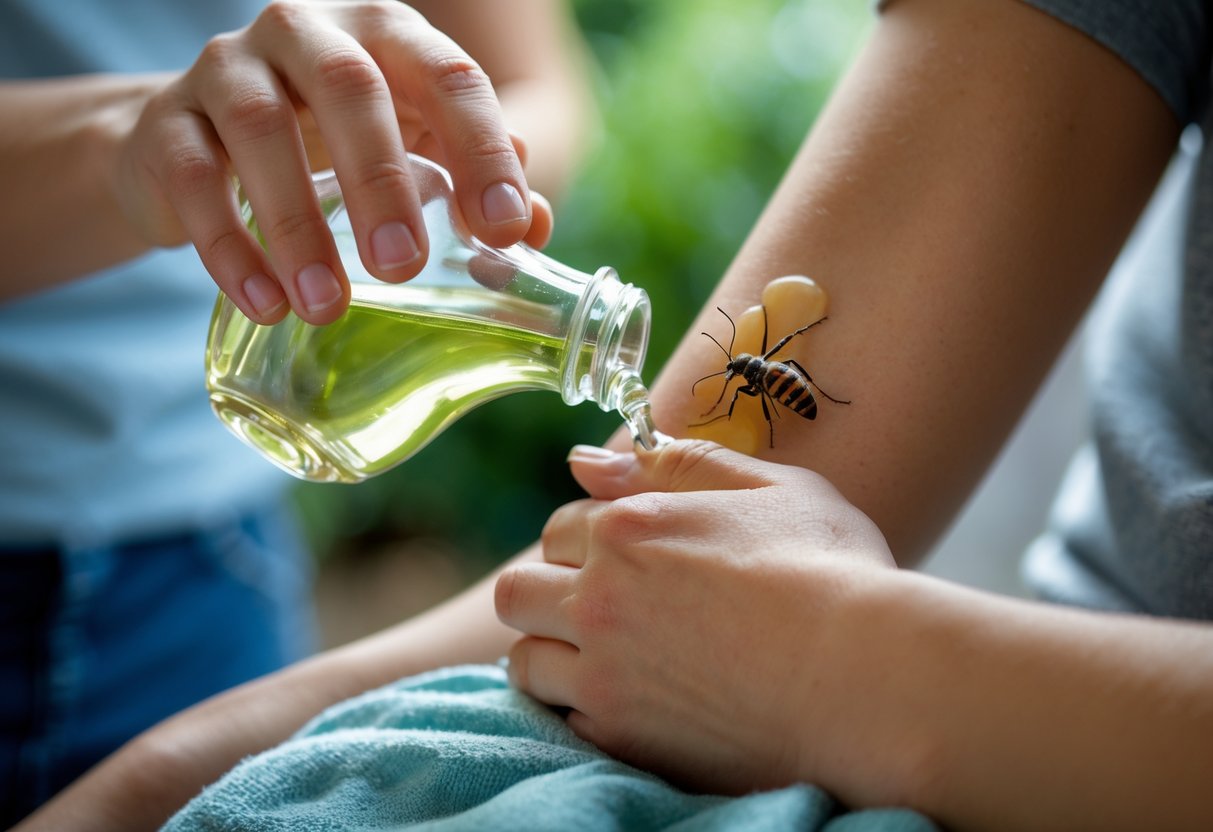
Not every sting reacts the same way to vinegar, so you’ll want to know when it’s actually helpful. Vinegar works best on stings from insects with alkaline venom, like wasps, and sometimes bees, but it won’t do much for spider or tick bites. Knowing that can save you some hassle and discomfort.
You don’t need anything fancy—just plain old vinegar and a little attention. Here’s how to use vinegar safely and properly for certain stings.
When to Apply Vinegar: Types of Stings and Scientific Rationale

Vinegar can help with some stings, but you’ve got to know what stung you. It’s mostly useful for stings with alkaline venom. Picking the right vinegar and using it the right way can ease pain and itching.
Wasp Stings and Vinegar’s Neutralizing Effect
Wasps inject alkaline venom into your skin. This venom has a pH above 7.0, which is what causes that burning and swelling.
Vinegar—whether it’s white or apple cider—brings acidity to the mix. When you dab it on a wasp sting, the vinegar can help neutralize the venom.
Pour vinegar over the sting for at least 30 seconds. That can calm down the irritation and slow the venom’s effect a bit.
It won’t fix everything, but it’s a handy way to take the edge off. If you get stung by a wasp, you can try this home remedy right away.
Jellyfish Stings and the Role of Vinegar
Some jellyfish stings leave behind tiny stinging cells, called nematocysts, in your skin. Those little cells keep pumping out venom until you stop them.
Vinegar actually shuts down the nematocysts, so they stop firing. If you get stung by a jellyfish—especially the types common in your area—rinse the spot with white vinegar.
Just pour it over the sting. Don’t use fresh water, though, since that can set off even more stinging.
Vinegar won’t clear out all the venom, but it keeps things from getting worse. If you can, try to figure out what kind of jellyfish stung you, so you know you’re using the right fix.
Bee Stings: Why Vinegar Is Not Ideal
Bee stings are a bit different. Their venom is acidic, not alkaline.
So, putting more acid (like vinegar) on top doesn’t really help much. Instead, a baking soda paste—since it’s basic—can do a better job of calming things down.
Vinegar might clean the sting or help prevent infection, but it’s not the best move for bee stings. If a bee gets you, pull out the stinger fast and use baking soda or just cold water for relief.
If vinegar is all you’ve got, you can use it, but honestly, it’s not the top pick for bee stings.
For more info, check out this guide on when to apply vinegar.
How to Safely Apply Vinegar to a Sting

If you’re treating a wasp or other insect sting with vinegar, start by getting the area clean. Pick the vinegar you’ve got, and use it carefully to help with pain or swelling.
Preparing the Sting Site
Wash your hands before you touch the sting. Use mild soap and cool water to gently clean the skin around the sting.
This helps cut down your risk of infection and gets rid of any dirt or leftover venom. If you see a stinger, try to get it out quickly with tweezers or by scraping with your fingernail.
Don’t squeeze it, or you might push more venom in. Pat the spot dry with a clean towel or some paper.
A slightly damp surface helps vinegar work, but don’t soak it, or you’ll water down the vinegar too much.
Step-by-Step Vinegar Application Methods
Grab a cotton ball, swab, or a small cloth and soak it with vinegar. Press it gently onto the sting for 10 or 15 minutes.
You can repeat this every few hours if you need to. If you’d rather, make a vinegar compress by soaking a clean cloth and laying it over the sting.
That keeps the area moist and can help with itching or swelling. Don’t rub vinegar into broken skin or open wounds, though—it’ll sting and could irritate things.
If you have a lot of stings or big areas to treat, check with a doctor before using vinegar everywhere.
Choosing Between Apple Cider and White Vinegar
Both apple cider vinegar and white vinegar can help with wasp stings because they’re acidic.
Most people grab white vinegar since it’s everywhere, cheap, and doesn’t really smell like much.
Apple cider vinegar might feel a bit softer on sensitive skin. Some folks like that it has a few nutrients that could help healing, though opinions vary.
The scent of apple cider vinegar is definitely stronger—and honestly, not everyone loves it.
The acidity matters most, so just use whatever real vinegar you’ve got nearby. Double-check the label to avoid cleaning mixes or anything flavored.


