
Ever spotted a fuzzy bee buzzing around some flowers and wondered whether it’s a bumblebee or a honey bee? Bumblebees are bigger and hairier, while honey bees are smaller and look sleeker. That’s probably the easiest way to tell which one you’re looking at.
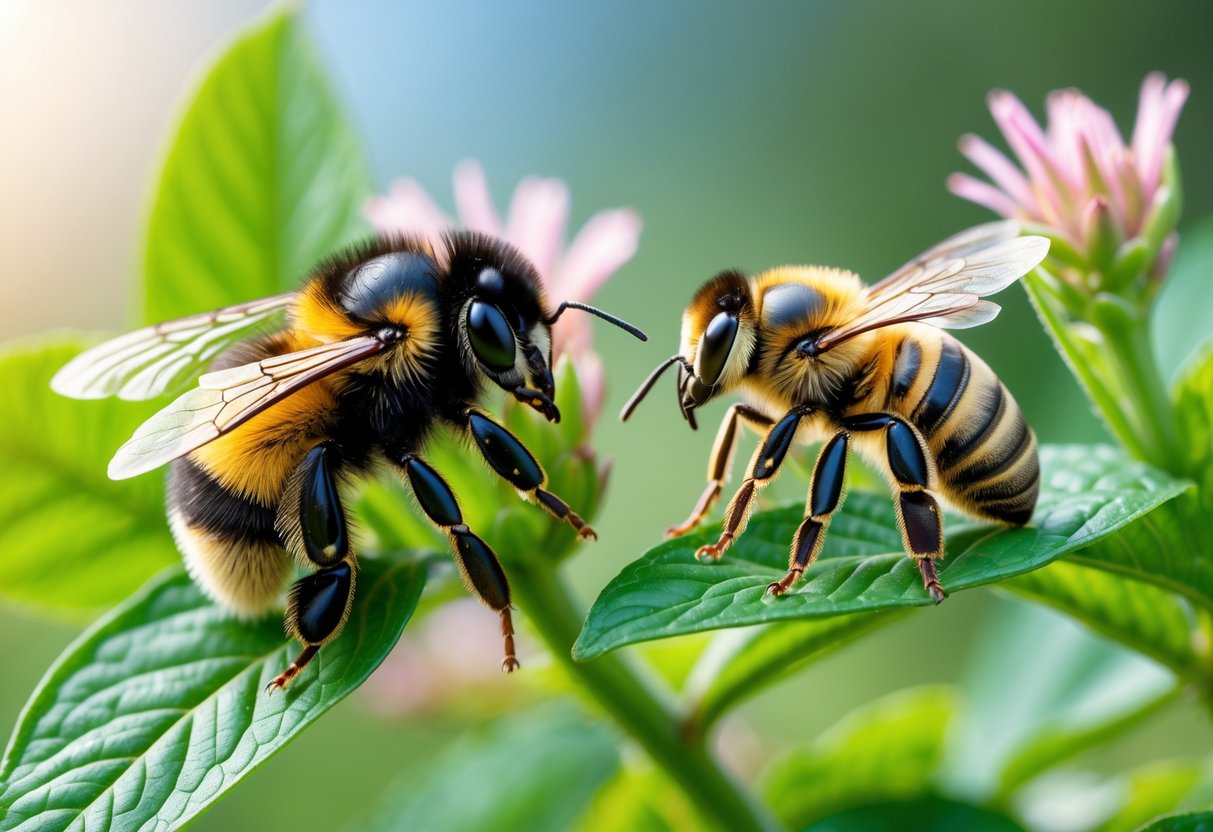
Beyond appearances, these bees have totally different homes and lifestyles. Honey bees build large, organized hives and make a lot of honey—sometimes the very same honey you might eat.
Bumblebees, on the other hand, live in much smaller nests and don’t make nearly as much honey. If you know these basics, you’ll start to see just how unique each type is.
You’ll notice differences in how they act, too. Bumblebees tend to move slower and aren’t as aggressive.
Honey bees are more social and seem to work together all the time. Curious about how these differences shape their lives and maybe even your backyard? There’s a lot to learn about these two important bees.
If you want the full scoop, check out Bumblebee vs Honeybee: The 8 Key Differences Explained.
Key Differences Between Bumblebees and Honey Bees

You’ll spot plenty of differences in how these bees look and live. Their behaviors around honey making and nest defense stand out, too.
If you pay attention to these details, you’ll get better at telling them apart—and maybe even appreciate their roles a bit more.
Physical Appearance and Size
Bumblebees look bigger and fuzzier than honeybees. You’ll see a round, robust body with thick hair that almost looks like soft fuzz.
They usually have black bodies with yellow or orange stripes.
Honeybees are slimmer and smaller. They don’t have as much hair, and their bodies show off brown or amber tones with lighter stripes.
Bumblebees lumber along with slow, heavy flights, while honeybees zip around quickly and fly in straight lines.
If you’re watching bees in your garden, these clues make it pretty simple to tell which is which.
Nesting Habits and Colony Structure
Bumblebees nest mostly underground, often in old rodent holes or thick patches of grass. Their colonies stay small, usually just a few hundred bees.
Honeybees build their hives above ground—in hollow trees or those man-made boxes beekeepers use. Their colonies get huge, sometimes with tens of thousands of bees.
Inside a honey bee hive, you’ll find a clear division of roles: workers, drones, and a queen.
Bumblebee colonies feel less structured, and with fewer workers, their daily life just runs differently.
Honey Production and Storage
Honeybees crank out large amounts of honey. They make enough to feed the colony all year and even leave extra for people to harvest.
Bumblebees don’t produce as much. They store just a bit to get the colony through short spells of bad weather.
Their nests only last for one season, so bumblebees don’t bother with big honey stores.
Honeybee hives, though, can stick around for years, which means lots of stored honey to survive the winter.
Sting and Defense Mechanisms
When a honeybee stings, its barbed stinger gets stuck in your skin. The bee can’t pull it out and dies soon after.
Bumblebees have smooth stingers, so they can sting more than once and survive. Still, they usually only sting if you get too close or mess with their nest.
Honeybees don’t go looking for trouble, but they’ll defend their big hives fiercely.
Bumblebees tolerate people a bit more, but they’ll protect their nests if they have to.
If you know how these bees behave, it’s easier to stay safe around them.
Want more details? Check out this guide on key differences between bumble bees and honey bees.
Roles in Pollination and Human Interaction

Both bumblebees and honey bees help plants grow, but they go about it in different ways. Their social lives and how people keep them differ, too.
Pollination Techniques and Effectiveness
Bumblebees use something called buzz pollination. They shake their bodies to knock pollen loose—especially from flowers that need a little extra help.
This makes bumblebees great at pollinating crops like tomatoes and blueberries.
Honey bees don’t buzz pollinate. Instead, they gather pollen and nectar, and their huge hives mean they can visit tons of flowers each day.
That’s why honey bees work so well for crops like almonds and apples.
Both types of bees help pollinate wild plants and crops, but bumblebees handle the tough flowers, while honey bees cover a lot of ground.
Lifespan and Social Behavior
Honey bee colonies have thousands of workers, plus a queen and drones. These hives keep going year-round, and honey bee workers live about six weeks.
The queen can live for years. Honey bees run on a strict hierarchy, working together to keep everything running smoothly.
Bumblebee colonies, though, are smaller and only last for one season. The queen hibernates through winter and starts fresh each year.
Workers don’t live as long, and there aren’t as many bees in each nest.
Honey bees are known for their organized routines and clever ways of communicating. Bumblebees seem a bit less busy—they just focus on getting through the season.
Beekeeping and Human Uses
People mostly choose honey bees for beekeeping. You can get a lot of honey from their hives and collect beeswax from the honeycombs.
Beekeepers also use honey bees to pollinate big farms. Still, honey bees deal with threats like the Varroa mite, which hurts their numbers and makes honey production tricky.
Bumblebees don’t usually make enough honey for people to keep them just for that. Sometimes, though, growers raise bumblebees in greenhouses because they’re great for buzz pollination.
Africanized bees? They’re a type of honey bee, but they act more aggressive and can be tough to handle. Carpenter bees live wild and don’t bother with hives, but they can mess up wooden structures.
When you look at all these roles, it’s honestly kind of impressive how each bee type helps with food growth. Beekeepers work hard to keep their bees healthy. If you want to dig into how honey bees and bumblebees handle pollination differently, check out honey bees vs bumble bees explained.


