
You’ve probably spotted both bumblebees and honey bees darting around flowers, but wow, they’re pretty different once you look closely. Bumblebees are bigger, rounder, and usually set up their nests underground. Honey bees? They’re smaller, slimmer, and prefer organized hives above ground. These quirks shape how each bee lives and works. If you’re curious about their role in nature, it’s actually kind of fascinating.
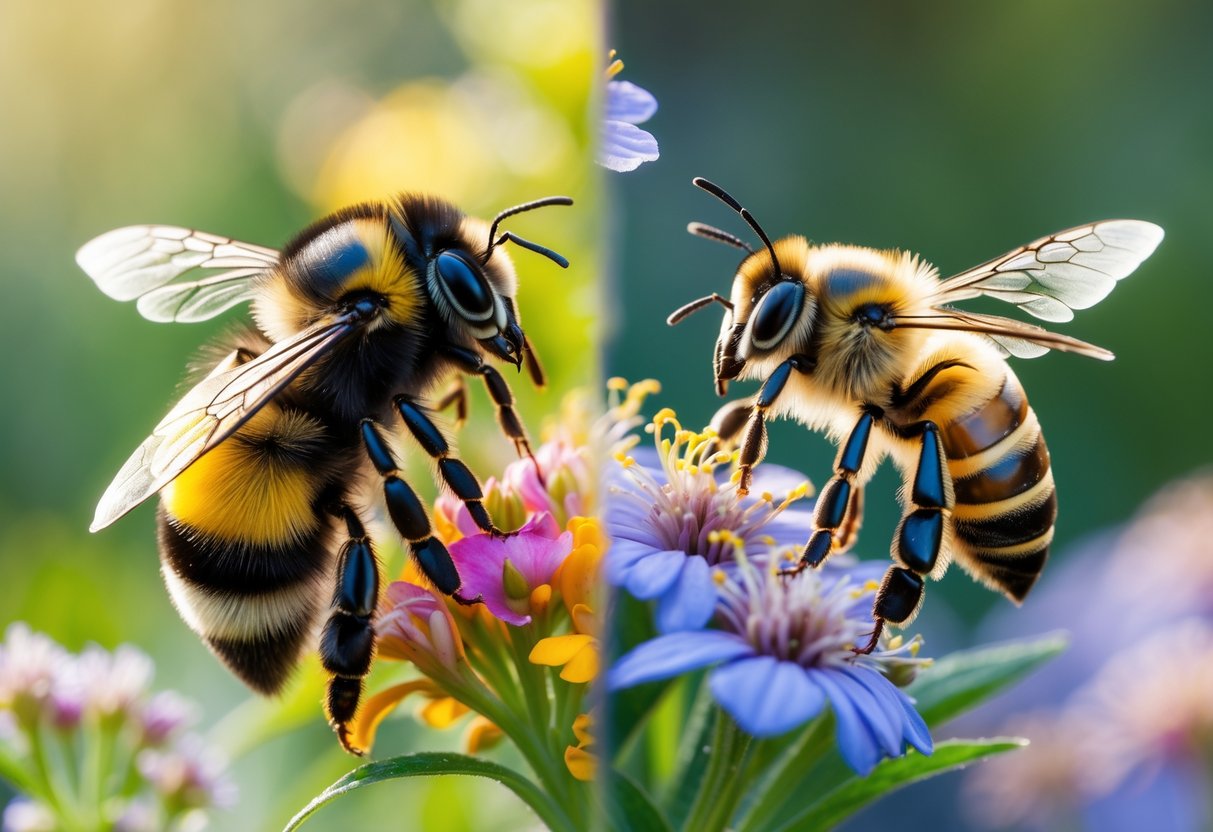
If you pay attention, you’ll see honey bees living in huge colonies that last all year. They’re super social. Bumblebees, though, keep smaller nests that usually don’t survive the winter.
Learning about these bees gives you a better sense of how pollinators keep plants growing. Whether you’re into gardening or just like watching bees do their thing, knowing the difference can change how you see them. Want more detail? Here’s a guide on the differences between honey bees and bumble bees.
Key Differences Between Bumblebees and Honey Bees

You can spot some obvious differences in how these bees look, where they build their homes, and how much honey they whip up. These details make it a lot easier to tell them apart.
Physical Appearance and Size
Bumblebees? They’re chunky and round, with bodies covered in thick fuzz that helps them haul pollen around. Honey bees look smaller, more slender, and have less hair.
Bumblebees almost look like little flying pom-poms, often with bright stripes. Honey bees have a sleeker look, usually golden-brown with dark stripes. If you’re ever unsure, just check how fuzzy and big the bee is—bumblebees always look fluffier and bulkier.
Nesting Habits and Colony Structure
Honey bees build big, complicated nests called hives. You’ll find these in tree hollows or in beekeepers’ boxes. Inside, they make neat rows of honeycombs to store honey and raise new bees.
Their colonies can have tens of thousands of bees, all working under a queen with clear roles for workers and drones.
Bumblebees do things differently. They build much smaller nests, often underground or hidden in thick grass. Their colonies usually only have a few hundred bees.
They don’t fuss with honeycombs. Instead, they make simple nests that fit their needs.
Honey Production Comparison
Honey bees are famous for their honey. They stash away loads of it in their hives, and people harvest it, too. This big stash keeps the colony alive during winter.
Bumblebees make honey, but way less—just enough for the colony to eat right away. Because their nests are smaller and not as organized, you won’t find bumblebee honey jars at the store.
If you want to dig deeper into these differences, here’s a guide on bumblebee vs honeybee key differences.
Behavioral and Ecological Differences

Bumblebees and honey bees act differently, and each has a unique job in nature. They pollinate plants in different ways, defend themselves with different tactics, and play their own roles in beekeeping.
Pollination Techniques and Efficiency
Bumblebees are champs at pollinating thanks to something called “buzz pollination.” They shake their bodies to knock pollen loose, especially from plants like tomatoes and blueberries. That’s pretty cool, right?
Honey bees collect pollen by brushing it onto their legs and hauling it back to the hive. They travel in big groups and visit tons of flowers each day, spreading pollen across wide areas.
Both types are important pollinators. Bumblebees usually handle cold or wet weather better, though. Honey bees like it warm and sunny before they get to work.
Stinging and Defense Mechanisms
Honey bees have a barbed stinger. If one stings you, the stinger gets stuck, and the bee dies afterward. It’s a one-time thing, really just for defending the hive.
Bumblebees have smooth stingers. They can sting more than once and don’t die from it. Still, they rarely sting unless you really bother them.
If you’re worried about getting stung, you’ll probably find bumblebees less aggressive. Honey bees defend their home more fiercely, especially if you’re near their hive.
Role in Ecosystem and Beekeeping
Beekeepers usually manage honey bees for honey and crop pollination. These bees live in big, permanent colonies. Pests like varroa mites hit honey bee populations pretty hard all over the world.
Bumblebees, on the other hand, stick to smaller colonies and mostly do their own thing in the wild. People rarely keep them, but they’re great at pollinating wildflowers and certain crops that honey bees just can’t handle as well.
Both honey bees and bumblebees help ecosystems by pollinating plants. Still, honey bees play a bigger part in agriculture because of their numbers and the way people manage their hives. Bumblebees bring more diversity and make pollination steadier, which honestly keeps the environment in better shape.


