
Ever spot a tiny fawn lying perfectly still and feel that urge to scoop it up? Baby deer lie down and freeze because this hiding trick keeps them safe from predators while their mom’s off foraging.
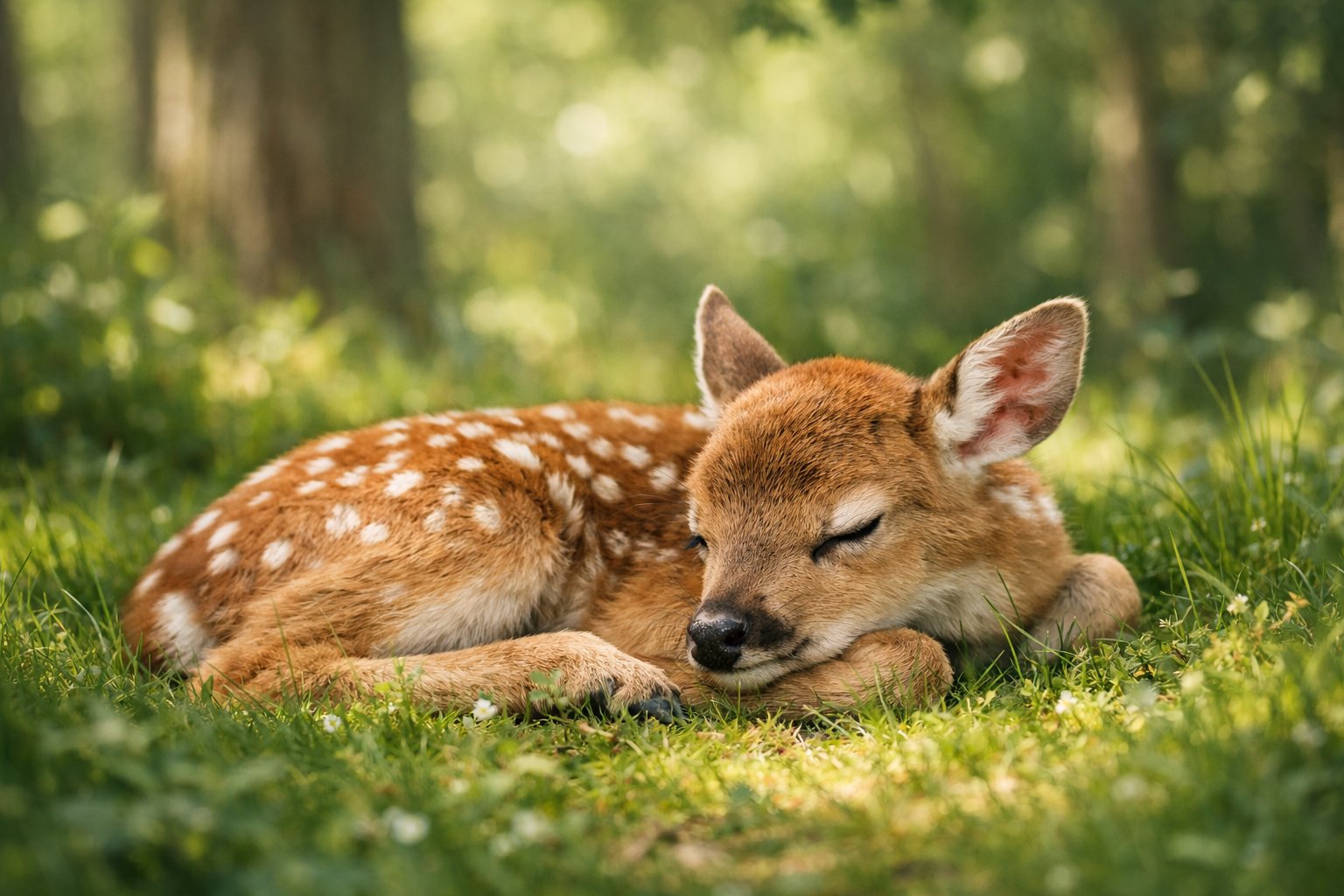
Their spotted fur, low scent, and instinct to freeze all work together to make them nearly invisible. I’ll walk you through how these things help, plus what you should do if you stumble across a fawn.
Why Do Baby Deer Lay Down?

Fawns lie down to hide, stay nearly scentless, and wait for their moms to come back. This lowers the odds that predators like coyotes, bobcats, or foxes will find them.
Instinctive Survival Strategy
When a newborn fawn senses danger, it just freezes and tries not to move a muscle. You’ll often see one tuck its legs and press its head to the ground to stay even more still.
That “freeze” move makes it so much harder for predators to spot the fawn. Newborns can’t outrun much at first, so hiding is really their only option.
For the first week or two, they spend most of their time bedded down alone while their mom searches for food. Staying motionless helps slow their breathing and heart rate, which makes them even harder to detect.
Camouflage and Scent Protection
Fawns come with those white spots that look a lot like dappled sunlight on the ground. If one’s lying in tall grass or brush, those spots break up its shape and make it tough to see.
This camouflage works best if the fawn doesn’t move at all. Moms help by licking their babies clean and eating the afterbirth, which keeps the fawn’s scent super low.
That way, even if a curious fox or coyote walks by, it might not notice anything. In those first few days, a fawn barely smells like anything at all.
Role of the Mother Deer
Mother deer leave their fawns hidden while they go off to eat. They’ll come back a few times a day to nurse and sometimes move the fawn to a new spot.
This helps keep predators from following the adult’s scent trail right to the baby. If you find a fawn alone, it’s best not to touch it.
Your scent can attract predators or make the mom stay away. If a fawn looks hurt, is in real danger, or you know the mother has died, reach out to a licensed wildlife rehabilitator or local authorities.
Differences Between Deer Species
Not all deer act the same way. White-tailed and mule deer fawns are classic “hiders”—they’ll lie still for days after being born.
You’ll see this in lots of places where these species live. Some other big hoofed animals, like certain antelope, get up and follow their moms almost right away.
Even among hiders, there are differences. Mule deer fawns might hide in brush, while white-tailed fawns use grassy spots.
Predators vary by region too, so depending on where you are, the main threats could be coyotes, bobcats, or foxes.
You can dig deeper into the fawn hiding strategy with the Utah wildlife fact sheet on newborn deer fawns (https://wildlife.utah.gov/pdf/mule_deer/mdwg-26_newborn_deer_fawns.pdf) or check out Biology Insights on why fawns stay still (https://biologyinsights.com/why-do-baby-deer-lay-down-a-survival-strategy/).
Other Deer Sleeping Habits

Where do deer actually sleep? How do they pick a spot, and why do they always seem so alert, even when resting?
These habits shift with the seasons, age, and what predators are around.
Where Do Deer Sleep?
Deer pick bedding spots that hide them but also let them escape quickly. Usually, they go for dense brush, thick grass, or a mix of shrubs and young trees near food.
Bucks like to bed down in thicker cover during the day to avoid people and predators. Fawns take shallow spots in leaves or grass and count on their camouflage.
In suburban yards, deer sometimes choose quiet corners near tree lines or under evergreens. Moose and bigger deer use similar tricks but need more space and deeper cover.
You can spot fresh bedding by looking for flattened grass, droppings, and little trails that lead to food.
How Deer Sleep and Bedding Down
Deer usually bed down by folding their legs under their bodies and staying super still. Sometimes, they’ll doze standing up so they can run if they have to.
Fawns especially can lie perfectly still for hours, which—along with those spots—keeps them hidden. Does leave their fawns hidden while they look for food, then come back to nurse.
When bedding, deer usually face open space so they can take off if needed. You’ll notice they pick bedding near food, water, and escape routes—not far from what they need.
If you come across a fawn alone, just leave it be. Most of the time, the mom’s nearby, and a wildlife rehabilitator would tell you the same.
Deer Sleep Cycle and Alertness
Deer sleep in short bursts throughout the day and night. They’re most active at dawn and dusk, since they’re crepuscular.
Most adults only manage a few hours of sleep daily. Their REM periods are brief.
This sleep pattern lets them feed at night and stay pretty alert during daylight. It’s honestly kind of impressive how well they adapt.
Even when they’re lying down, deer keep their senses sharp. You’ll notice their ears twitching to catch sounds.
Their nostrils keep sampling the air for scent. Sometimes, one eye stays open, or they’ll jump up fast if they sense danger.
When people are around, deer change their sleep habits. They might bed down earlier or pick thicker cover in your yard just to avoid you.


