
Spotting a white deer can stop you in your tracks. Usually, you’re just seeing a rare genetic twist, like albinism or piebald coloring—not some supernatural omen. Still, the moment can feel almost otherworldly.
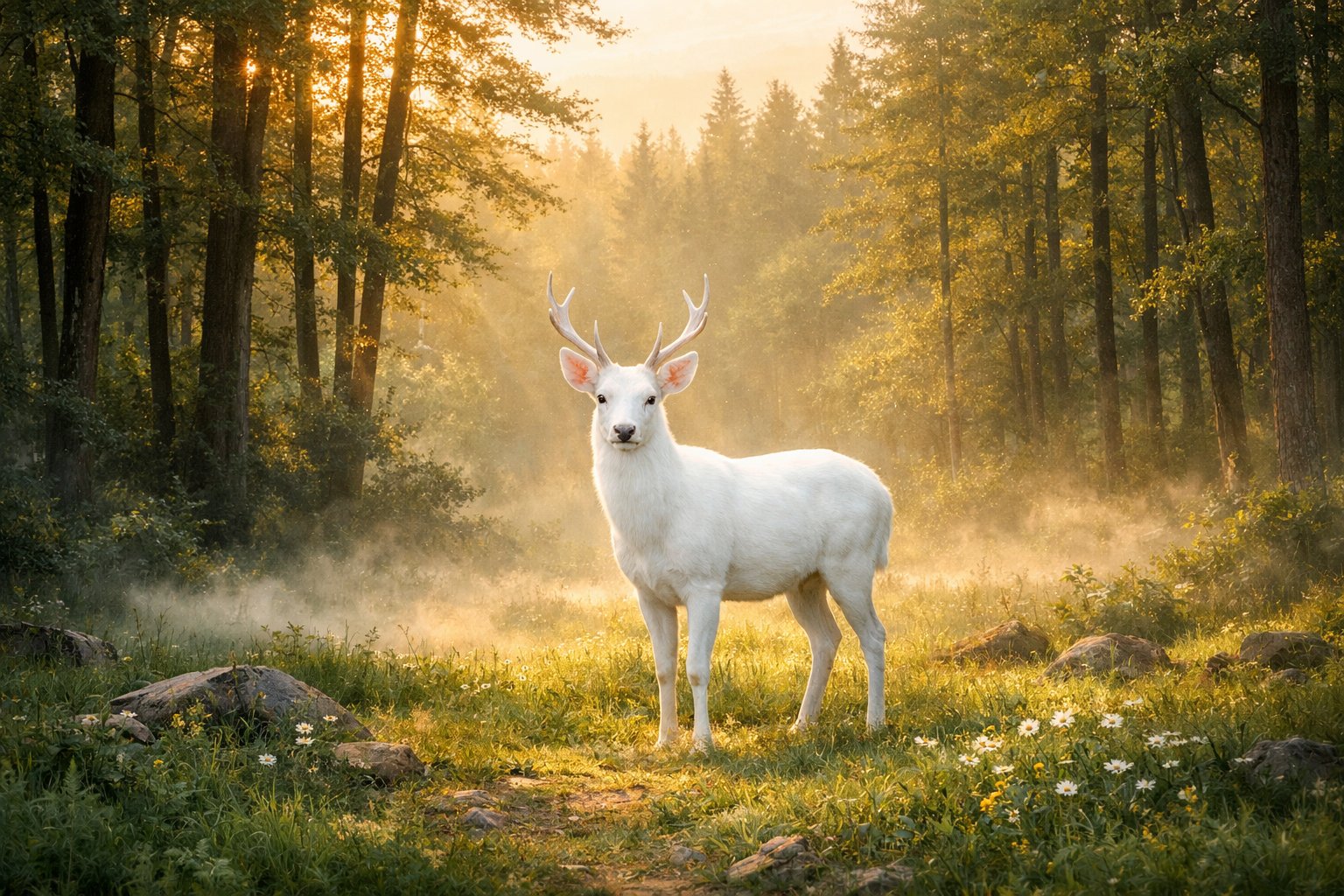
Let’s get into why white deer are so uncommon, what science says about their looks, and the ways people have given them special meaning over time.
You’ll find both the facts about how these deer happen and a bit of perspective on why seeing one can feel so significant.
As you read, expect short, straightforward explanations about the genetics behind white deer. You might even start thinking differently about what the moment meant to you.
The Science Behind White Deer Sightings

White deer show up for a few genetic reasons, and you’ll mostly find them in certain places.
Let’s look at how albinism and leucism change their color, what makes piebald patterns different, and just how rare these deer really are.
Albinism and Leucism: Genetic Causes of White Deer
Albinism happens when a deer can’t make melanin. An albino deer has no pigment at all in its fur, skin, or eyes.
You’ll notice an albino by its pink or reddish eyes, pale nose, pale hooves, and pure white coat. This trait usually comes from a recessive gene that both parents must carry.
Leucism, on the other hand, reduces pigment in the fur but not always in the eyes. A leucistic deer might keep normal eye color and show some patches of regular color on its coat.
Different genetic changes cause leucism, and it also makes survival tougher since the white coat stands out to predators and hunters.
Both conditions are rare in white-tailed deer and other species. Albino fawns especially struggle because their vision can be poor and they have zero camouflage.
If you spot one, it’s best to leave it be and not disturb the animal.
Piebald Deer and Other Rare Color Variants
Piebald deer have odd patches of white mixed with their usual brown fur. This pattern, called piebaldism, comes from mutations that mess with pigment during development.
A piebald white-tailed deer might have just a few white spots or be almost completely white, but their eyes and hooves stay dark.
Piebaldism isn’t the same as albinism or leucism. These deer tend to survive better than true albinos since they keep some camouflage.
Hunters and wildlife managers often spot piebald deer in population studies because the markings make them stand out.
You might see other rare color types too, like partial albinism or diluted pigment in moose. These pop up from different genetic quirks and aren’t tied to any one region.
If you get a photo of a strange-looking deer, experts can usually figure out what’s going on.
How Rare Is It to See a White Deer?
Catching sight of a true albino deer is incredibly rare. Most estimates put albino animals at super low numbers since the gene has to come from both parents.
Leucistic and piebald deer show up a little more often than albinos, but they’re still not common.
White deer don’t have it easy. Predators spot them quickly, and they can stand out even more in snow or thick cover.
Some areas do have higher numbers, usually because small, isolated deer populations allow those rare genes to pop up more.
Your chances depend on things like how many deer live nearby, how much hunting happens, and whether the herd is isolated.
Places with protected herds or unique genetics see more sightings than big, connected populations.
Regions Where White Deer Are Found
You’ll find white deer all over North America, but some spots report them more than others.
The Seneca Army Depot in New York, plus protected herds in Wisconsin and Michigan, are famous for white or piebald deer. Montana and California get reports now and then, but usually it’s just one animal, not a whole group.
Most U.S. sightings involve white-tailed deer, though you might spot odd color variants in other species like moose up north.
Protected lands, wildlife refuges, and places with little hunting pressure seem to host more white deer.
If you’re traveling to a known white deer area, local wildlife groups usually have records and tips for viewing. Keeping your distance helps these unique animals stick around for others to see.
What It Means to Encounter a White Deer

Spotting a white deer can feel special, but there are some real-world things to keep in mind. How you act matters for the deer and the community.
Cultural and Spiritual Views on Seeing a White Deer
A lot of cultures treat the white deer as a powerful symbol. In Native American and Celtic stories, it stands for purity, guidance, or sometimes a message from beyond.
People who see one often say they feel calm or inspired to reflect. Some folks even take it as a sign to make a big decision, while others just feel lucky or awestruck.
If you’re curious, you can check out more cultural meanings from sites like white deer symbolism.
Ethical and Legal Aspects of White Deer Encounters
Don’t disturb or feed the deer. In a lot of places, feeding wildlife is illegal—it changes animal behavior and spreads disease.
Check your local rules before you do anything. Never try to capture or keep a white deer.
Laws protect wild deer and their habitats. If you see an injured deer, call wildlife rescue or animal control.
Respect any private property and posted signs. Getting too close can stress the deer and put you in danger if it runs.
What to Do If You See a White Deer
Stay calm and keep your distance. Use binoculars or a camera’s zoom if you want a closer look or a photo.
Move slowly and quietly. Quick movements might scare the deer into a road or a dangerous spot.
If you’re with others, ask them to stay still and keep voices down. Jot down where and when you saw the deer, and let your local wildlife office know if the animal looks sick or has odd markings.
Impacts on Deer Herds and Wildlife Observation
You might spot a white deer because it has leucism, albinism, or just carries a rare white coat gene. But honestly, just seeing one doesn’t mean the whole herd will suddenly look different.
Predators and curious people can change how these deer survive in the area. When more people show up, they often break up the herd’s usual routine.
Sometimes, deer get pushed closer to roads or wander onto private land. If you want to watch, try sticking to the trails and keep your group small.
Following Leave No Trace guidelines really does make a difference. Biologists keep an eye on small or isolated groups of white deer to see how their genes and numbers are holding up.
If you spot one, reporting it can actually help conservation efforts. Just try not to do anything that might mess with how the deer move or communicate.


