
Ever wondered how fast a deer swims when it suddenly plunges into water? Honestly, it’s quicker than most people guess. A healthy adult deer usually manages somewhere between 3 and 10 miles per hour, and in rare, frantic bursts, they can hit up to 15 mph. That means a deer running from danger might cross a river or lake a lot faster than you’d think—especially if it’s desperate to get away or just heading for safer ground.
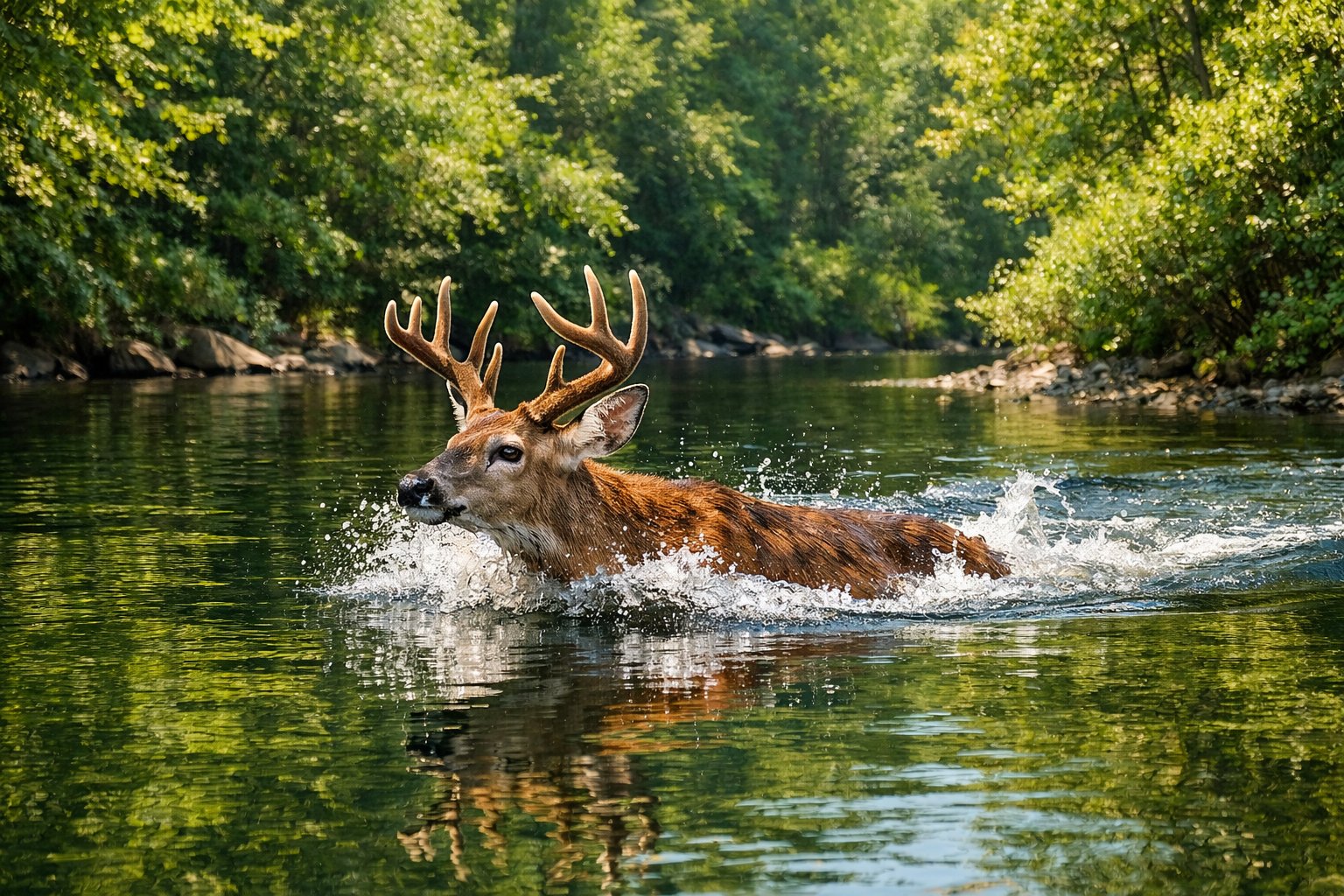
So, what really affects those speeds? Body size, the specific species, water current, and how fit or scared the animal feels all play a part. Some deer swim farther or faster than others, and you’ll see why in a bit. There are some neat examples and even a few surprising facts about which species go the distance. If you’re hoping to spot deer near water, these details might come in handy.
How Fast and How Well Can Deer Swim?

Deer can swim at pretty decent speeds and will cross rivers or lakes when they need to—whether they’re fleeing, looking for food, or just trying to reach an island. Their bodies actually help them stay afloat and keep moving, though young or stressed-out deer get tired much faster.
Average Swimming Speeds of Deer
Most healthy adult deer swim at about 4 to 8 miles per hour if the water’s calm. Species and condition matter a lot. Whitetail deer, for example, sometimes hit short sprints near 10 to 15 mph if they’re panicked, but honestly, that’s not something they can keep up for long.
Water slows them down, and they still need to breathe, so they can’t just power through nonstop. When a deer escapes a predator, it really digs in with its hind legs and stretches out. If a river’s got a current, that changes things—a 5 mph swimmer fighting a 2 mph current only makes 3 mph progress upstream.
Big antlers, a heavy coat, injuries, or even pregnancy can slow a deer down. A fit adult in the summer? That’s usually your fastest swimmer.
Physical Adaptations for Swimming
Deer rely on long legs and strong hindquarters to push through the water. Their swimming style actually looks a bit like bounding on land—lots of coordinated rear kicks and foreleg strokes for steering.
Their coat helps, too. The outer hairs trap air, which gives them a little extra buoyancy, and the dense underfur keeps their core warm, at least for short swims. Deep lungs and a broad chest let them take big breaths and hold them while crossing.
You’ll often spot a deer keeping its head low to cut through the water and keep its nose above the surface. Even when swimming, their eyesight and hearing stay sharp, so they can spot the shoreline or any threats and change direction fast.
How Far Can Deer Swim?
Most deer just cross rivers and ponds that are a few hundred yards wide. There are plenty of documented cases of deer swimming half a mile or even a full mile in calm water if they’re motivated. Some rare stories mention several-mile swims, usually when food’s scarce or they’re trying to reach an island, but that’s not the norm.
Distance really depends on water temperature, the weather, and how fit the deer is. Cold water drains their energy quickly, so they get tired faster and can’t go as far. Strong currents or rough water make things risky—deer can get exhausted or hypothermic and might not make it out.
Islands close to shore often draw pregnant does, who’ll swim short distances to find safer spots to rest. Those long-distance swims? They happen, but not nearly as often as the routine short crossings.
Swimming Capabilities of Baby Deer
Fawns can swim, but they’re nowhere near as strong or enduring as adults. A young fawn will paddle hard for a short stretch and can get across small streams or ponds close to the edge. If the current’s strong, though, the fawn might need help from its mother.
Fawns don’t have much insulating fur, so they lose body heat quickly. If you see a fawn in deep or cold water, it’s at risk of getting exhausted or hypothermic in just a few minutes. Most does avoid long swims until their fawns are older, or they stick to shallow spots where the footing is better.
Species Differences and Notable Deer Swimmers

Different deer species have their own quirks—body shape, leg length, and coat thickness all play a role. These traits change how far and fast each one can swim, and even why they bother to get in the water at all.
Korean Water Deer and Their Aquatic Skills
You’ll spot Korean water deer (Hydropotes inermis argyropus) near rivers and wetlands in Korea and parts of China. Their compact bodies and long legs make it easier for them to leap into water and power through currents.
They swim mostly to escape predators or reach reed beds for food. Their coats are thinner than deer from colder climates, so long swims in cold water wear them out faster.
Korean water deer usually cross short rivers or marshy channels, not big open stretches. If you watch one, you’ll see quick, low strokes and a fast dash onto the bank.
They rely more on short bursts of speed and buoyancy from their fur than on sheer endurance.
Chinese Water Deer: Swimming Behavior
Chinese water deer (Hydropotes inermis inermis) act a lot like their Korean cousins but have some local differences. You’ll find them in tidal marshes, rice fields, and freshwater wetlands.
They swim more often in places with islands and channels, sometimes moving between feeding spots at night.
These deer stick to short crossings—usually under a mile—and rarely venture far from shore. When you track them, you’ll notice they head straight for thick cover after leaving the water, using reeds to stay hidden.
Their swimming helps them escape danger and find food, but they’re not built for long migrations across open water.
Swimming Abilities of White-Tailed Deer
White-tailed deer (Odocoileus virginianus) show off the widest range of swimming habits in North America. You might see them crossing rivers, lakes, or even swimming to islands.
Adults can keep a steady swimming pace, and if they’re really motivated, they’ll push into higher speeds for a bit. Reports vary, but usually, they manage several miles per hour for short distances.
Whitetail fawns swim, too, but they don’t last as long in the water. Adults use swimming to dodge predators, move during hunting season, or get to food in hard-to-reach places.
Their two-layered coat helps with both buoyancy and insulation in cool water. Watch for those strong kicks and that classic head-high style when they cross bigger channels.
Vampire Deer and Other Unique Species
People sometimes toss around the term “vampire deer” when talking about odd folklore or confusing certain species, but it doesn’t actually mean there’s a common deer out there that drinks blood.
If you’re thinking of tiny, unusual deer like muntjacs or some rare island types, their swimming skills can really differ.
Some smaller species just avoid deep water because they can’t float well, but others will cross short channels if they’re after food or looking for a mate.
When you spot a unique local deer, pay attention to its body size, how strong its legs look, and where it lives.
These details usually tell you more about how well it can swim than whatever people call it.
If you want the real scoop, check out regional wildlife reports or field notes—those often mention island crossings or how these deer escape predators.


