
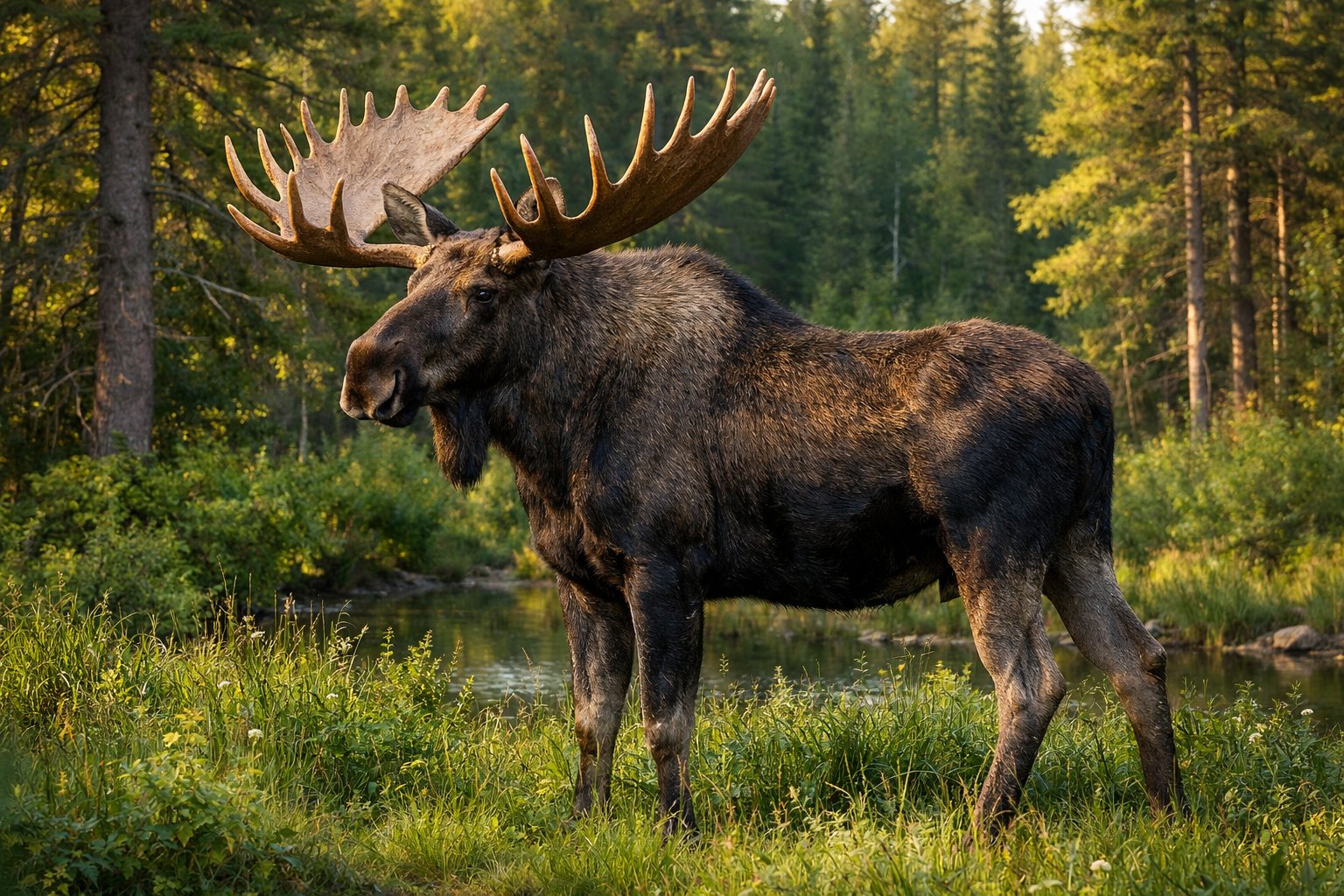
If you’re curious about the biggest living deer, look no further than the moose. This massive animal can tip the scales at over 1,500 pounds and stand taller than 6 feet at the shoulder.
Want a quick answer? The moose takes the crown as the largest living deer. The extinct Irish elk matched it in body size and absolutely dwarfed it in antler spread.
Stick around and you’ll see how the deer family stretches from tiny forest dwellers to these hulking giants.
We’ll also check out some other large deer, talk about how scientists decide which is “biggest,” and peek at what made prehistoric giants like the Irish elk so unforgettable.
The Largest Deer: From Living Giants to Prehistoric Titans

Let’s break down which living deer grow the tallest and heaviest.
We’ll also see which populations produce true giants, and which extinct deer sported the wildest antlers ever found.
Moose: Today’s Biggest Deer Species
The moose (Alces alces) stands as the tallest and heaviest deer species around today.
Adult males usually reach 4.6–6.9 feet at the shoulder and weigh anywhere from 840 to 1,540 pounds, depending on where you find them.
You’ll spot the biggest moose in chilly places rich with food.
Their broad, palm-shaped antlers can stretch over 6 feet across in the largest bulls.
Moose grow new antlers each spring and drop them in winter.
How big their antlers get depends a lot on age and what they eat.
Females don’t have those huge palmate antlers and stay smaller overall.
A few things stand out about moose:
- They’ve got tall legs, perfect for wading through wetlands.
- Their shoulders are humped, and their noses are long.
- Eating leaves, twigs, and water plants helps fuel their size.
Alaskan Moose and Record-Breaking Individuals
Alaska produces some of the world’s biggest moose.
Bulls there often weigh more than 1,300 pounds and can stand 7 feet at the shoulder.
The state claims many records for antler size, including beam length and palm width.
Some bulls have antlers nearly 6.5 feet wide and skulls with huge beams.
Hunters and museums have documented these giants, though most adult Alaskan bulls are a bit smaller than the record-holders.
Alaska’s long plant growing season and cool climate help moose reach these sizes.
When you compare moose to other deer, Alaskan bulls lead in both weight and antler mass.
Their huge antlers are all about showing off and winning fights during the rut, not for eating.
Irish Elk and Other Extinct Giant Deer
The Irish elk (Megaloceros giganteus) is the most famous extinct giant deer.
You can find its fossils from Ireland all the way to Siberia.
Some of the latest bones date back around 7,700 years.
Adult Irish elk stood about 6.5 feet at the shoulder and carried antlers up to 12 feet wide.
Those antlers are the biggest any deer ever grew, likely thanks to sexual selection.
Peat bogs and other sites have preserved many skeletons and antlers in great shape.
The Irish elk belonged to the Cervidae family, but it isn’t closely related to today’s elk.
Its closest living relative is probably the fallow deer.
Other extinct deer like Sinomegaceros and Praemegaceros also reached massive sizes and grew wide antlers.
This shows that several deer lineages evolved to be giants at different times.
If you want more details, check out the Irish elk on Wikipedia.
Other Impressive Large Deer Species in the World

Some deer reach impressive weights, surviving in cold tundra or high plateaus.
They often rely on very specific habitats.
Many of these species face threats like hunting, shrinking habitats, and changes in land use.
You’ll find conservation and reintroduction programs working to help several of them.
Elk and Wapiti: Majestic Rivals of the Moose
You’ll find elk (or wapiti, Cervus canadensis) in open forests and mountain valleys across North America and parts of Asia.
Big bulls can reach around 1,300 pounds and stand over 5 feet tall at the shoulder.
Their bugling calls echo during the rut, attracting mates and warning off rivals.
Look for their pale rump patch and shaggy neck manes in the fall.
Hunters and habitat changes pushed some herds down in the past.
Now, better management and reintroductions have helped elk numbers bounce back in many regions.
If you visit Colorado or the Greater Yellowstone area, you might see huge groups during the breeding season.
Reindeer and Caribou: Survivors of Harsh Environments
Reindeer and caribou (Rangifer tarandus) live in Arctic tundra, boreal forests, and some mountain ranges.
Tundra caribou migrate hundreds of miles in massive herds, while forest types stick closer to home.
Large males in some subspecies can weigh over 700 pounds.
Both males and females grow antlers, which help them dig for food under snow.
Their hooves work like snowshoes, and their thick fur keeps them warm in brutal cold.
Many Indigenous peoples depend on domesticated reindeer for food and transport.
Climate change, development, and predators all affect caribou migrations and populations.
Conservation efforts often focus on protecting calving areas and migration routes.
Red Deer, Sambar, and Other Notable Species
You’ll spot red deer (Cervus elaphus) roaming across Europe and Asia. Sambar (Rusa unicolor) show up mostly in South and Southeast Asia.
Red deer bulls can top 1,000 pounds. They tend to stick to mixed woodlands or wander open moors.
Sambar are even heavier, with some big males hitting over 1,200 pounds. They seem to prefer dense forests and rainforests, browsing shrubs and grasses as they go.
Other large deer worth mentioning? Thorold’s or white-lipped deer (Cervus albirostris) live up on the Tibetan Plateau. Barasingha (Rucervus duvaucelii) hang out in Indian wetlands. Pere David’s deer survive in managed reserves.
Conservation stories look a bit different for each species. Hunters and habitat protection help red deer populations. Sambar, on the other hand, struggle with deforestation and habitat fragmentation. Thorold’s deer really depend on preserving those high-altitude habitats.
If you care about these deer, you might want to support protected areas. Wetland restoration helps barasingha, and wildlife corridors keep migratory species like caribou connected to their calving and wintering grounds.


