
Ever wandered through the woods and wondered which animals make deer genuinely nervous? Deer mostly fear animals that hunt them—like wolves, coyotes, mountain lions, and sometimes bears—since those predators can kill adult deer or fawns. Let’s dig into which predators matter depending on where you live and how their presence shifts deer behavior.
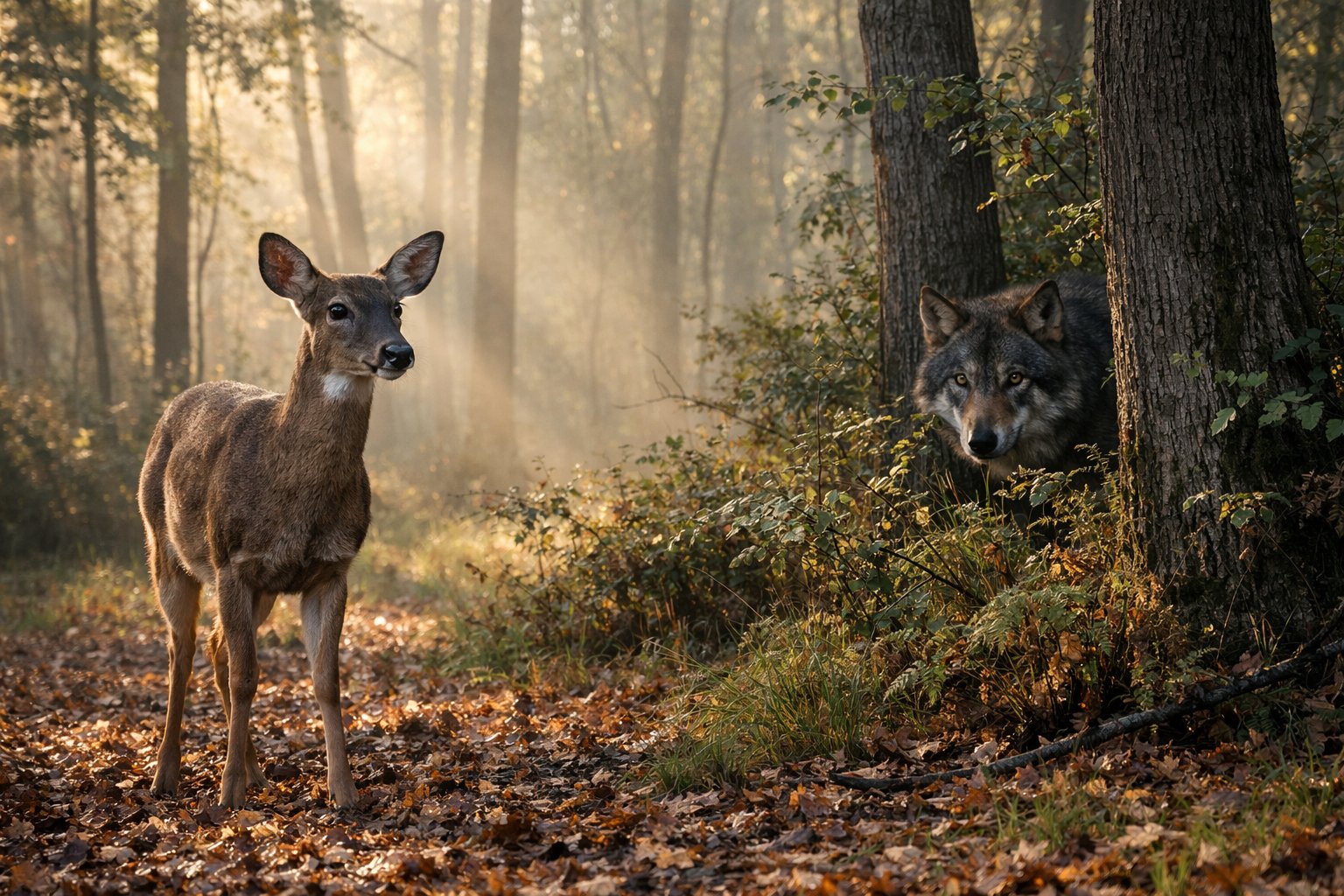
Deer spot danger using sharp hearing, a strong sense of smell, and a knack for noticing sudden movements. These instincts really shape where they eat and when they move.
We’ll look at common predators, how deer react, and what all this means for wildlife, pets, and even people who live near deer.
What Animals Are Deer Afraid Of?

Deer face real risks from larger predators and from animals that hunt their young. Some species pose the most danger, while others are smaller threats but still matter.
People also change deer behavior a lot, and fawns react differently than adults.
Most Feared Predators: Wolves, Coyotes, Cougars, and Bears
Wolves hunt in packs and often take down adult whitetails by working together. They usually target weak, old, or sick deer, but they’ll chase healthy animals too if the odds look good.
Coyotes, though smaller, adapt to all sorts of places. They mostly hunt fawns, especially in open fields or at the edge of the woods where cover is thin. Sometimes, in packs or pairs, coyotes overwhelm yearlings.
Cougars (or mountain lions) use ambush tactics. They stalk quietly, then pounce from cover, often killing deer with a strong bite to the neck. You won’t see cougar attacks in open spaces much, since they love heavy cover.
Bears—both black bears and grizzlies—act opportunistically. In spring, they feed on fawns and will scavenge adult deer carcasses. Bears don’t usually chase adult deer, but they become more of a risk during denning or when food gets scarce.
Lesser-Known Threats: Bobcats, Domestic Dogs, and Golden Eagles
Bobcats usually go after fawns and smaller deer species. You’ll spot bobcats in mixed forests, where they use stealth and quick sprints to catch young or weakened deer.
Domestic dogs sometimes stress and injure deer. Off-leash dogs chasing deer can cause panic, injury, and even death. It’s honestly best to keep dogs leashed in deer areas to avoid this mess.
Golden eagles and other big raptors threaten very young fawns. In open terrain, these birds swoop in and carry off tiny fawns if the mother leaves them too exposed. Birds of prey mostly affect newborns, not older deer.
Foxes rarely catch healthy fawns, but if food is scarce, they’ll take neonates. Even these smaller predators matter, since they influence where deer decide to bed down or feed.
Humans as Super Predators: The Impact on Deer Behavior
People change deer behavior more than any other predator. Hunting, habitat loss, and roads force deer to move differently and pick new spots.
Whitetails often go nocturnal when people are around a lot. Your presence triggers strong flight responses in deer.
They quickly learn to avoid places where you hunt, hike, or leave dog scent. People also affect predator balance—if you remove wolves or coyotes, deer numbers can spike and even change the landscape.
Feeding deer creates new risks. When deer come to feeders, they get less wary and more likely to get hit by cars or catch diseases. Managing food sources and keeping pets under control actually helps.
Fear Responses in Fawns and Young Deer
Fawns mostly rely on hiding and staying still. Newborns spend hours curled up in the grass while their moms forage nearby.
This trick works for many predators, but not for birds of prey or persistent canines. Young deer just can’t outrun danger like adults can.
Coyotes, bobcats, and dogs are the most likely to catch them in those first weeks. Fawn mortality jumps in areas where cover is thin or the habitat’s all chopped up.
Does move fawns around a lot and pick dense bedding spots to keep them hidden. If you walk too close to bedding areas or let your dog wander, you can break this protection and expose fawns to predators.
How Deer Detect and Respond to Danger

Deer survive by using sharp senses, group signals, movement choices, and learned reactions. Their hearing, smell, and vision help them spot threats, warn each other, and pick safe places.
Let’s see how that works in real life.
Deer Behavior and Senses for Survival
Deer rely on hearing and smell first. Their big ears swivel to catch faint sounds, so a distant footstep or even a car hum can make them alert.
Their noses pick up human, dog, and predator scents long before you’d notice anything. Vision helps them spot movement, not so much detail.
At dawn or dusk, they see motion at the edges of their vision and freeze if they’re unsure. Sometimes you won’t notice them until they bolt.
Body language gives away fear. A raised head, focused ears, and tail flagging mean a deer feels threatened. Fawns hide and use their spots for camouflage, while adults run fast and zigzag to escape.
Alarm Calls and Group Responses
When one deer senses danger, it warns the others. You’ll hear a sharp snort—basically a loud nose blast—that tells the herd something’s up.
That snort, plus tail flagging, gets the group ready to flee. Deer also stomp or grunt quietly to share alarm.
Living in groups helps: more eyes and noses spot trouble sooner. If one deer bolts, the rest usually follow.
Social context changes things a bit. Does with fawns stay close and lead hidden escapes. Bucks might freeze and size up the risk before running.
In open areas, expect the whole group to bolt at once if something spooks them.
Avoidance Strategies and Habitat Selection
Deer pick spots that help them avoid surprise encounters. They love edge habitats—where woods meet fields—so they can feed and dash to cover quickly.
During hunting season, you’ll notice they skip open lawns during the day and stick to dense brush or conifers.
Wind direction matters. Deer move so that wind carries human or dog scent away from them. If you walk upwind, you’re way more likely to alert them.
Fencing and barriers change how deer move. Electric fences can stop deer from jumping, while tall non-electric fences just block them outright.
You can also try planting things like marigolds, mint, lavender, oregano, thyme, rosemary, or chives. Sometimes these discourage browsing, but honestly, results can vary.
Dealing With Unfamiliar Threats and Repellents
Deer figure out which things are dangerous, but honestly, they get used to stuff pretty quickly. Loud noises—like propane exploders, radios that turn on suddenly, or even banging pie pans—might startle them at first.
But after a while, they just tune out repeated sounds if nothing bad ever happens. If you want to keep them guessing, you’ve got to switch up the timing and type of noise.
Electronic gadgets? The results are kind of all over the place. Ultrasonic devices don’t really fool deer for long.
Motion-activated lights, wind chimes, and sprinklers that go off when something moves can help, but only if you move them around now and then. Sometimes, recorded predator calls will spook deer, but it’s usually just a short-lived scare.
Chemical and biological repellents can help cut down on browsing. Stuff like putrefied eggs, dried blood, Bobbex, or commercial sprays such as Liquid Fence all rely on strong smells to keep deer away.
You’ll get better results if you mix up the repellents and use them with physical barriers. No single trick works forever.
Try combining scare tactics. Pair a motion detector with a sprinkler and some noise for a bigger impact.
Keep changing where you put things and what you use. Deer are smart enough to figure out patterns, so don’t let them get comfortable.


