
Ever spotted a deer curled up in a snowy grove and wondered how it manages to stay warm—or even safe? Deer actually sleep in well-chosen bedding spots like thick conifer stands, dense brush, or the sheltered sides of hills. These places block snow and wind, letting them rest in short, alert intervals to save energy.
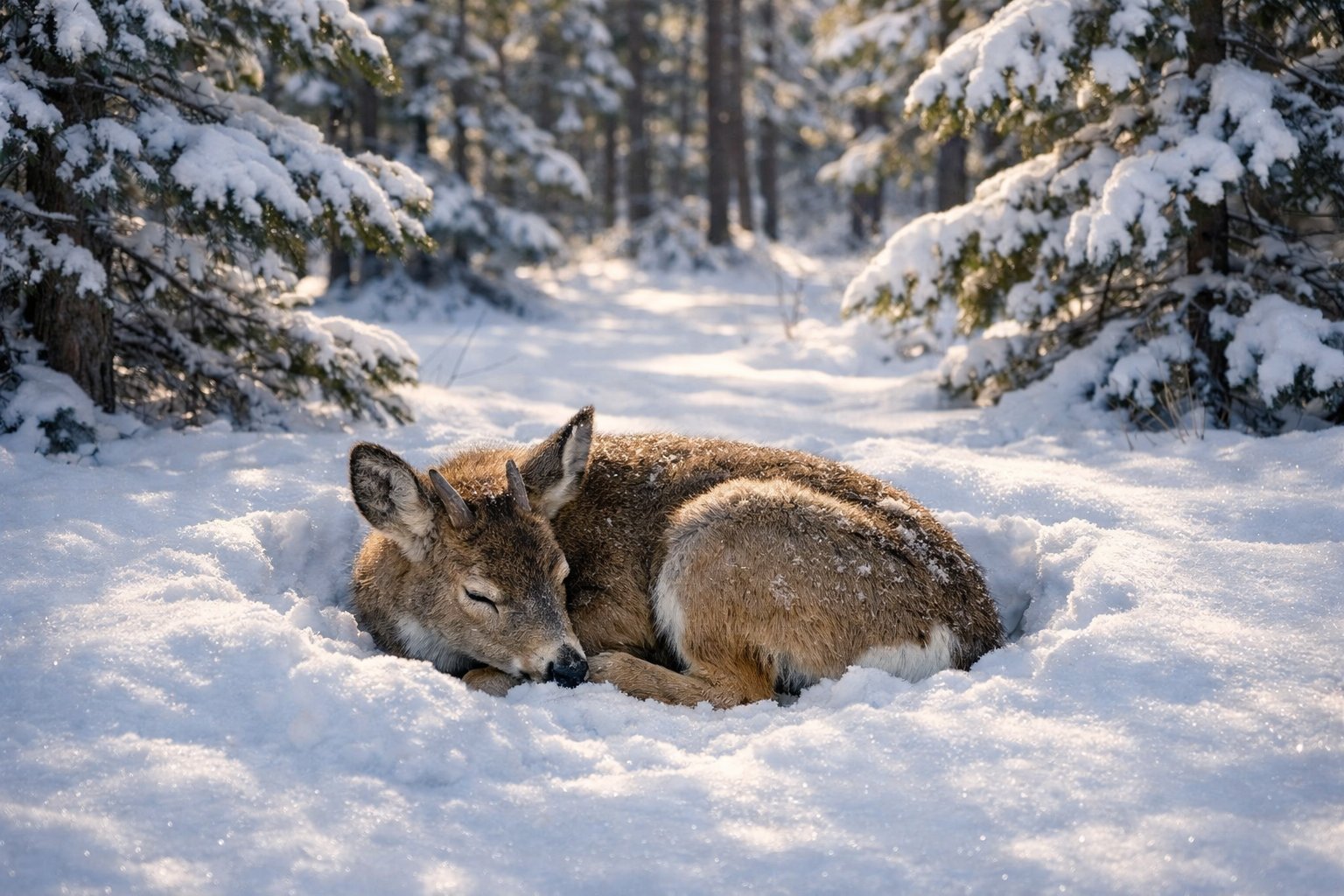
If you dig into how deer pick their winter beds, you’ll notice topography, sunlight, and food nearby all play a role. Their physical and behavioral tweaks for surviving deep snow and cold? That’s worth a look too.
Winter Deer Bedding Locations And How Deer Sleep In Snow
Deer choose bedding spots that cut the wind, trap whatever heat they can, and keep escape routes close. You’ll often find them tucked into evergreens, thick brush, or on slopes that offer shelter.
They don’t all bed the same way, though—bucks and does have their own preferences.
Coniferous Trees And Deer Yards
Coniferous stands like spruce and pine block wind and catch snow on their branches. White-tailed deer and mule deer often gather in these spots, called deer yards. Here, the canopy keeps snow shallower and the ground just a bit warmer.
Inside a yard, deer bed down in small depressions or right up against tree trunks. This shelter helps them out when the temperature drops. If you want a deep dive, check out this detailed explanation of where deer go in winter (https://iere.org/where-do-deer-go-in-the-winter/).
Thickets, Tall Grass, And Dense Brush
Thickets and brush offer close cover and a quick escape. Deer often pick tangled shrubs, tall grass edges, or willow patches near water for bedding. These spots keep them hidden from predators and cut down on wind chill.
When snow piles up, deer tuck their legs underneath and press their bellies to the ground. Dense vegetation stops drifting snow and creates a shallow, warmer pocket. This works for smaller deer and in places where conifers are hard to find.
South-Facing Slopes And Terrain Features
South-facing slopes soak up more sun, so snow melts faster there and the soil stays a little warmer. Deer often bed on these slopes, in gullies, or behind ridgelines that block the wind. Even a few extra degrees of warmth can make a difference during a cold snap.
Ravines, hollows, and the lee sides of hills act as natural windbreaks. Deer use these places to lose less heat and keep their trips to food short. They pick spots with good visibility and a quick way out—just in case.
Differences In Buck Beds And Doe Beds
Bucks tend to pick beds near the edges of cover, where they can see trouble coming. You’ll notice buck beds are often more isolated, maybe set up on higher ground or points with a wide view. Bucks also move beds more often during rut or bad weather.
Does usually go for denser, more hidden beds close to feeding areas, especially when they have fawns. Their beds are tucked into deep cover and keep a low profile to hide the young. You’ll sometimes find doe beds grouped together in the same yard, sharing sheltered space and trails.
Adaptations And Winter Survival Strategies

Deer rely on coat changes, smart bedding choices, and little behavior tweaks to save heat and calories when snow gets deep. Their fur traps air, they move less to conserve energy, and they rest in short bursts.
Winter Coat And Thermal Cover
Deer grow a thick winter coat with long guard hairs and dense underfur. Those hollow guard hairs trap air—kind of like tiny insulation tubes. That helps them keep body heat in, even when snow piles up on their back.
You’ll spot deer bedding under evergreens or on sunny slopes, blocking wind and soaking up any warmth they can. This cover hides them from predators and reduces heat loss from wind chill.
They oil their fur with skin oils, so water and snow slide off. That keeps the underfur dry and working well. With the right bedding spot and a solid winter coat, deer can stay warmer without burning through their energy.
Energy Conservation And Behavioral Adaptations
Deer cut back on activity to save energy. They feed in quick bursts at dawn and dusk, then rest during the coldest hours. You’ll notice them sticking to established trails in the snow to avoid wasting effort.
They switch to eating woody browse—twigs, buds, and evergreen needles. It’s not easy to digest, but it’s what’s available. Deer even slow down their metabolism in winter, so they need fewer calories to get by.
In some regions, deer group up in dense conifer patches—this is called yarding. Grouping lets them share trails and move less through deep snow. It also gives a bit more safety from predators while they conserve energy.
Sleep Patterns And How Long Deer Sleep
Deer don’t really sleep for long stretches—kind of surprising, right? Instead, they grab lots of quick naps that add up to maybe 3 to 5 hours over a whole day.
Most of their rest happens around midday or when the night feels a bit warmer. You’ll notice their “sleep” isn’t deep; they stay light and alert, ready to wake up at the slightest sound.
Fawns usually nap longer and a bit deeper than adults, but grown deer keep those sleep breaks short so they can stay on guard.
When snow piles up, deer pick bedding spots close to food. That way, they don’t waste energy traveling back and forth in the cold. If you’re trying to spot them in winter, keeping this in mind can actually help.


