
You’ll spot deer bedding in places that offer a mix of cover, safety, and food. In the UK, deer usually sleep in dense thickets, under conifers, on ridge benches, and along field edges where tall grass or scrub gives them camouflage and a quick way out.
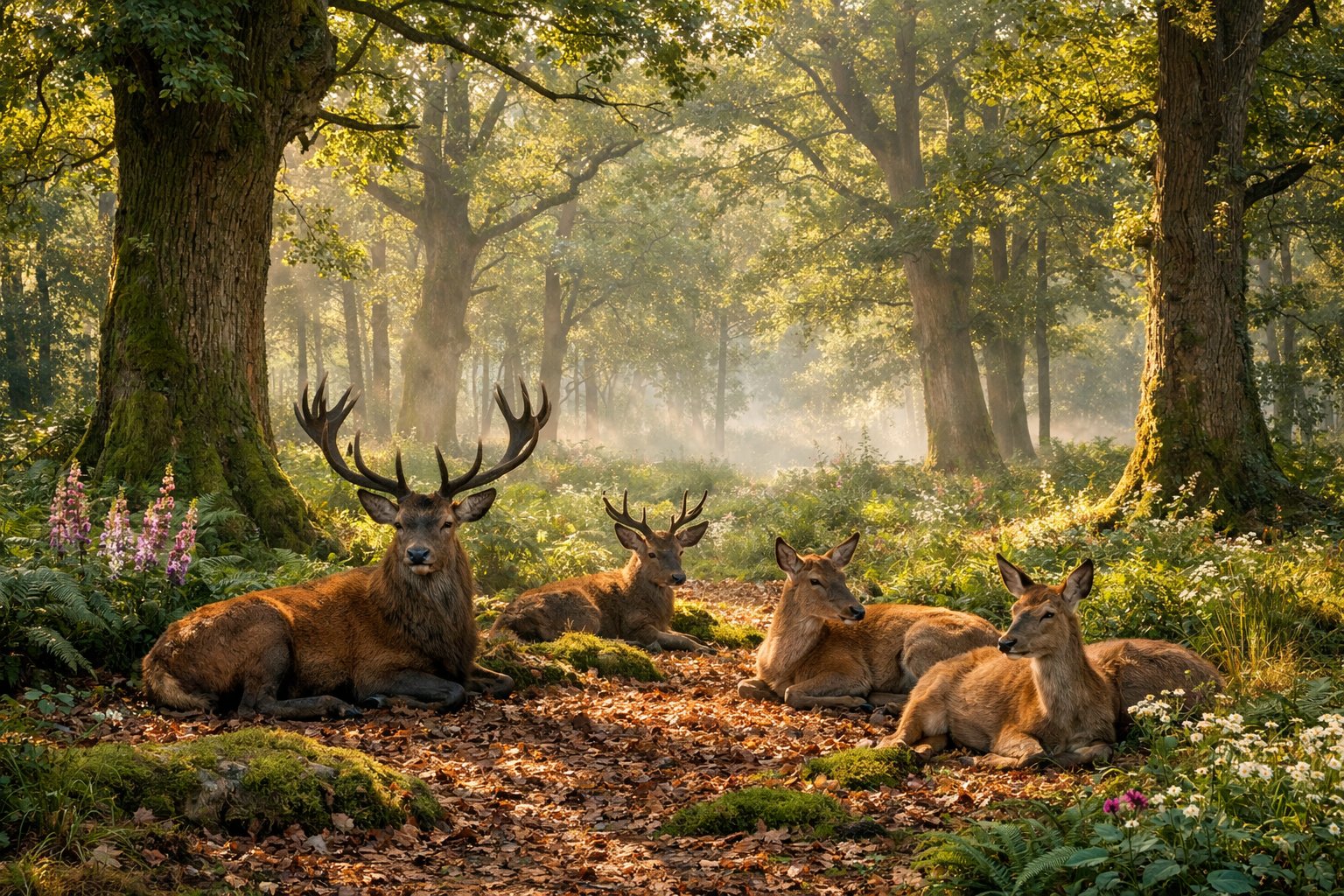
If you walk quietly near woodland edges, moorland ridges, or hedgerows, you might notice subtle signs—oval depressions, flattened grass, and tracks nearby.
Keep the wind in mind. Deer usually face into the breeze, so that’s a clue for finding their bedding spots, but always respect their space.
Where Do Deer Sleep in the UK?
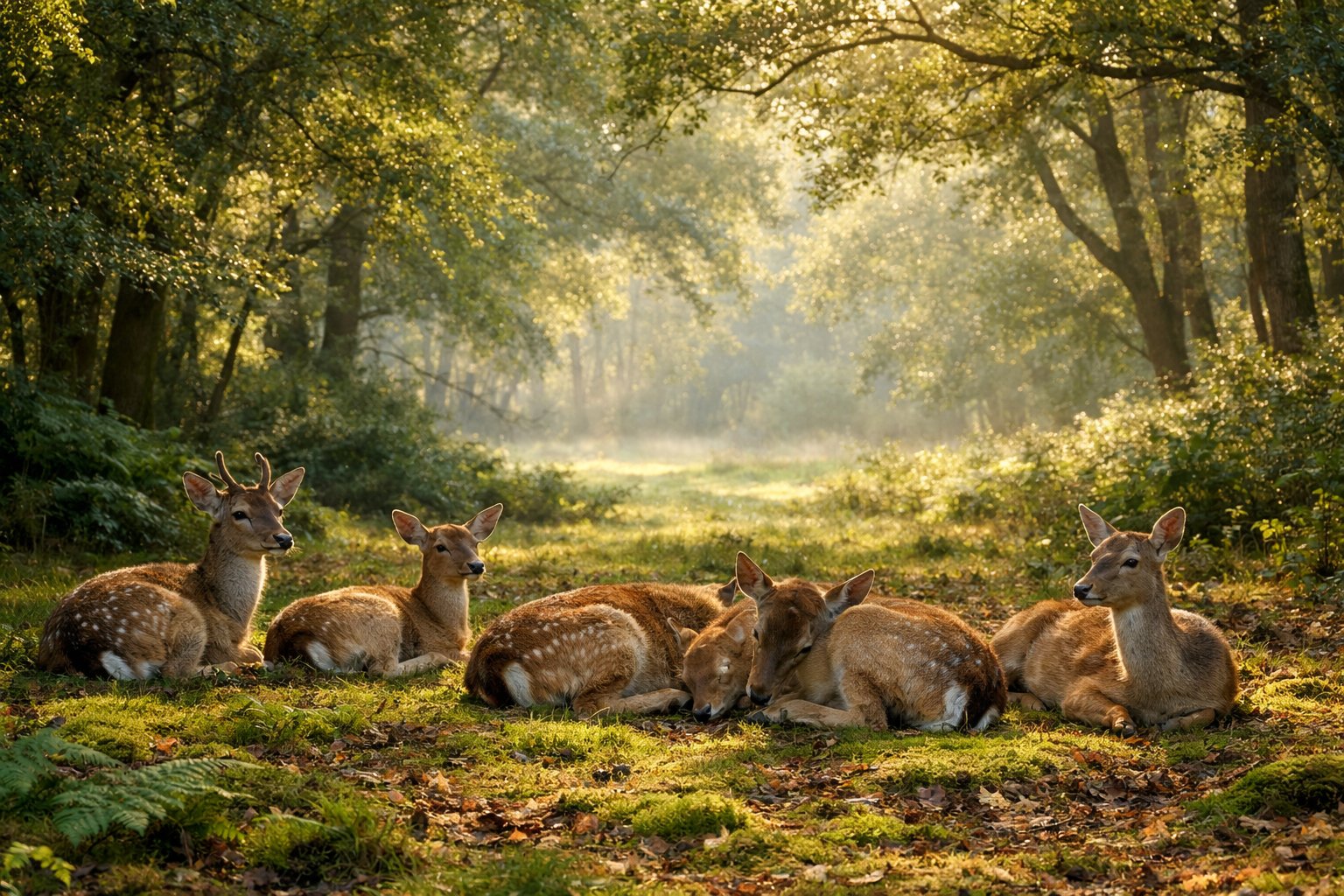
Deer pick bedding spots that offer cover, sightlines, warmth, and a fast way out if needed.
Many beds sit near feeding areas, thick shelter, or higher ground that catches a bit of sunlight.
Typical Bedding Areas and Habitats
You’ll find deer beds where there’s dense foliage and a quick escape route. Look for evergreen thickets, hawthorn and willow scrub, or tall grass along woodland edges.
These spots hide deer but also let them see or smell what’s coming. In farmland, deer often bed at hedgerows, field margins, and strips of uncut crops.
Ridge tops and hill points work for roe buck and fallow deer since higher ground gives them a view and a wind advantage. In wetter areas, small marsh islands and reed pockets make safe bedding sites.
You’ll spot oval depressions, flattened plants, and sometimes droppings or hoof prints. If you scan at dawn or dusk, you might catch deer bedding close to feeding grounds.
Daytime vs Nighttime Bedding Locations
During the day, deer like thicker cover where they can rest but stay partly alert. You’ll often find them in dense scrub, under conifers, or in tall grass.
They keep their heads up to sample the wind for danger. Day beds are all about staying hidden, not seeing out.
At night, deer shift a bit closer to feeding zones and sometimes bed in more open areas along the edge, where they can see better. Since deer are crepuscular, they get active at dawn and dusk, then settle near clearings, tracks, or field edges for quick foraging.
Bucks usually pick solitary, well-hidden night beds. Does and fawns might group up a bit more.
Seasonal Shifts: Winter and Summer Bedding
In winter, deer look for south-facing slopes and evergreen cover for sunlight and shelter from cold winds.
You’ll find beds tucked behind conifers or on the leeward side of slopes, where snow is lighter and it feels a bit warmer. They stick close to browse to save energy.
When summer hits, bedding shifts to cooler, shady spots—dense hedgerows, tall grass, or river corridors.
Fawns hide in the thickest cover they can find, and females often bed together. On hot nights, deer sometimes pick open spots with a breeze.
Urban and Rural Bedding Adaptations
If deer sleep in your yard, they follow the same instincts: cover, safety, and food. In towns, they bed in overgrown gardens, drainage ditches, or along park edges where shrubs and trees hide them.
You might spot flattened grass or tufts of hair left behind. Out in the countryside, deer stick to natural hedgerows, woodland margins, and field corners.
Farming practices, like leaving uncut strips, can change where deer decide to bed. If you understand these patterns, you’ll have a better sense of where deer might hide, and you’ll avoid surprising them at dawn or dusk.
Deer Sleep Habits and Behavior

Deer rest in hidden spots that offer cover, visibility, and a quick escape route. You’ll see how they sleep lightly, when they group up, how fawns act differently from adults, and how much rest they actually get.
How Deer Sleep and Stay Alert
Deer almost always lie down to sleep; standing naps are rare and only happen if danger is close. They tuck their legs under and keep their heads up or just slightly lowered so they can react fast.
If they feel safe, like in thick bramble or evergreen, they might lower their heads and get a bit deeper sleep, but only for short bursts.
You’ll notice their ears twitch while they rest. Deer trust their hearing and sense of smell more than deep sleep.
They take lots of short naps, always ready to react if something’s off. Wind direction matters—a lot. Deer face into the wind so they catch scents first.
Do Deer Sleep Alone or in Groups?
Deer sleeping habits really depend on sex, age, and risk. Bucks mostly bed alone, picking quiet, high spots with a fast escape route.
They avoid groups to cut down on competition and being noticed. You’ll spot lone buck beds on ridge points, field edges, or tucked into heavy cover near food.
Does, especially with fawns, usually bed near each other. Group bedding offers more eyes and ears on alert.
In open country or near people, does might spread out but still keep each other in sight. Urban deer get creative and bed in parks or gardens where there’s cover and snacks close by.
Bedding Behavior of Fawns, Does, and Bucks
Fawns stay hidden for the first weeks of life. Their mothers leave them in tall grass or dense bramble while they feed nearby.
If you look closely, you might spot tiny, camouflaged depressions with hardly any droppings. Fawns freeze if you approach, so it’s best to keep your distance.
Does pick sheltered places with food and cover close by for quick nursing. Their beds are smaller, round, and often near each other.
Bucks make bigger, oval beds and move them more often, especially during hunting season. They pick spots with a view and cover so they can keep watch and bolt if needed.
How Long and How Often Do Deer Sleep?
Deer don’t sleep in one long stretch like we do. Instead, they get several hours of light rest scattered throughout the day and night.
Most of their deep sleep barely totals a couple of hours. The rest? Just quick naps, sometimes only a few minutes at a time.
Deer are crepuscular, which means they’re up and feeding at dawn and dusk. They usually rest during the middle of the day and parts of the night.
When winter hits, deer might bed down longer in sheltered spots just to save energy. If hunters or predators start showing up more, deer will switch things up—bedding for shorter times, staying hidden, and moving between beds more often.
If you want to spot deer beds or figure out their routines, check out field guides that cover bedding sites and signs like flattened grass, hoof prints, or droppings. For details on UK habitats, you might want to see where deer sleep in woodlands and along field edges at Where do deer sleep in the UK? (https://www.studycountry.com/wiki/where-do-deer-sleep-in-the-uk).


