
If you just want the quick answer, here it is: deer usually go for woody browse—twigs, buds, and leaves from trees and shrubs—because that stuff sticks around even with deep snow and gives them steady calories.
Woody browse like twigs, buds, and evergreen needles tops the list for most deer in winter.
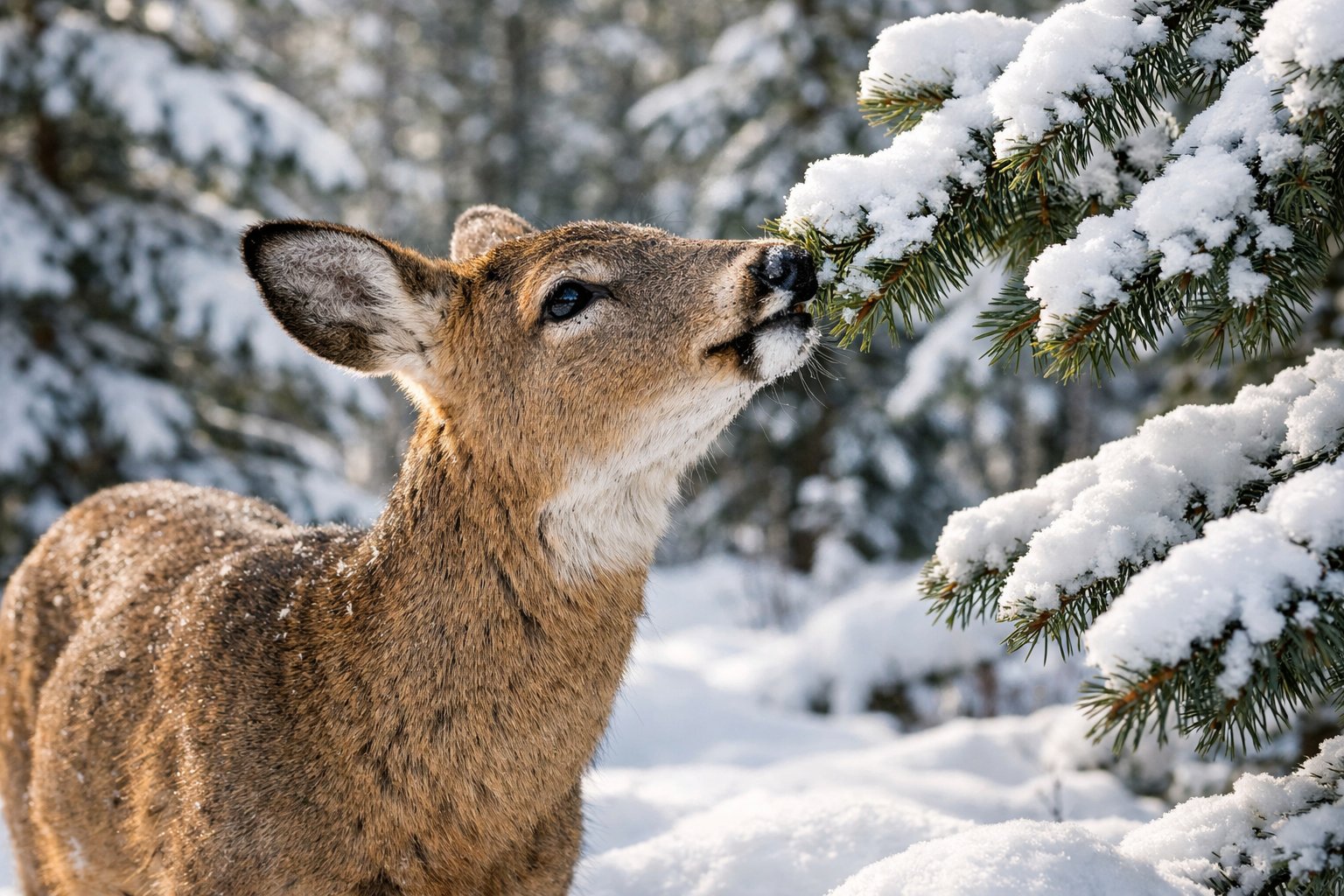
But there’s more to the story. Things like acorns, standing corn, and winter-hardy plants can become important if deer can find them.
Local habitat and snow depth really change what deer end up eating.
Stick around and you’ll see how deer switch up their diet, where they search for food, and even how you can spot the plants they’re after this winter.
Deer’s Favorite Winter Foods and Natural Forage

Deer count on a few main food types in winter: woody twigs and buds, hard mast like acorns, evergreen leaves, and leftover crops from farm fields.
These foods keep them going with energy, fiber, and a few nutrients when grass and weeds disappear.
Woody Browse: Twigs and Buds
Woody browse makes up most of a deer’s winter meals.
You’ll catch deer stripping twigs and nibbling buds from aspen, birch, maple, and willow.
Twigs and buds are fibrous and not exactly calorie-packed, but they give roughage and a little protein.
Browse also includes smaller shrubs and young stems where nutrients are packed into the buds.
Deer go for branches they can reach—usually under 6 feet—so short trees and understory plants matter more than big, tall ones.
If deer suddenly eat a bunch of new foods, it can actually hurt them. Their gut works best with natural woody browse, which keeps their digestion running smoothly as winter drags on.
Acorns and Hard Mast
Acorns and other hard mast count as high-value winter food if deer find them.
Oaks, especially white oak, drop acorns loaded with fats and carbs that help deer rebuild fat reserves.
Beechnuts, chestnuts, and crabapples also give a punch of energy.
Deer will dig through light snow to get to fallen mast.
A good mast year pulls deer toward oak stands or beech and chestnut groves.
But mast crops change every year and depend on your region.
When acorns are scarce, deer turn to woody browse and whatever’s left in fields to get enough calories.
Evergreen Leaves and Trees
Evergreens step in when all the other leaves are gone.
Deer browse white cedar, spruce, fir, hemlock, juniper, and even some planted arborvitae.
Needles and soft foliage give a few vitamins and moisture, which helps when winter air gets dry.
Evergreen browse is tougher and doesn’t have as much energy as mast, but it’s always there, even under snow.
Deer usually munch on lower branches, and over time, you’ll notice the trees look trimmed from below.
If you want to help deer, don’t just offer evergreens. They still need foods with more energy.
Evergreens work best as a supplement, not the whole menu.
Agricultural Crops in Winter
Leftover corn, soybeans, hay, alfalfa, clover, and even stored root crops draw deer into fields.
Corn gives a quick carb boost, while soybeans and legumes add some protein.
Hay and alfalfa give them bulk and roughage.
Deer use farm fields most when mast and browse run low.
Crowding at feeding spots can raise disease and predator problems, so wildlife managers often spread out food or improve habitat instead of making big bait piles.
If you spot deer in crop fields, remember that easy access to these foods changes how deer move and survive.
Where corn or waste grain is common, deer linger near farm edges or in woodlots that link up with food sources.
How Deer Adapt and What Influences Winter Food Preferences

Deer get through winter by changing how they digest, how they act, and where they look for food.
The choices you make—like how you manage habitat or whether you feed deer—can help or actually hurt their chances.
Deer Digestive System and Rumen Changes
Deer are ruminant herbivores, so they’ve got a multi-chambered stomach that ferments tough plant stuff.
In winter, they lean hard on woody browse—buds, twigs, bark—because their rumen microbes shift to handle slow-digesting, low-energy foods.
If you suddenly give them new feeds like corn, alfalfa, or protein pellets, their guts can’t handle it right away. That can lead to digestive problems, or worse.
It’s safer to introduce new foods slowly over days or weeks so their rumen bacteria get used to the change.
Older or weaker deer especially have a hard time with sudden food changes; their condition really affects how easily they adapt.
Regional and Environmental Factors
Where you live matters a lot for what deer eat.
Up north, deer often gather in snow-free yards and eat more hardwood buds and conifers.
In milder places, they keep browsing shrubs, leftover crops, and even fruit trees for longer.
Local plants and how deep the snow gets really shape what ends up on a deer’s menu.
You can make a difference by managing habitat.
Leaving pruned limbs or hinge-cutting small trees gives deer more food they can actually reach.
Wildlife managers and groups like the National Deer Association usually recommend boosting natural woody browse instead of relying on grains or big feeding spots, since those can change deer behavior and raise predator risk.
Risks of Supplemental Feeding
Feeding deer might look helpful at first, but it actually causes a bunch of problems for their health and for conservation efforts.
When people gather deer at feeders or feeding stations, they end up raising the risk of disease. Parasites and illnesses can spread quickly in these crowded spots, and some of these diseases can even mimic or make chronic wasting disease worse.
Predators catch on fast and start hunting near these predictable feeding areas. That’s not great for the deer, obviously.
If you still want to feed deer, don’t dump a lot of food all at once. Try spreading out small amounts in different places.
Stick with woody browse or low-intensity supplements that last longer. And definitely skip anything on the harmful list—like big piles of corn or high-protein feeds that local deer aren’t used to.
Always check your local wildlife management guidelines before you start any kind of supplemental feeding.


