
You’ll catch deer munching on a lot of plants, but they’re picky—they go for the most nutritious, easy-to-digest bits. Deer mostly eat leaves, buds, soft plants (forbs), fruits like berries and acorns, and young shoots from trees and shrubs.
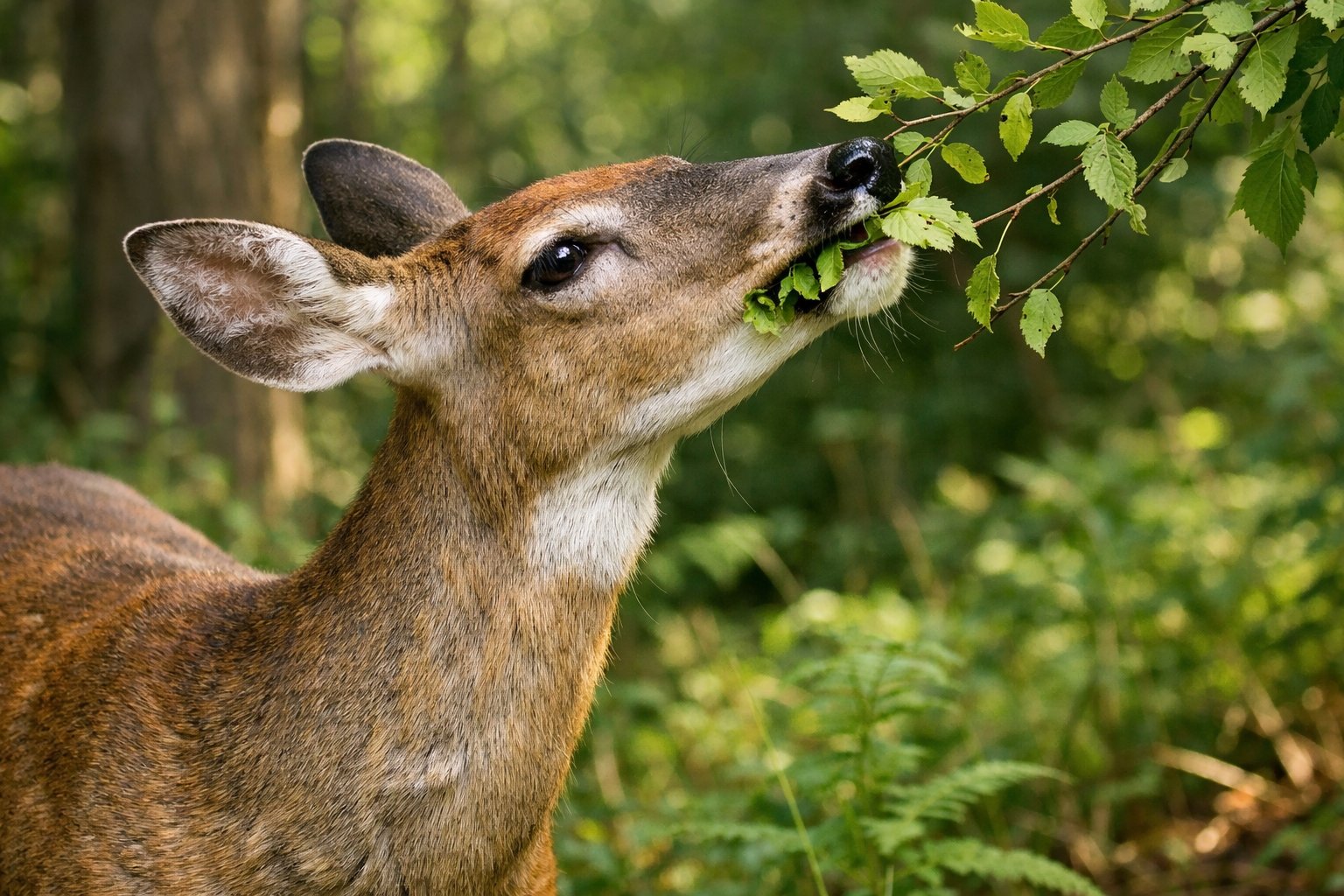
Ever wonder why deer pick certain foods? This post dives into what they like, how those choices shift with the seasons, and how their unique digestion lets them get the most out of plants.
Stick around to find out which plants draw deer in, when they eat them, and how knowing their diet helps you manage land, plant a smarter garden, or just spot them in the wild.
What Do Deer Eat? Core Diet and Most Preferred Foods
Deer go for plants that give them energy, protein, and minerals. In spring and summer, you’ll see them picking greens that are easy to digest. When fall comes, they switch to nuts and fruits, then turn to woody twigs in winter.
Browse and Tender Leaves
Browse means woody twigs, buds, and young shoots—deer chew these when other foods run low. White-tailed and mule deer often target saplings of maple, willow, ash, and dogwood.
They love tender new growth since it’s packed with protein and not as tough as old wood. In spring and early summer, deer grab tender leaves and forbs like clover, chicory, and dandelion, plus grasses such as bluegrass and alfalfa.
These foods give them fast energy and support antler and fawn growth. When winter hits, browse becomes a lifeline: deer strip bark or nip buds from oak and other trees just to make it through.
Acorns and Other Nuts
Acorns rank as a top fall food for many deer, especially whitetails. You’ll spot them feeding under oak trees where white and red oak acorns drop in piles.
Acorns pack fats and carbs, so deer use them to build up fat for winter. Other nuts like chestnuts, beechnuts, hickory nuts, and pecans also end up on the menu. Mast crops—those big nut harvests—can really change where deer hang out in autumn.
When mast crops fail, deer wander to fields, food plots, or rely more on browse and farm crops.
Fruits and Berries
Deer love soft fruits when they’re ripe. Apples, pears, persimmons, and wild berries like blackberries, raspberries, and elderberries all attract them.
Fruits give deer sugars and water, especially important in late summer and fall. Berries grow on shrubs and along edges, so deer often feed near brushy spots like honeysuckle or dogwood.
In the South, they’ll gobble up persimmons and snack on small fruits in forests. Fruit can bring deer right up to gardens, where they might also chomp on hostas, tomatoes, and ornamental shrubs.
Agricultural Crops and Food Plots
Deer don’t hesitate to raid crops like corn, soybeans, beans, peas, wheat, oats, and rye. Corn and soybeans are especially tempting in fall and early winter since they store a ton of energy.
You’ll spot deer in food plots planted with clover, alfalfa, brassicas (think turnips and rape), sunflowers, and beets. Mixing clover + brassicas works great: clover gives them protein, brassicas offer digestible carbs and greens late into fall.
Farmers and landowners often deal with deer damage to pumpkins, sweet potatoes, and veggies like tomatoes. Planting food plots away from houses and close to cover can help manage where deer feed.
How Deer Digest Their Food: Ruminants and Dietary Adaptations

Deer rely on a specialized gut and smart food choices to get nutrients from plants that humans just can’t digest. Their system breaks food down in stages and changes with the seasons. Feeding wild deer, by the way, can actually cause health and management headaches.
Four-Chambered Stomach Explained
Deer have a four-chambered stomach: the rumen, reticulum, omasum, and abomasum. The rumen acts as the main fermentation tank, where microbes break down cellulose into nutrients deer can use.
Food can sit there for hours while bacteria and protozoa do their thing. The reticulum traps heavier bits and helps form cud. Sometimes you’ll see deer chewing cud—that’s regurgitated stuff they re-chew to break it down more.
The omasum absorbs water and some nutrients. The abomasum, the “true” stomach, uses acids and enzymes to digest proteins like a regular stomach would.
This whole process lets deer pull energy from twigs, leaves, and other fibrous browse that most stomachs just can’t handle. Microbial fermentation keeps them going even on low-quality winter forage.
Concentrate Selectors and Feeding Behavior
Deer qualify as concentrate selectors—they go after high-quality, easily digested plant parts instead of bulky grasses. You’ll notice them picking tender shoots, buds, fruits, and forbs over coarse stems.
Choosing nutrient-dense bits helps deer meet protein and mineral needs without needing a huge gut. They often target new growth, clover, young tree seedlings, and mast like acorns. That choice shapes where deer hang out and how forests grow back.
Your landscaping or crop choices might attract deer if you plant what they love or leave fruiting trees open. Since they focus on quality, deer move around a lot and browse from many plant species. They adjust what they eat to balance protein, energy, and minerals.
This behavior keeps their rumen microbes healthy and digestion running smoothly.
Seasonal Shifts in Diet
Deer diets shift as the year rolls on. In spring and summer, they go for fresh forbs, new leaves, and grasses loaded with protein. That supports antler growth in bucks and milk for does.
You’ll see them in meadows and along edges during these seasons. In fall, they switch gears and eat high-energy foods like acorns and berries to pack on fat for winter.
Once greens disappear in winter, deer survive on woody browse: twigs, buds, and bark. Their rumen microbes shift too, favoring those that break down tougher fibers.
Seasonal diet changes influence where deer eat and rest. If you pay attention to fruiting trees, young saplings, and evergreen browse, you can guess where deer will show up on your land.
Risks of Feeding Deer and Wildlife Management
Feeding deer might look helpful at first, but honestly, it often does more harm than good. When people put out food, deer crowd around, which ramps up the risk of disease—think chronic wasting disease and parasites.
You also end up messing with how deer move and what they eat in the wild. They stop foraging naturally and start relying on handouts.
If you give them poor-quality food, you can actually upset their digestion. Most wildlife managers I know really don’t recommend feeding because it throws off population control and can make crop or garden damage worse.
If you really want to help deer, try focusing on their habitat. Plant native browse, let mast-producing trees grow, and keep some cover around.
Always check local regulations and listen to wildlife agencies before you feed deer. That way, you’ll protect deer health and steer clear of fines or unexpected ecological problems.


