
You might spot a deer freeze, flash its white tail, or suddenly bolt across a field—those quick moves are how deer defend themselves. They count on sharp senses, speed, and group signals to dodge danger, and those tricks often let them escape predators without a fight.
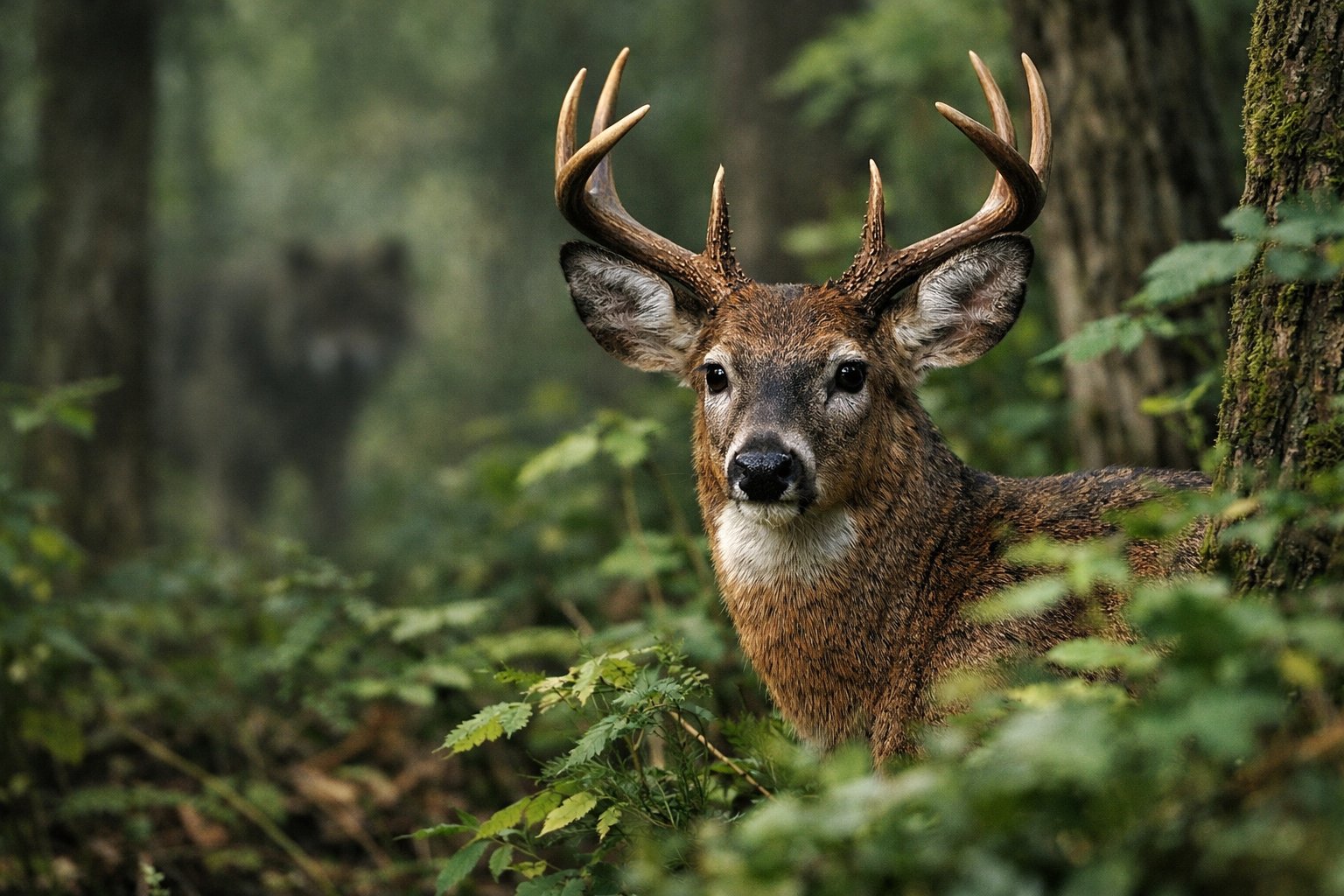
Let’s look at how their hearing, sight, and sense of smell warn them early. Agility and hooves help them in a chase, and herd behavior adds another layer of protection.
You’ll see how each defense works up close, and how their environment and social habits shape their survival.
Key Defense Mechanisms Deer Use

Deer escape danger by running fast, hiding, using sharp senses, and sometimes striking back if they get cornered. These defenses let them spot threats early, flee quickly, and, if they have no other choice, stand their ground.
Evading Predators Through Speed and Agility
When you see a deer bolt, that’s its main defense: speed. Whitetail deer can dash up to 35 mph in short bursts.
They also zigzag and make sharp turns to lose predators, especially through thick woods. Their long, strong hind legs help them leap over fences or logs and make high jumps.
Sometimes, you’ll catch a deer “stotting”—springing with all four legs. It looks odd, but it shows off their strength and might throw off a predator.
This mix of speed, agility, and explosive leaps makes chasing a deer a risky bet for most predators.
If you watch deer long enough, you’ll notice they pick escape routes they know well and that play to these strengths.
Camouflage and Concealment in Nature
Deer trust their ability to blend in. Their brown coats match the woods and fields, and fawns keep white spots to break up their outline in grass and brush.
You’ll find deer bedding down in tall grass or thickets, or tucked against brush piles. When a threat gets close, they often freeze, counting on their color and stillness to hide them.
This trick works best at dawn or dusk, when light and shadow help them disappear.
Deer pick bedding spots with good views and quick exits. That keeps them hidden, but always ready to bolt.
Next time you walk near deer habitat, pay attention to how cover and light make them harder to spot.
Alertness and Sharp Senses
You might rely on your eyes and ears, but deer take it to another level. Their ears swivel to pick up faint sounds, and their nose catches scents most of us would miss.
Their eyes sit on the sides of their head, giving them nearly a 300-degree view. That wide angle helps them spot movement from almost anywhere.
Deer pause often to listen and sniff, always checking for danger—whether it’s wolves, coyotes, cars, or people.
They use alarm signals too. A sharp snort or a stomp warns the group, and that can set off a chain reaction escape.
Watch a herd, and you’ll see one nervous deer spook the rest—social vigilance keeps everyone safer.
Fight or Flight: Antlers and Hooves
Most deer run when they sense trouble, but they’ll fight if they have to. Bucks grow antlers each year, mainly for battling during mating season, but they can use them to defend against predators when cornered.
Does and fawns rely on their hooves. A solid kick from a deer can injure a dog or other attacker.
You’ll sometimes see does stand their ground and kick, especially to protect their fawns.
Antlers look different depending on the species and age, so not every deer uses them the same way. Still, when escape isn’t an option, antlers and strong hooves give deer a fighting chance.
Environmental and Social Tactics for Protection

Deer lean on group living, warning signals, and smart choices about where they hang out to stay safe. Herd behavior, sound and scent cues, good bedding spots, and seasonal moves all play a role in their survival.
Using Herd Behavior for Safety
When deer group up, they get more eyes and ears scanning for trouble. A herd spreads out to feed but keeps close enough to warn each other fast.
Young fawns stick with adults, which lowers their risk since adults notice threats first.
You might notice deer using formation tactics—placing sentinels on high ground or at the forest edge to watch open fields.
During the rut, bucks often stay near does and can get aggressive to protect them and their territory.
In places with lots of predators, bigger herds mean each deer has a better shot at avoiding danger.
Even in suburbs, herds take advantage of lawns and edges where they can see danger coming and slip into nearby brush. That mix of cover and open space explains why deer cluster in certain spots.
Communication and Warning Signals
Deer have their own way of talking—using sound, scent, and body language. A loud snort or stomp warns the group, and you might hear it before you see any danger.
Does use soft bleats to call fawns, and a fawn’s quiet call brings a quick response only when it’s really needed.
Scent matters a lot. Bucks rub trees and leave gland scents to mark territory and signal danger.
You might spot a flattened bed with a strong-smelling scrape nearby—proof that deer have been around and are sending messages.
Visual cues help too. When a deer raises its tail, that white flash signals others to run. You’ll often catch this on trails or at field edges.
All these signals combine to create a fast, layered alarm system that gives each deer a better shot at escape.
Importance of Deer Habitat in Defense
Good habitat means cover and escape routes deer can trust. Dense thickets, brush piles, and mixed forests let deer bed down out of sight but still hear danger coming.
They pick bedding spots with overhead cover and a clear way out.
Edges where forest meets field are gold for deer—they offer quick food access and a fast dash to safety.
In winter, deer look for south-facing slopes and thick evergreens to block the wind and stay warmer.
Human changes—like roads, fences, and development—chip away at these safe spaces and push deer into trickier, riskier moves.
If you walk a property, notice the corridors—strips of trees, hedgerows, and shelterbelts—that deer use as hidden highways.
Protecting or restoring these features makes a real difference for their survival.
The Role of Migration and Seasonal Changes
Seasonal moves really shift how you notice deer defending themselves. Many herds head for lower-elevation winter ranges, chasing after better food and less snow.
You’ll probably spot deer timing these trips just right—avoiding deep snow that would slow them down and make it easier for predators to catch up.
During the rut, things get interesting. Bucks start focusing on finding mates and might take more risks, which makes them stand out to both predators and hunters.
You’ll often see bucks patrolling and staking out territories. Sometimes they clash, other times they just seem jumpier, keeping an eye out for threats.
When fawning season rolls around, does pick out dense, hidden spots and stay put for hours. If you look closely, you might find a fawn tucked away in tall grass.
Mothers usually come back only now and then, hoping to keep their scent from attracting unwanted attention.
All these seasonal habits work together, helping deer juggle their need to eat with the constant pressure to avoid predators and people.
Links: use details from an article about how deer protect themselves in the wild (https://iere.org/how-do-deer-protect-themselves/) and a piece on deer behavior during hunting season (https://exploringanimals.com/remarkable-ways-deer-adapt-their-behavior-during-hunting-season/).


