
You watch a deer freeze or bolt and probably wonder why it acts like that. Honestly, deer fear humans mostly because people have been their predators and threats for generations. Deer rely on sharp senses and memories to stay out of trouble.
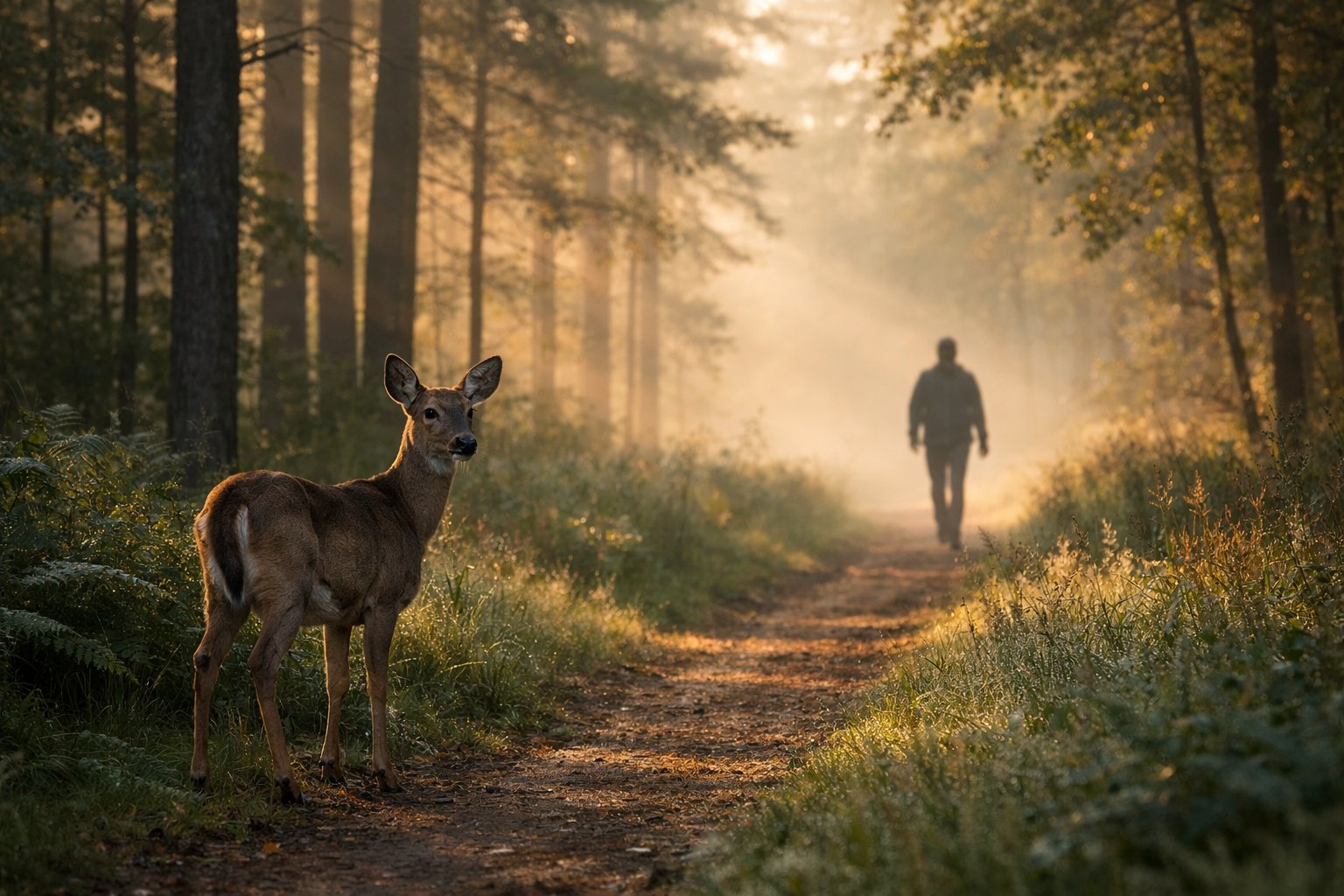
Think about it—deer can hear, smell, and spot movement long before you even notice them. That built-in instinct, plus memories of past bad encounters, explains why they often flee or get jumpy.
Let’s dig into why deer fear people and what shapes their reactions. You’ll get a better sense of their behavior, and maybe you’ll even change how you act around them.
Core Reasons for Deer Fear of Humans

So, why do deer react to people the way they do? It mostly comes down to deep instincts, sharp senses, and the differences between wild and urban animals.
These three things drive how deer decide to flee, freeze, or stick around.
Evolutionary Predation and Instinctive Flight Response
Deer grew up, evolution-wise, as prey animals. Their bodies and brains always prep for danger.
When a white-tailed deer senses something off, its heart starts racing and its muscles get ready to sprint. This quick reaction helps them escape wolves, coyotes, and—yes—humans.
You’ll notice this as the classic “flight response.” It’s a split-second decision: run or risk getting hurt.
Bucks, does, and fawns all use that logic, but experience changes how fast they react. Hunting teaches deer to run sooner, so deer in rural or hunted areas often bolt at the slightest hint of people.
Deer Senses and Threat Detection
Deer depend on sight, smell, and hearing to size up danger. Their eyes catch movement really well, so sudden moves or weird shapes set off alarms.
They’ve got an amazing sense of smell, too. Human scent usually means trouble, even if you’re downwind.
Those big ears? They swivel to pick up even tiny sounds, like a twig snapping.
Check out their body language: a raised tail, stiff neck, or stomping foot means they’re getting nervous.
Deer use these signals to figure out if they should run. If you move slowly, stay downwind, and keep quiet, a deer might not freak out.
But if you rush at them or yell, you’ll almost always make them run.
Differences Among Wild and Urban Deer
A deer’s fear level really depends on what it’s experienced. Wild deer living in forests with hunting pressure stay super alert and keep their distance.
They learn from threats and watch other deer, too. Fawns copy the adults.
These wild deer react fast to humans.
Urban and suburban deer, though, can get used to people. If humans don’t bother them and there’s easy food, they start hanging around.
You might see them grazing on lawns or strolling down sidewalks at night.
But when deer lose their fear, it leads to problems—more car accidents, garden damage, and even disease spread.
If you want them to stay wary, don’t feed them and use gentle deterrents.
Factors That Influence and Shape Deer Reactions Toward Humans

How deer respond to people depends on their past, which predators live nearby, and how people change their food and habitat.
The little choices you make—where you walk, whether you feed them, how your neighborhood changes—these all affect how close deer will let you get.
Habituation and Human-Deer Interactions
If deer see people often and nothing bad happens, they start getting used to humans. This process, called habituation, makes them less jumpy.
In parks or suburbs, habituated deer might just watch you walk by or cross a street without rushing off.
Habituation happens even faster if people leave food out or move calmly around deer every day.
It might seem harmless, but it lowers their natural caution. If something scary returns—like hunting or loud noises—these deer might not react fast enough. That’s risky for both you and the deer.
You’ll still see signs of stress, though: tail-flagging, stomping, or that stiff, alert posture. Even relaxed-looking deer can feel uneasy.
Impact of Habitat Loss and Urbanization
When people build homes, roads, and lawns, deer lose their old forests and paths. They end up in yards, greenways, or right by the road.
Urban edges give them food and cover, so deer put up with people more than they would in deep woods.
Losing predators like wolves or coyotes changes how deer act, too. With fewer threats, deer feel safer and don’t run from humans as quickly.
But when deer crowd into small areas, you get more car accidents, garden raids, and disease problems.
If you want to help, plant deer-resistant plants and keep natural cover connected.
City planners and wildlife managers can use green corridors and smart zoning to keep deer and people from getting in each other’s way too much.
Feeding Deer, Habits, and Disease Risks
When people feed deer, they basically teach them to come closer and hang around for food. Handouts, birdseed, or even a little treat in the yard—these things make deer less likely to run away and more likely to gather in yards or parks.
That crowding? It actually makes it easier for diseases and parasites to spread. Chronic wasting disease (CWD), for example, can move through a group pretty quickly.
Feeding also messes with how deer normally find food. They start relying on the easy stuff and might ignore their usual wild diet.
Over time, this can hurt their health. Plus, hungry deer looking for snacks might end up munching on your garden or landscaping.
Want to avoid all that? Try removing anything that attracts them, lock up your trash, and plant things deer don’t like. It’s honestly better for everyone—especially the deer.
If you notice a deer looking sick or spot any signs of CWD nearby, go ahead and let your local wildlife folks know. They’ll want to handle it right away.


