
You see deer in fields or hanging out at the edge of a forest, but have you ever wondered who’s actually out there hunting them? Wolves and big carnivores usually take down the most adult deer in most places, while smaller predators and scavengers go after fawns or weak animals. Let’s dig into which species really drive deer mortality and how that shapes the food chain.
As you look into this, you’ll see that different deer species deal with different threats. Predators matter a lot for ecosystems, and opportunistic hunters and scavengers fill in the gaps. Curious about which animals top the list and why they matter so much where deer live? Keep reading.
Who Eats Deer the Most?

Deer face threats from both people and wildlife. Most deer deaths happen because of hunters, big carnivores that hunt in groups, and smaller predators that pick off fawns.
Each predator changes deer numbers and where deer hang out.
Humans as the Leading Predator
Let’s be honest—humans kill more deer than any wild animal does. In the U.S., hunters take about 5 to 6 million white-tailed deer every year during hunting season.
States with lots of rural land and strong hunting traditions, like Texas, really rack up the numbers.
Hunting removes many adult bucks and yearlings, which cuts down the local deer population. It also puts venison on the table and helps wildlife agencies keep herds at a manageable size so there aren’t too many car accidents or crops getting munched.
Regulations like bag limits and permits try to keep deer numbers in check.
Wolves: Pack Hunters of Deer
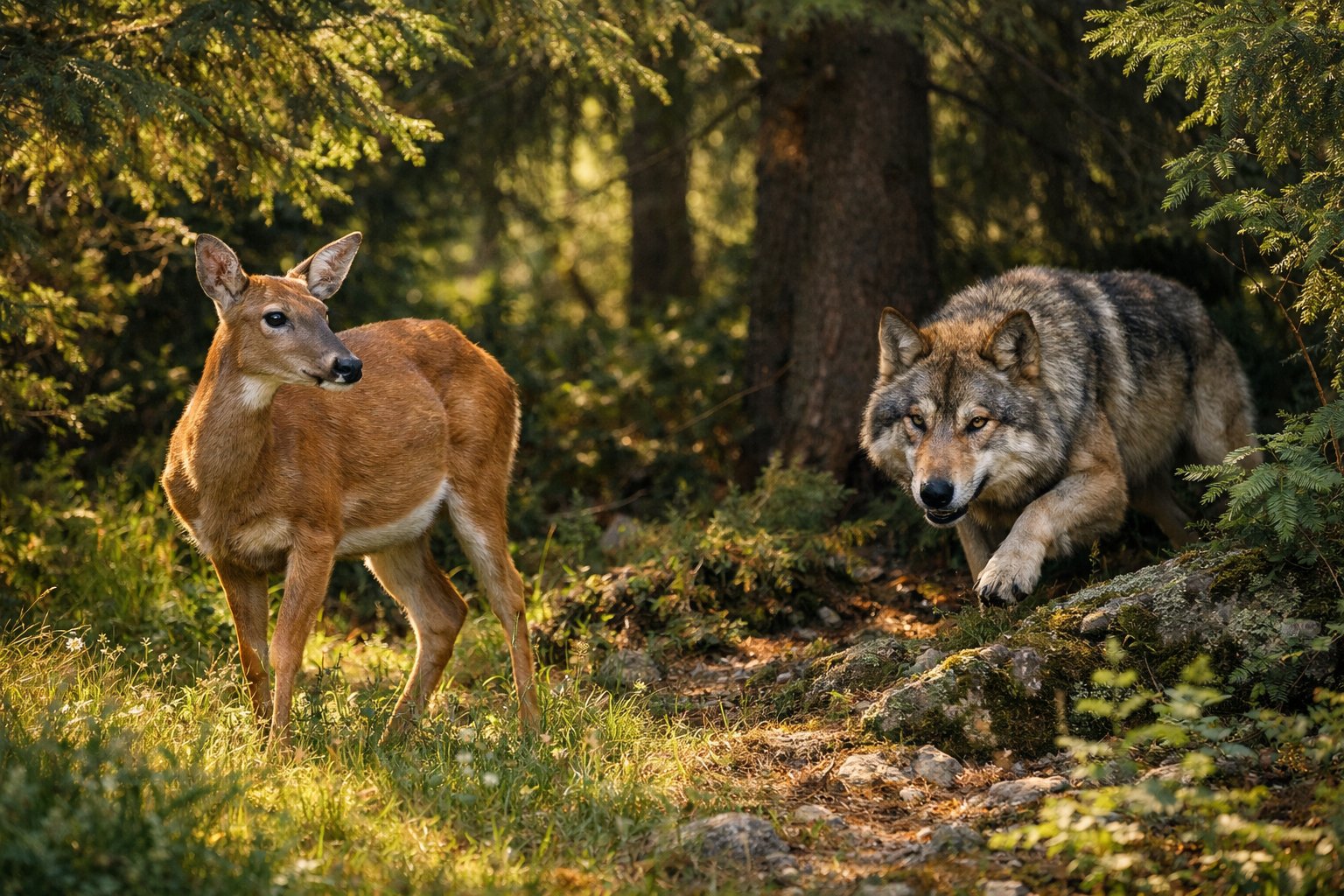
Wolves hunt deer as a team, which makes them the most effective non-human predator for adult deer. One wolf might not take down many, but a pack can bring down big adults by working together.
Wolves usually go after weak, old, or injured deer first.
Where wolf populations stay healthy, they can remove a lot of deer each year and even change how deer behave. You might notice deer avoiding open spots or feeding at different times to dodge wolves.
Wolves have the biggest impact in places like Alaska, Canada, and some western U.S. regions where they’ve made a comeback.
Coyotes and Their Impact on Deer Populations
Coyotes hit deer numbers in a different way than wolves do. Mostly, you’ll see coyotes going after fawns in spring and early summer.
Fawns try to hide, but they’re still a big part of a coyote’s diet when they’re tiny and easy to catch.
Coyotes also scavenge and sometimes take yearlings. In places without wolves, coyote numbers can go up and cause more fawn deaths.
Some wildlife managers try to remove coyotes to help fawns survive, but honestly, studies show that doesn’t always work out in the long run.
Mountain Lions and Big Cats
Mountain lions, or cougars, hunt alone and take adult deer pretty often. You’ll find them in western North America and in Florida, where the Florida panther lives.
A single mountain lion can kill a lot of deer in a year since it feeds on large prey over and over.
These cats like dense cover so they can stalk and pounce. They usually target healthy adults, yearlings, and fawns if they can get them.
If there are more mountain lions around, deer might start moving differently and stick to safer spots to avoid getting caught.
Secondary and Opportunistic Predators

These predators tend to go after fawns, injured adults, or just eat what’s already dead. They put extra pressure on deer populations when things like deep snow, habitat changes, or food shortages tip the balance.
Bears: Omnivorous Threats
Bears eat deer when they get the chance, especially fawns and weaker adults. Black bears often find fawns in spring and early summer near the woods’ edge.
Grizzlies and brown bears can take down bigger deer or scavenge carcasses, especially after winter when they’re hungry for protein.
You’ll often spot bears near calving spots or where there’s a carcass. Bears use brute force, not stealth, and might leave behind big bone pieces.
Their presence can make deer moms hide their fawns even deeper in thick cover.
Bears compete with hunters and other scavengers, too. In places with grizzlies, managers have to consider bear predation when planning deer hunts or population goals.
Birds of Prey and Scavengers
Big raptors sometimes grab tiny fawns or injured deer. Golden eagles—and now and then, bald eagles—have been seen taking young deer in open areas or when snow is deep.
Raptors rely on surprise and speed from above to snatch vulnerable fawns.
Scavengers like turkey vultures, black vultures, and crows find and clean up deer carcasses fast. Vultures can spot carrion from way up high and strip away soft tissue quickly, which helps nutrients cycle back into the ecosystem.
Crows and smaller birds help break down what’s left and even alert other scavengers.
Scavengers actually help by reducing disease risk when they eat dead deer. Their activity also helps predators like wolves or wild dogs that might show up later to finish the job.
Other Predators and Unusual Cases
Smaller carnivores and some unexpected predators play a role, too. Bobcats and lynx often go after fawns, and sometimes they’ll take down a sick adult.
Coyotes and wild dogs usually hunt fawns in packs. In fragmented habitats, they can put a lot of pressure on local deer populations.
Wolverines and hunting dogs might scavenge or hunt deer, but that only happens under certain conditions. It’s not something you see every day.
Alligators sometimes kill deer that wander too close to the water down in the Southeast. They’ll even drag adult deer underwater, which is honestly a little terrifying.
In some places, leopards and jaguars show up as unexpected predators. And believe it or not, there are rare cases of killer whales feeding on deer carcasses near the shore.
Human-related predators deserve a mention, too. Domestic dogs and feral hogs sometimes injure or kill deer.
Hunting regulations also shape how these interactions play out. All these different predators feed into the bigger food web, nudging deer behavior, population numbers, and the overall health of the ecosystem.


