
You’ll spot deer in forests, fields, and even near towns. They blend speed, sharp senses, and a surprising amount of social intelligence—few animals do it quite like deer. They survive by seeing in low light, smelling danger from a distance, running fast, and using antlers and herd signals to protect themselves and their young.
Let’s look at how their bodies and senses work together. You’ll see why antlers matter, how their grazing shapes forests and fields, and get some real-life examples of deer behavior, their role in nature, and even a few ways people and deer cross paths.
Remarkable Deer Biology and Adaptations
Deer show off physical and behavioral traits that help them eat a wide range of plants, avoid predators, and reproduce. Let’s dig into species variety, antler growth, their four-part stomach, and the senses that keep them safe.
Diversity of Deer Species
Deer belong to the family Cervidae, which includes a wild mix of species adapted to all sorts of habitats. You’ll find tiny pudu and key deer hiding in dense forests and mangroves, while much larger moose and elk roam boreal and temperate zones. Reindeer (yep, caribou) live in Arctic and subarctic areas and migrate long distances. Some, like the Chinese water deer, don’t even have antlers; they sport tusk-like teeth for show.
Coat color and patterns help deer blend in. White-tailed and mule deer have coats that match their local vegetation. Fawns usually wear spots that help them hide. Leg length and body size change with habitat: long legs help moose and elk wade through deep snow, while pudu stay compact for thick brush.
Antlers and Unique Headgear
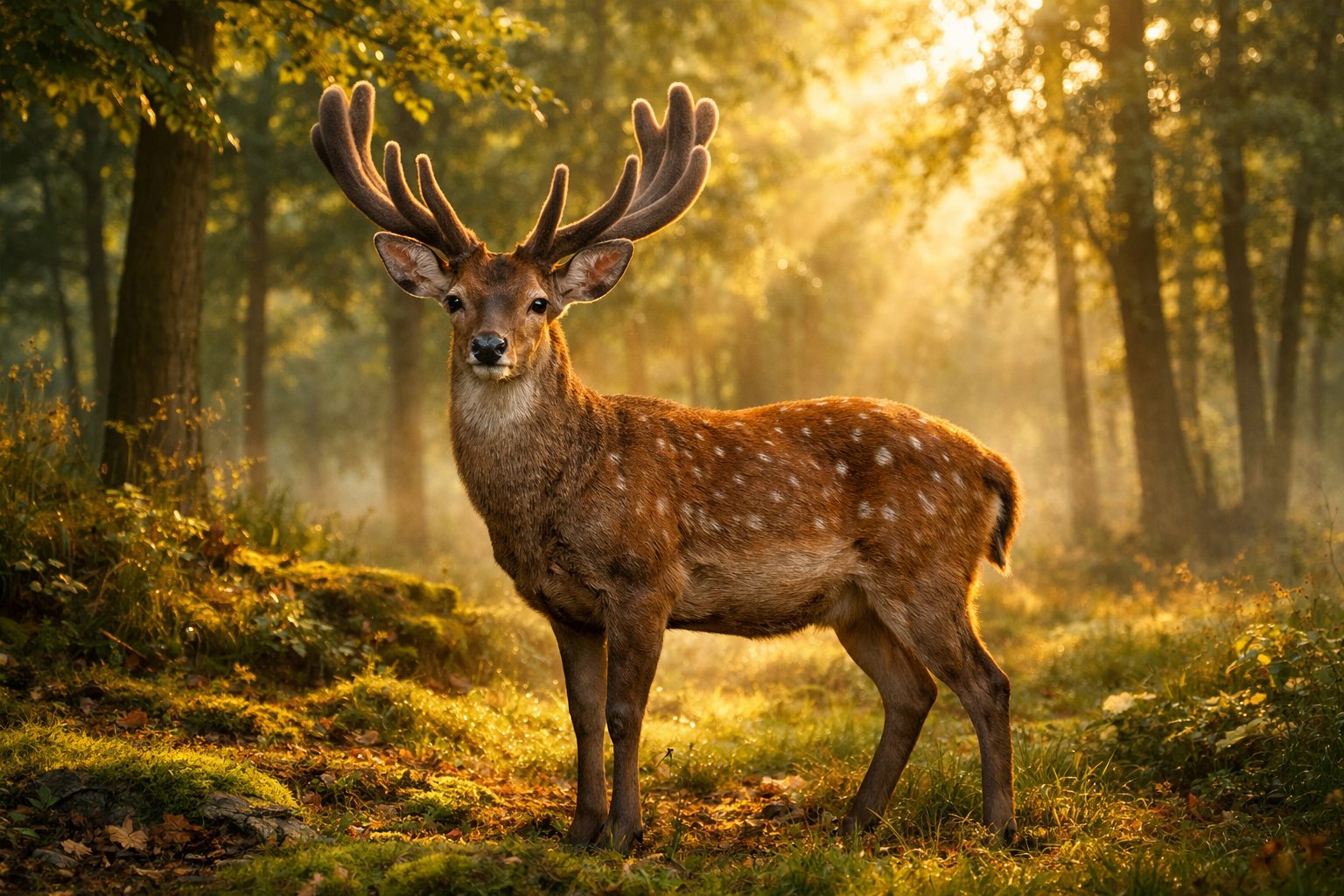
Most male deer (bucks) grow antlers every year. Reindeer are the oddballs—females grow them too. Antlers start as velvet, a fuzzy tissue loaded with blood vessels that helps them grow fast. You’ll see antler cycles follow the seasons: they grow in spring and summer, shed velvet in late summer, and use hard antlers for rut fights in the fall.
Antlers aren’t just for show; bucks use them for mate displays and battles. Size and branching usually tell you about age and nutrition—a huge rack often means a healthy buck. Some deer skip antlers altogether: musk deer and water deer have tusks instead. The extinct Irish elk had absolutely massive antlers, proving that headgear can get pretty wild across species.
Digestive System: Ruminants with Four-Chambered Stomachs
Deer, as hoofed ruminants, handle tough plant food with a four-chambered stomach: rumen, reticulum, omasum, and abomasum. Deer swallow plant material into the rumen first, where microbes start breaking down cellulose. Later, they bring up cud to chew it again, which helps them get more nutrients.
This system lets deer handle big food shifts with the seasons. In summer, they munch on high-protein leaves and grasses. When winter hits, they switch to woody browse, buds, and twigs. The omasum absorbs water and nutrients, and the abomasum acts like a real stomach, using acids and enzymes to break things down. Rumination makes it possible for deer to survive on all sorts of plants.
Sensory Abilities and Survival Traits
Deer depend on smell, hearing, and vision to stay alive. Their sense of smell is probably their best tool. They sniff out predators, find mates, and mark territory using scent glands on their legs and between their hooves. Their big, mobile ears swivel to catch faint sounds from wolves, coyotes, or mountain lions.
Vision helps them spot movement and see in low light. Deer have a wide field of view and a tapetum lucidum, which boosts their night vision—perfect for feeding at dawn or dusk. You’ll see behavior help too: white-tailed deer flash their tails to warn others, fawns freeze and stay quiet to avoid being spotted, and bucks use body posture to show aggression or back down during the rut. These traits together let deer dodge danger and thrive in all sorts of places.
If you’re curious, there’s a detailed article on deer traits and adaptations (Deer Traits: A Look at Their Adaptations).
Deer Behavior, Ecological Roles, and Human Connections

Deer use signals and routines to survive and shape the world around them. You’ll see how they form family groups, change with the seasons, shape plant communities, and face threats from people and predators.
Social Structures and Communication
Deer usually live in matrilineal family groups—does and their young stick together, while bucks head off as they get older. You might notice an older doe grabbing the best bedding spot, or a fawn trailing after one particular female.
They talk with body language, scent, and sound. A raised tail means danger. Ear positions, head angles, and antler displays show what they’re thinking. Bucks rub trees and scrape the ground to leave scent marks, letting others know about dominance and mating status. Fawns bleat for their mothers, and does answer with soft grunts.
Social groups shift with the seasons and risk. In winter, you’ll often spot bigger groups trading food access for safety. During the rut, male competition and scent marking ramp up, and social ties loosen.
Behavioral Patterns and Seasonal Cycles
Deer change their behavior with daylight, food, and breeding. They tend to feed at dawn and dusk when it’s cooler and quieter. In spring and summer, does focus on raising fawns. Fall brings the rut, and bucks start searching for mates.
During the rut, you’ll see sparring, antler clashes, chasing, and more noise. Bucks try to show off before fighting. Fawns survive their first weeks by staying still and hidden, then start following and learning where to forage.
Deer sometimes leap or stot when alarmed, confusing predators and showing off their fitness. Predators like wolves, mountain lions, coyotes, and bears influence when and where deer move. Habitat—food, cover, and safe paths—sets the pace for how deer live.
Deer as Key Herbivores and Ecosystem Influencers
Deer shape plant communities by browsing selectively. You’ll spot taller saplings trimmed and ground plants thinned out where deer are common. This changes forest regrowth and can shift which species thrive, affecting birds and small mammals too.
Their feeding creates patchy vegetation—some plants benefit, others don’t. Deer spread seeds and nutrients as they move and leave droppings. Too many deer can lead to overbrowsing, which reduces forest diversity and hurts understory plants that other animals need.
Predator-prey relationships put deer at the center of food webs. When predators are around, deer change their behavior and group sizes, which then changes plant growth and even streamside vegetation. Managing deer numbers impacts lots of other species and the whole look and feel of your local ecosystem.
Conservation, Threats, and Management
People drive the biggest risks to deer: habitat loss, roads, and hunting pressure.
You have to weigh the trade-offs between hunting for population control and preserving populations where numbers are already low.
Hunting regulations, seasons, and bag limits try to keep deer numbers in line with what their habitat can actually support.
Conservation programs put their energy into habitat preservation, wildlife corridors, and managing predators.
Some deer species face endangerment and really need focused recovery plans or protected areas.
In spots where deer have become way too numerous, managers sometimes organize controlled hunts, test contraception, or move animals to new places to cut down on damage and disease.
It’s important to realize how roads and growing suburbs crank up collision risks and chop up deer habitat.
If you work with local agencies on restoring habitat and stick to hunting regulations, you help both deer survival and your own safety.
Curious about how deer behave or interact with their environment? Check out this overview on deer behavior and ecology.


