
Ever spot a deer on a trail and wonder just how fast it can take off? Most deer can sprint at around 30–45 miles per hour for short bursts. Some, like mule deer or caribou, push toward the higher end of that range. So, when you see one startle and dash, that’s what you’re witnessing.
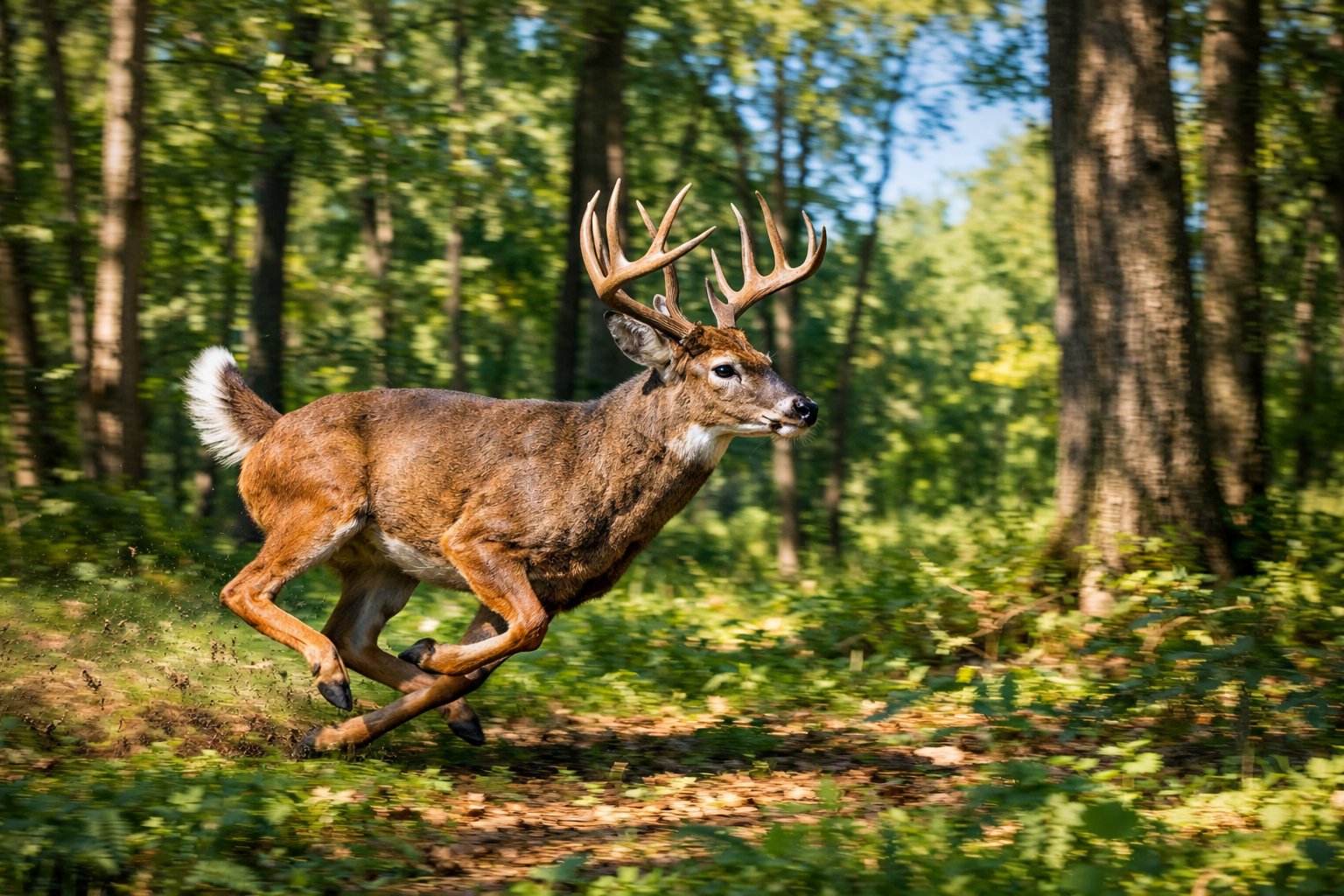
But there’s more to it than just raw speed. Deer mix bursts, sharp turns, and jumps to escape. Let’s dig into the basics of deer speed, the body parts that power them, and those wild behaviors that make them so quick.
Deer Speed Fundamentals

Deer rely on speed, agility, and stamina to dodge danger and cover ground. You’ll see how their top speeds stack up, how species differ, and when they choose to sprint or just keep a steady pace.
How Fast Can a Deer Run?
Most adult deer hit burst speeds between 30 and 45 miles per hour (mph). White-tailed deer usually top out around 35–45 mph for those quick sprints.
Mule deer show similar ability, often hitting the high 30s. Caribou and reindeer can really move, too—some say they reach close to 50 mph, though that’s rare in real measurements.
Age, health, and terrain all play a part. A young, healthy deer on open ground will run faster than an older one in thick brush.
Watch for their quick takeoff and sharp turns. Deer count on agility, not just speed.
Variation Among Common Deer Species
Different species show clear differences in speed. White-tailed deer (you’ll find them in eastern North America) can sprint up to about 45 mph in short bursts.
Mule deer, out west, run similarly but often use those long, bounding strides out in the open. Red deer and elk are bigger, so they max out closer to 30–40 mph. They’re slower, but their size gives them more power and stamina.
Roe deer in Europe are nimble and can burst away fast in the woods. Moose? They’re heavy and a bit slower—usually under 35 mph, even with those long legs.
If you want the nitty-gritty, check out this biology overview of deer speed.
Sprinting vs. Endurance Running
Deer have two main running modes: short sprints to get out of trouble fast, and longer, steady runs for migration or covering distance.
Sprinting only lasts a few seconds and uses every ounce of muscle. That’s when they hit those top speeds (30–45+ mph).
For longer trips, deer settle into endurance paces—think 15–25 mph, sometimes slower. Caribou migrating will keep a steady clip for miles, relying more on stamina than speed.
Terrain changes everything. Dense forest means short, fast bursts and quick turns, but out on the plains, deer can hold a faster run for longer.
What Makes Deer So Fast?

Deer blend light bodies, long legs, and springy muscles to sprint, turn, and leap. Anatomy, environment, and motivation all shape how fast they move and how long they can keep going.
Deer Physiology and Anatomy
When a deer bursts away from danger, you see its long, slender limbs and powerful hindquarters in action. Those legs create explosive force, and the flexible spine stretches with each stride to lengthen their step and boost speed.
Hooves dig in for grip, whether the ground is soft or hard. Special ligaments in their lower legs work like springs, storing energy on landing and releasing it when they push off.
A big heart and large lungs pump oxygen to the muscles fast, fueling those short sprints.
Species differ, of course. White-tailed deer usually reach 30–40 mph in a sprint, while mule deer and caribou can go even faster. Age and health matter—a young, fit deer always accelerates best.
Factors Influencing Deer Speed
The terrain around you changes how fast a deer can run. Open fields let them hit top speed. Thick woods force shorter strides and quick stops.
Deep snow, dense brush, or steep hills slow them down. Weather plays a part too. Wet or icy ground means less traction, and heat or exhaustion shortens those sprints.
Motivation makes a difference. A deer running from a predator puts in more effort than one just moving around.
Physical condition can’t be ignored. Injuries, parasites, or poor nutrition all slow a deer down. Season matters—rutting bucks might go for fast, short chases, while does with fawns use quick, careful bursts to keep their young safe.
Deer Speed vs. Horses and Dogs
Ever wondered if a dog or a horse could actually outrun a deer? Over short sprints, plenty of medium-sized dogs can keep up with a deer, or sometimes even beat one, at least on flat ground. Sprinters like greyhounds really shine here, though they burn out fast, especially if things get bumpy.
Horses, on the other hand, bring a lot more endurance to the table. They can keep up 25–30 mph for longer stretches, which is pretty impressive. Sure, some racehorses can sprint past most deer, but they really need a wide, flat space to hit those speeds.
Deer, though, have a knack for quick bursts, sharp turns, and leaping over whatever gets in their way. When the ground gets mixed up—think woods, ditches, fences—a deer almost always slips past both dogs and horses, even if their top speed isn’t much higher.


