
You probably figure deer just eat plants, right? Turns out, they’ll eat meat every now and then, too.
Deer mostly munch on leaves, grasses, and fungi. But when nutrients run low or seasons shift, they’ll grab a bite of carrion, eggs, or even small animals. That choice explains some of the weird scenes people spot in the wild.
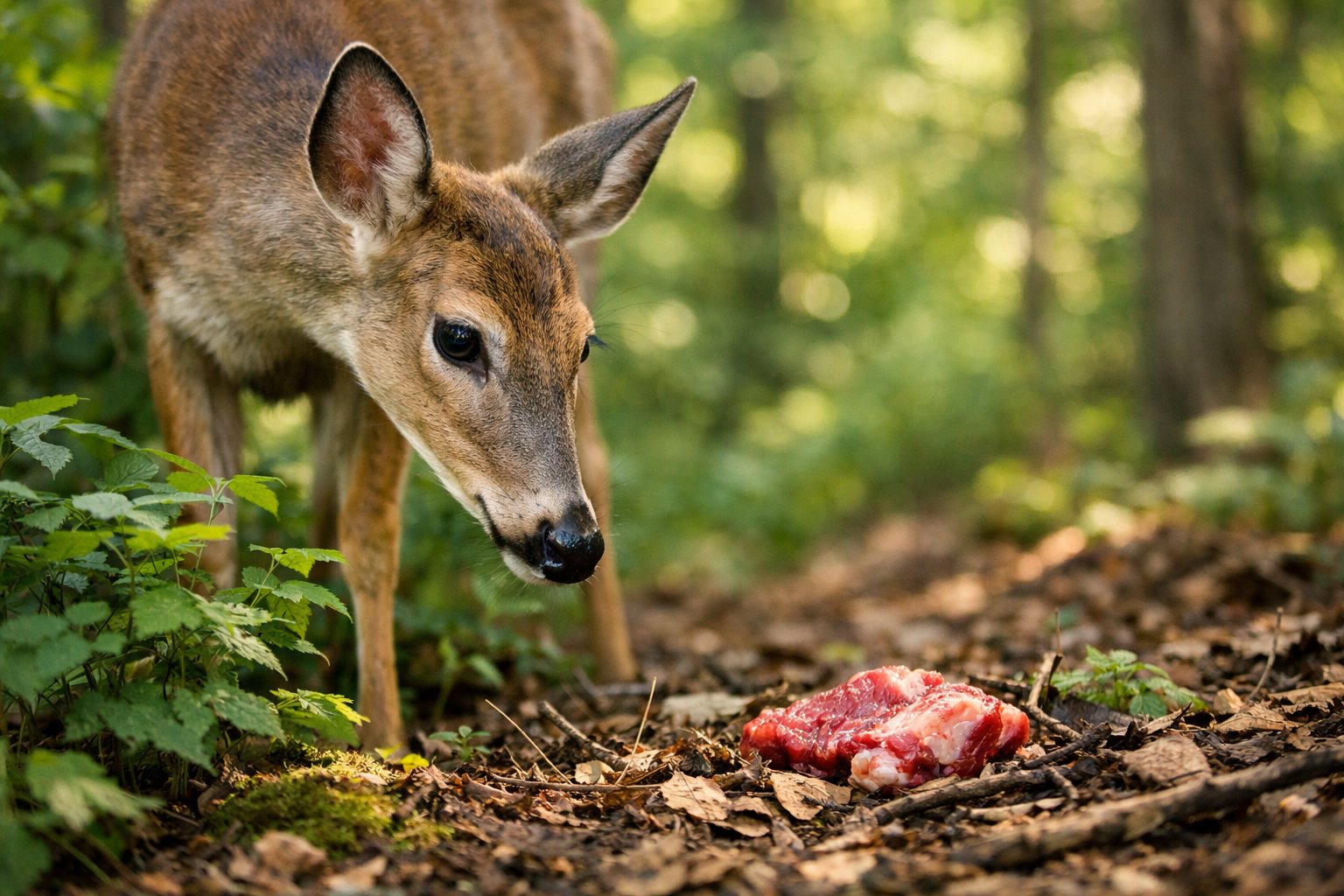
Why do deer suddenly go for meat? When does it happen, and how do they even handle animal protein when they’re built for plants?
Let’s dig into the science behind this surprise—and what it means for wildlife you might see near trails, farms, or even your backyard.
When and Why Do Deer Eat Meat?

Deer stick to plants for the most part, but sometimes they’ll eat animal matter for specific reasons.
Let’s look at real cases, how scavenging can help them survive, and why the need for minerals or protein might drive them to do it.
Documented Cases of Deer Eating Meat
Biologists and trail cameras have caught white-tailed deer and other species eating carrion, dead fish, and even small animals like nestling birds or snakes.
People have seen deer eating bird eggs on the ground or picking at hunter gut piles. Field notes mention deer gnawing on bones or shed antlers for minerals.
Usually, these are brief moments—not a regular habit. Videos show deer grabbing soft tissue or eggs they stumble across while foraging.
Deer don’t have the body for hunting big prey. So, when they eat meat, it’s mostly scavenged carcasses, tiny animals, or eggs.
Opportunistic Feeding and Survival Strategy
When food gets hard to find, deer switch things up. You might notice this in late winter or during droughts, when plants aren’t great and calories drop.
Eating carrion or eggs gives them a quick shot of protein and fat—stuff you just don’t get from twigs.
This isn’t a big shift in their diet, just a practical move to survive tough times. Their digestive system really prefers plants, so they don’t stick with meat for long.
But grabbing a few bites can give them the nutrients they need to hang on through rough patches.
Nutritional Deficiencies and Antler Growth
Deer need way more calcium and phosphorus when growing antlers or when females are nursing. You’ll sometimes see males chewing on shed antlers or bones—osteophagy, if you want the fancy word—to get those minerals.
Antlers grow fast and soak up a lot of calcium and phosphorus. Protein matters too, especially if there’s not much new plant growth.
Eating small animals, eggs, or carrion gives them a protein boost that helps with tissue repair and antler building. In spots where the soil and plants lack minerals, deer chew bones and scavenge more often.
How a Herbivore Eats Meat: Anatomy and Diet Flexibility
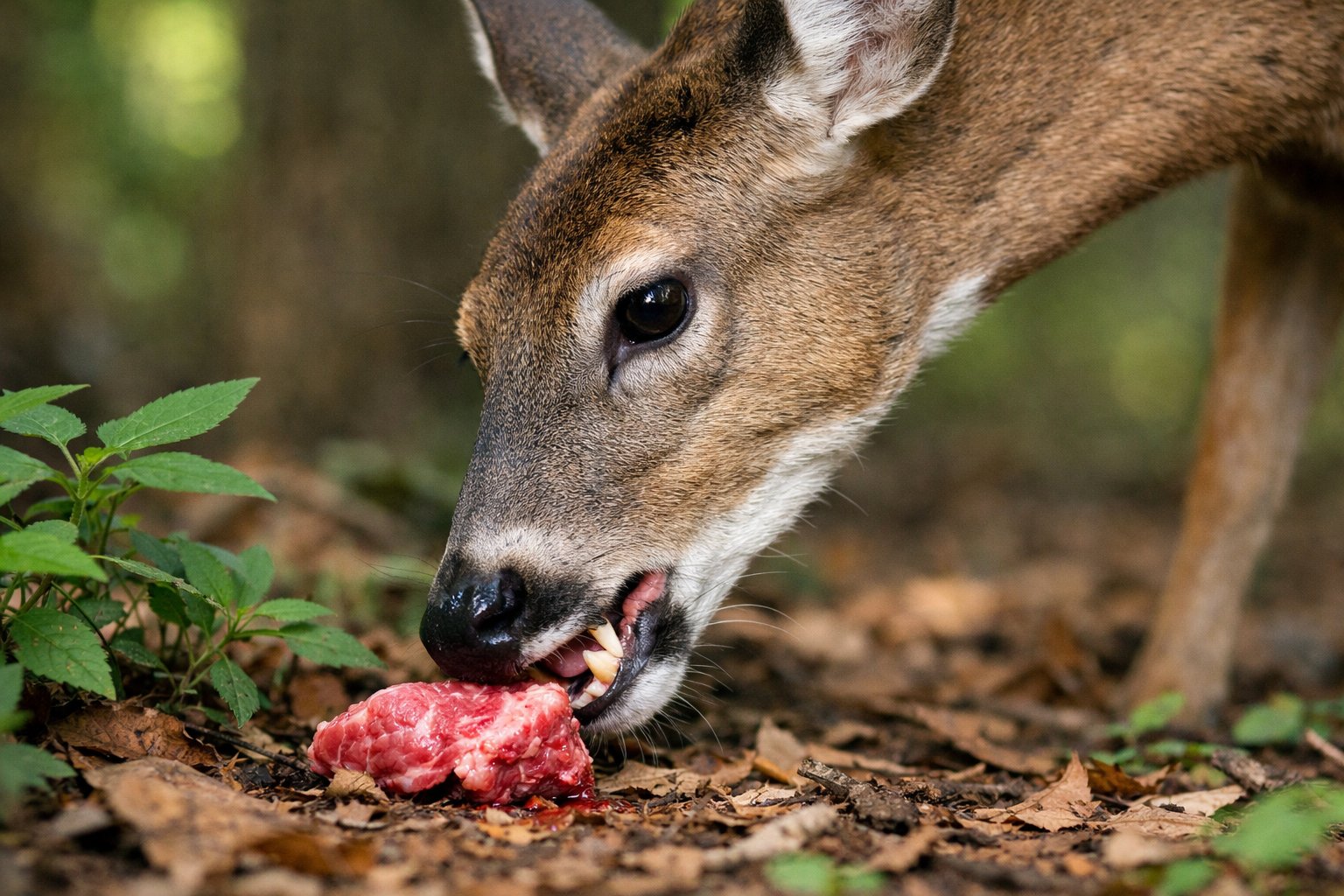
Let’s talk about how deer usually get their nutrients from plants, what their stomach does, and how a little meat fits in.
This part breaks down what deer eat and how their bodies handle the occasional meaty snack.
Plant-Based Diet and Natural Food Sources
Deer mostly go for leaves, grasses, fruits, nuts, and acorns. Those foods give them the fiber, sugar, and fats they need.
Young plants and fruits are easy calories. Nuts and acorns bring fats and protein when they’re around.
What deer eat changes with the seasons and where they live. In spring and summer, they love fresh shoots and herbs.
Come fall, they chase acorns and fruits to fatten up. Winter is tough—they nibble on twigs and woody plants when nothing else is left.
Even though they’re herbivores, deer sometimes eat eggs, insects, or dead things. These extras add protein and minerals plants might not have.
Hunger, habitat loss, or high energy needs—like for nursing moms—can push them to try new foods.
Ruminant Digestive System and Four-Chambered Stomach
Deer are ruminants, which means they’ve got a four-chambered stomach: rumen, reticulum, omasum, and abomasum.
The rumen is full of microbes that break down plant cellulose. Those little guys turn fiber into energy for the deer.
Chewing cud matters a lot. Deer spit up and re-chew food to help the microbes do their job.
That whole process works best for plants and lets deer get more nutrients out of their food.
Meat can go through their stomach, but the system isn’t really built for it. Deer enzymes and gut flora focus on breaking down plants, not lots of animal protein or fat.
A little meat might get digested, but it can mess with their gut microbes and slow down digestion.
Impact of Meat Consumption on Deer Health
Sometimes, deer eat meat and get a boost of protein, fat, and even minerals like calcium from bones. That extra nutrition can really help when food is scarce or when females need more energy to nurse their fawns.
If a deer eats small amounts now and then, it usually doesn’t cause any immediate harm.
But if they eat a lot of meat or do it for a long time, problems start to show up. Their gut microbes change, which can upset their digestion or make it harder for them to process fiber.
Too much protein or fat puts extra strain on a deer’s liver and kidneys. Over time, that’s not great for their health.
Meat can also introduce pathogens and parasites that deer wouldn’t usually encounter with their normal diet. When deer scavenge around human areas, the risk of disease and conflict goes up.
Wildlife managers try to use habitat and food choices to lower those risks and keep deer healthier.


