
You’ve probably spotted deer in parks, forests, or even along the roadside. They’re part of the Cervidae family, and honestly, they’ve got more going on than just antlers and a gentle stare.
Here are ten real facts that break down how deer live, what those antlers are for, and how these animals fit into their world.
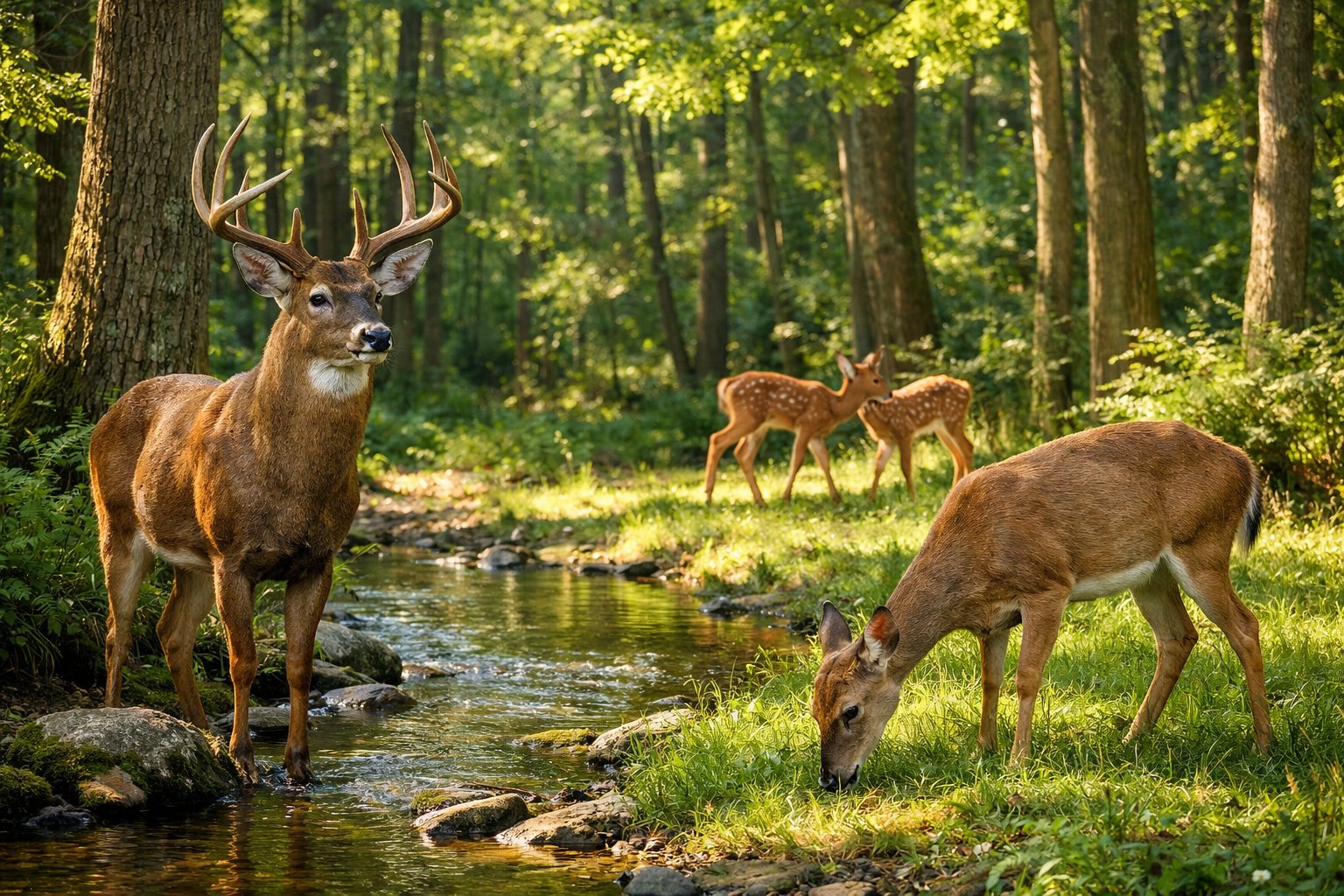
If you keep reading, you’ll get short, handy points about their eyes, antler growth, social habits, and what’s on their menu. These nuggets can help you spot deer, understand them, or just figure out how to share space with them—whether in the wild or your own backyard.
Top 10 Fascinating Deer Facts

Let’s get into how deer grow and drop antlers, how they talk and sniff things out, what fills their bellies, and how fawns manage to hide so well. There’s stuff here about their speed, size differences, and how North American deer act, too.
Antler Growth and Shedding
Male deer (and female reindeer) grow antlers from their skulls every year. Growth starts in spring, with a fuzzy velvet layer bringing blood and nutrients.
By late summer, the velvet peels away and the antlers harden just in time for breeding. When mating season ends, bucks shed antlers to save energy.
Shedding usually happens in late winter or early spring. People find these antler sheds on trails and in fields, and researchers use them to study deer health and age.
Antlers are bone, not horns, and in some species like elk—or the extinct Irish elk—they can get massive.
Deer Communication Methods
Deer talk in their own way, using sounds, body signals, and scent. Bucks grunt, does bleat, and fawns call out with high-pitched sounds to find their moms.
When they’re spooked, deer flash their tails as a warning. Scent is a big deal, too.
They’ve got glands on their legs, heads, and between their hooves. Bucks rub antler bases on trees to leave their scent and claim territory.
Reindeer and caribou use forehead scent glands during the rut. If you spot rubs, scrapes, or droppings on the trail, you’re seeing signs of deer communication.
Deer Diet and Digestive System
Most deer stick to a plant-based diet—leaves, twigs, grasses, and shrubs make up their meals. White-tailed and mule deer browse woody plants in winter.
Sometimes, muntjac or water deer go for small animals or carrion, but that’s rare. Deer have a four-chambered stomach, so they’re ruminants.
They chew their food, spit it up as cud, and chew again to break down tough fibers. This system helps them pull nutrients from rough plants.
If they’re low on minerals, deer might chew bones or nibble meat for extra phosphorus and calcium.
Fawn Camouflage and Survival
Fawns blend in with their spotted coats, hiding in leaf litter and grass during those first weeks. The spots break up their shape, making them tough to spot.
Mothers leave fawns tucked away while they feed, coming back a few times a day to nurse. Fawns stay still and keep their scent low to avoid predators.
Predators use sight, smell, or sound to hunt young deer. If you see a fawn alone, don’t touch it—mom’s probably nearby and will come back.
Human scent can sometimes make a mother abandon her baby, so it’s best to keep your distance.
Deer Athletic Abilities
Deer are fast, can jump like pros, and even swim when they need to. White-tailed deer can hit bursts of 35–45 mph.
They leap over fences more than 8 feet high and clear big gaps to escape danger. Their long legs and strong muscles let them accelerate quickly and make sharp turns.
Moose aren’t as speedy, but they’re powerful and swim well. Bucks use their agility during fights or when chasing does in the rut.
If you’ve seen deer leap and zig-zag when startled, you know how quick they are.
Diversity of Deer Species
The Cervidae family covers a lot of ground, from tiny pudú to giant moose. Depending on who you ask, there are about 40 to 60 deer species.
You’ll find white-tailed deer, mule deer, red deer, roe deer, elk, caribou, and water deer among them. Some species, like water deer and Siberian musk deer, skip the antlers and grow tusk-like teeth instead.
Reindeer females grow antlers, which is unusual. Some deer are everywhere, but others—like the Bawean deer—are at risk.
Deer Senses: Vision, Smell, and Hearing
Deer depend on their sharp senses to survive. Their sense of smell is impressive—they sniff out food, recognize family, and pick up on predators.
Deer use scent glands for marking and communication. Their eyes sit high and on the sides of their heads, giving them a wide view and good motion detection.
Most have a tapetum lucidum, a reflective eye layer that helps them see at night. Their hearing is top-notch, too; they swivel their ears to catch sounds.
Put all that together, and sneaking up on a deer isn’t easy.
Unique Features of Male and Female Deer
Male deer, or bucks, grow antlers each year and use them for fighting over mates. Antler size shows off a buck’s age and health.
Bucks also scrape and wallow to attract does and show dominance. Females, or does, raise the fawns and pick out safe bedding spots.
Reindeer break the mold—both males and females grow antlers, but females keep smaller ones through winter. In some species, does get aggressive to protect their young or food.
Largest and Smallest Deer Species
Moose take the prize for the biggest deer, with adult bulls weighing over 1,000 pounds and standing tall at the shoulder. Elk and caribou are also on the larger side.
The extinct Irish elk had antlers that stretched up to 12 feet. On the flip side, the southern pudú is tiny—barely 20 inches tall.
Big deer can reach higher plants, while small deer duck into thick brush to hide from danger.
Deer in North America
North America is home to white-tailed deer, mule deer, elk, moose, and caribou. White-tailed deer thrive in forests, fields, and even suburbs.
They sometimes cause car accidents, especially during the rut. Mule deer prefer the western mountains and brushlands, with their own unique ear and antler shapes.
Caribou (reindeer) live up north and migrate in herds; both sexes grow antlers. Elk have bounced back in many areas thanks to conservation.
You’ll spot deer in all kinds of habitats, and how people use land really affects where herds go and how big they get.
If you want more, check out 10 Fascinating Facts About Deer You Probably Didn’t Know.
Fun and Surprising Deer Details

Deer stick together in groups, rely on scents and sounds to talk, and see surprisingly well at night. Here’s how they organize, stay safe, show up in culture, and even cross paths with people in cities, highways, and wild places.
Deer Social Structure and Herd Behavior
You’ll often spot deer in small groups, or herds, especially across the United States and Canada. White-tailed deer and elk are pretty common in these areas.
Herds usually have females (does) and their fawns. Bucks join in during the breeding season, or rut, when the competition for mates heats up.
Herd size changes with the seasons and food supply. In winter, deer gather where shelter and food are better, which boosts their chances of making it through the cold.
Sometimes, mothers will take in orphaned fawns, and female-led groups help care for the young. Predators like coyotes and mountain lions shape how herds move and hide.
When danger shows up, deer snort and flash their tails to warn others, then bolt in zig-zag paths.
Adaptations for Night and Safety
Deer are built for life in dim light. Their eyes have loads of rod cells and a reflective layer called the tapetum lucidum, which helps them see well at night.
You’ll notice they’re most active at dawn and dusk—those crepuscular hours—when they feed and move around. Their hearing and smell work with their vision to spot threats.
Deer can swivel their ears to catch faint noises from predators or people. If startled, they sprint and leap high—handy for dodging mountain lions or jumping fences.
Bucks use antlers for fighting during the rut and as a visual signal to other males about their size and strength.
Deer in Popular Culture
Let’s be honest—you probably know Bambi. That Disney movie really changed how people feel about deer.
Bambi’s modeled on a white-tailed deer and made a lot of folks care about wildlife and forests. Deer show up in hunting traditions, art, and even city murals across North America.
You’ll see deer in holiday decorations, logos, and literature, where they stand for gentleness or wildness. This cultural love (or sometimes frustration) shapes wildlife rules and how neighborhoods react when deer wander in.
When deer numbers climb near towns, people argue about feeding bans, fencing, and keeping roads safe.
Deer and Human Encounters
You might spot deer near roads, in parks, or even wandering through your backyard.
In the United States, deer-vehicle collisions injure and kill many people each year. Stay alert on roads, especially around dawn and dusk.
If you live close to woods in Canada or the U.S., try planting deer-resistant plants. High fencing can help keep your garden safe, too.
Leaving pet food outside? That’s an open invitation for deer, so it’s best to bring it in.
When you see a deer, keep your distance. Don’t feed them—it changes their behavior and increases the risk of disease.
Sometimes you’ll find a fawn alone. Usually, its mother is just out foraging and will return.
Wildlife agencies suggest calling local conservation officers only if you clearly see the deer is injured or it poses a danger to people.


