
You can usually spot a happy deer by watching how it moves and where it chooses to hang out. A relaxed posture, slow grazing, gentle grooming with others, playful leaps, and soft grunts all hint at contentment in deer.
When deer feel safe and well-fed, they relax, socialize more, and show playful behaviors that make their mood pretty easy to read.
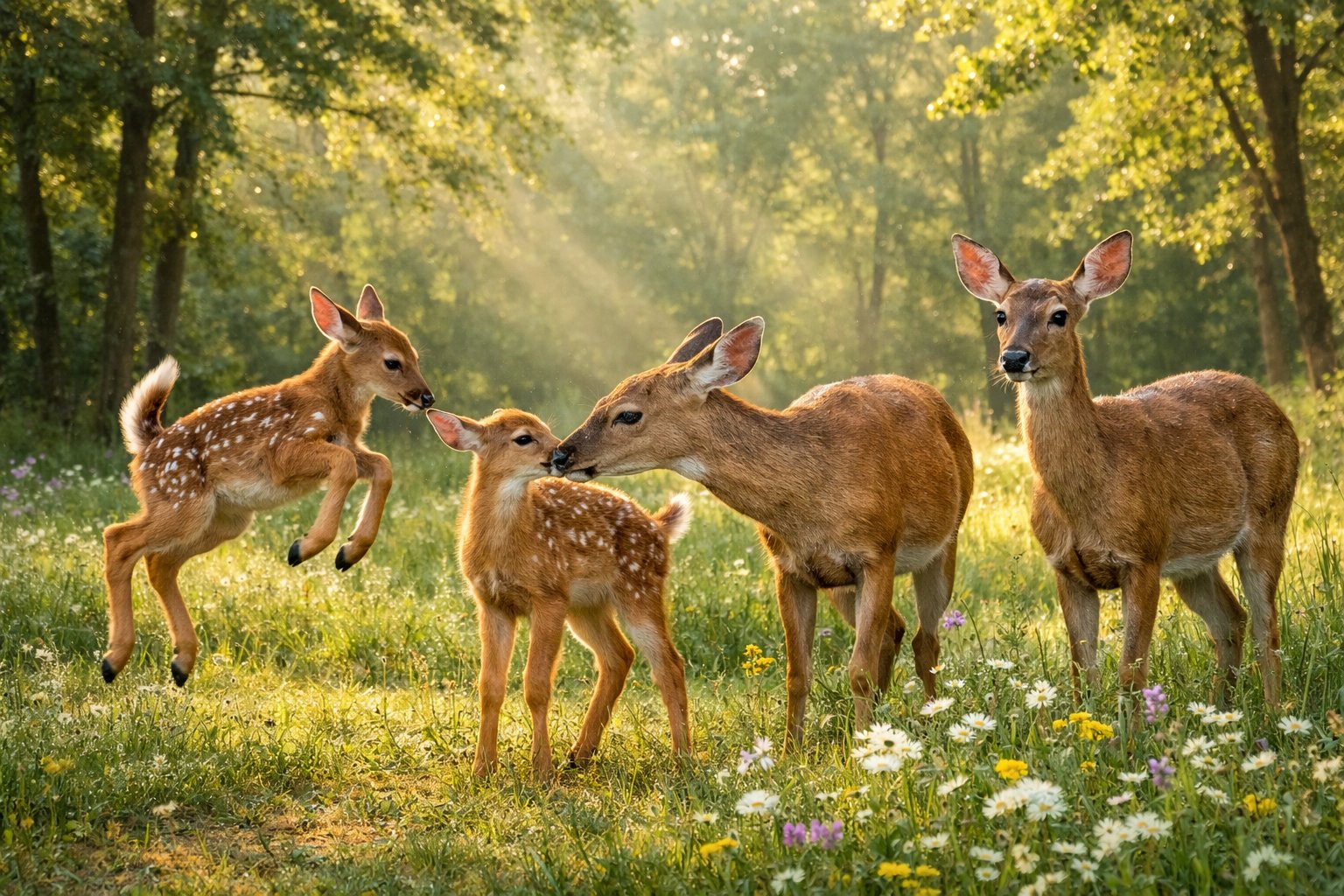
Keep an eye on their ears, tails, and how the group acts; these small cues tell you if a deer feels calm or spooked. The rest of this article breaks down body language, social habits, vocal cues, and how food and habitat shape deer behavior so you can spot those peaceful moments in the wild.
How Deer Show Happiness: Body Language and Social Behaviors

Happy deer stand out if you watch for relaxed posture, playfulness, group signals, and slow feeding or sunbathing. Loose muscles, gentle chases, mutual grooming, and calm grazing all suggest deer feel safe.
Relaxed Body Posture and Movement
A relaxed deer keeps its head low or at mid-level, walking with a slow, steady gait. Its ears hang loosely and might flick a bit; they don’t point stiffly forward.
Watch the tail—it hangs down or sways slowly, not tucked tight. Soft muscles, not tense, are another giveaway.
A whitetail that stops to chew slowly and keeps its nose near the ground probably feels secure. Resting bucks stand or lie down without bristling hair.
Their eyes look soft, blinking normally instead of staring wide and fixed. If a deer moves confidently through open ground without pausing every few steps to scan, that’s a sign it feels comfortable.
Try binoculars to spot these details without disturbing them.
Playful Actions Among Fawns and Adults
Fawns bounce, leap, and make quick little runs that look just like play. You’ll see them chase siblings and jump with all four legs off the ground.
These bursts help them build muscle and social skills. Adults play too, especially yearlings and bucks that aren’t breeding.
They might spar gently, butting heads or making mock charges with no real intent to harm. These playful bouts end quickly and without aggression.
Look for loose, easy movements and relaxed faces when they play. If their tails and ears stay calm afterward, it was probably just play, not a fight.
Play usually happens near food or in clearings where deer feel safe.
Signs of Social Contentment in Herds
When you see deer in calm, close groups, that’s often a sign they’re content. Grooming—nibbling at each other’s necks or shoulders—builds social bonds and keeps parasites down.
Resting close together on a sunny slope or tucked in a thicket shows trust. The herd keeps its pecking order, but younger bucks yield without drama.
If one deer stands while the rest stay bedded, it’s usually sentinel behavior, not panic. Soft grunts or low bleats might pop up during these calm moments.
When deer bed down within a few body-lengths of each other, they feel pretty secure. Mutual grooming or feeding in sync also means the group is relaxed.
Feeding and Sunbathing When Relaxed
A relaxed deer eats slowly, chewing with care and pausing between bites. You’ll spot deer grazing in open fields or along forest edges, not rushing or scanning every second.
If a deer spends several minutes in one patch, it probably trusts the area. Sunbathing is another clue.
Deer lie on a warm spot with legs tucked underneath, exposing their sides to the sun. Sometimes they close their eyes or blink slowly.
White-tailed deer often pick slightly higher spots with a good view to catch some sun. When deer switch between eating and short grooming breaks, they’re mixing comfort with self-care.
If you see bucks feeding side-by-side or fawns napping near does while adults keep eating, the group likely feels safe.
Communication and Environmental Factors That Influence Deer Happiness

Deer show happiness with clear body language, soft sounds, and slow feeding when food and shelter are good. You can read their ear and tail positions, hear gentle grunts or bleats, and spot calm grazing in places like parks, woods, or the edges of neighborhoods.
Non-Verbal Cues: Tail and Ear Signals
Start with the ears and tail. A relaxed doe holds her ears a bit sideways and may flick them slowly.
That’s a good sign she’s not tense or searching for threats. A tail that hangs low or loose while feeding usually means comfort.
Fawns playing might lift their tails briefly during joyful leaps. Tail flicks can mean irritation, but if the body is loose and chewing is slow, it’s probably contentment.
Ears that swivel toward sounds but stay soft show curiosity, not fear. Stiff ears or a tucked tail? That’s usually stress.
Hunters and wildlife watchers use these signs to figure out if deer feel secure.
Deer Sounds: Grunts, Bleats, and Other Happy Vocalizations
You’ll sometimes hear soft grunts or low bleats from calm deer. Does use gentle bleats to keep fawns close or chat with the herd.
These sounds are short and not sharp. Tending grunts and quiet contact grunts show bonding or mild interest, especially in spring and summer.
Bucks also make low grunts as they move through the herd, and outside the rut, it’s usually not aggressive. Don’t mix up alarm snorts or wheezes with happy calls.
Alarm sounds are sharp and often repeated. If you record or hear deer vocalizing, check what they’re doing—feeding calmly or grazing with relaxed posture usually means those sounds are friendly.
The Role of Safety, Food, and Habitat
Deer need safe cover, steady food, and water to really relax. You’ll find content deer in places with forest edges, meadows, and parks that offer both food and hiding spots.
Areas with oak trees and lots of acorns give them good nutrition and make them less anxious. When food is abundant, deer eat slowly and don’t spend as much time on alert.
Urban deer can look relaxed when people aren’t around much, but lots of disturbance raises their stress. Conservation efforts that keep habitats diverse help deer stay healthy.
Predators, loud noises, or bad weather can make happy behaviors disappear. If you manage land, keeping brush for bedding and planting native browse can really boost deer well-being.
Human Interaction and Observing Happy Deer
When you watch deer, keep your distance and grab some binoculars if you have them.
You’ll spot happier deer if you stay quiet and avoid sudden movements. Try visiting at dawn or dusk—those hours are honestly the best for calm feeding and social grooming.
Don’t feed or approach does and fawns. Feeding changes their behavior and actually harms the herd’s health.
If you work with wildlife experts or follow National Deer Association advice, you help conservation efforts and reduce conflicts with hunters and the public.
Sometimes, deer in parks or neighborhoods act like they’re comfortable around people, but that can hide real stress. Watch for relaxed chewing, grooming, or playful behavior—those are the clearer signs of a content deer, not just how close they’ll let you get.


