You probably know folks call deer meat “venison,” but have you ever wondered why that name stuck or what it really means? Venison is just the common name for the meat from deer and their close relatives—it’s what you get when you hunt or farm these animals.
Let’s dig into where that name comes from and what makes venison stand apart from other red meats.
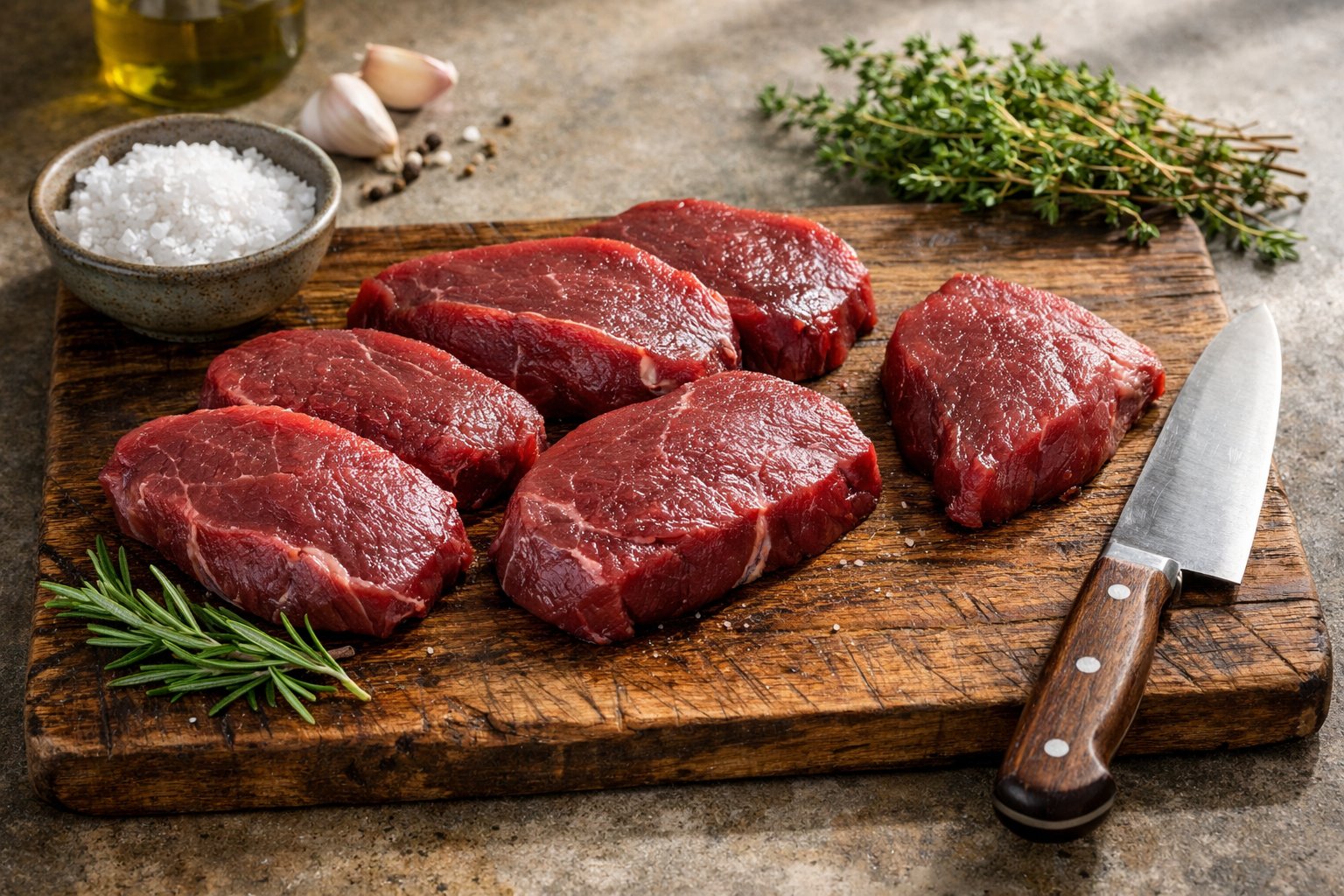
You’ll get a bit of history, some notes on how venison tastes and cooks, and a look at the main types out there. If you’re thinking about buying, cooking, or just getting to know this meat, there’s something here for you.
Why Is Deer Meat Called Venison?

People use “venison” for deer meat today, but the word has roots in hunting lingo and old European languages. Over time, hunting, law, and food preferences shaped how we use the word.
Etymology and Linguistic History
The word “venison” comes from the Latin venari, meaning “to hunt.” Later, Old French brought in venaison, and English picked it up after the Normans showed up.
At first, folks used “venison” for any hunted meat, not just deer. Medieval records mention venison for boar, hare, and other game. As English evolved, people narrowed it down to mean only deer meat.
That shift matters because it ties the name to the act of hunting, not just the animal. When you call deer meat venison, you’re using a word packed with centuries of hunting culture and language change.
From Game Meat to Modern Venison
Back in medieval times, venison meant all sorts of game. Nobles and commoners both used the word, but laws controlled who could hunt what.
By the early modern period, venison started to mean only deer and similar animals. Depending on where you are, you might see antelope called venison—especially in parts of Africa where true deer don’t live.
Today, most restaurants and butcher shops use “venison” just for deer meat. If you buy or cook venison, you’re connecting with that history. Food terms really do get more precise as time goes on, shaped by markets, farming, and old hunting habits.
Norman Conquest and Cultural Influences
The Norman Conquest in 1066 brought a boatload of French words into English, including venaison. The Normans controlled hunting rights and royal forests, so their vocabulary pretty much set the tone for legal and food language.
You’ll spot venison in old English law and stories, usually with a whiff of status. Nobles ruled the hunt and ate venison, so the word became a bit fancy. As English soaked up Norman French, venison shifted from a catch-all for game to a more specific food term.
Those changes stuck around. Even now, “venison” feels like it carries a bit of its old-world flavor—hunted meat with deep ties to law, land, and social class. It’s kind of wild how words hang onto their past, isn’t it?
Characteristics and Varieties of Venison
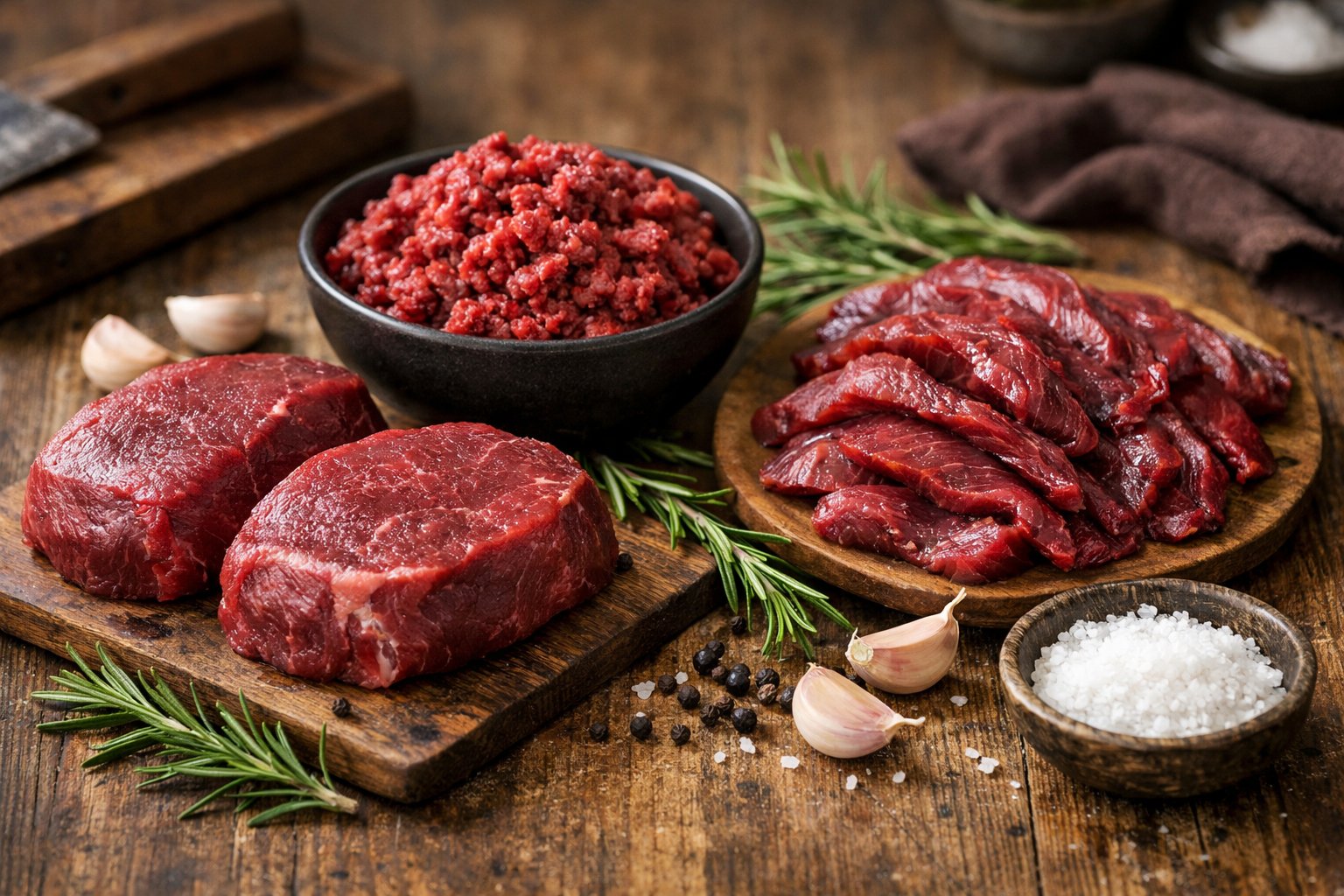
Venison covers meat from many kinds of deer and close relatives. You’ll find lean cuts, flavors that go from mild to pretty gamey, and a bunch of uses—from steaks to ground meat—depending on the animal and how it grew up.
Types of Venison and Related Species
Most folks in North America mean white-tailed deer or mule deer when they say venison. In Europe, you’ll run into red deer and fallow deer, and on some islands, axis deer show up. Cooks often group elk and moose with venison since they’re part of the Cervidae family too.
Some places label farmed red deer meat as cervena. Wild deer and market hunting give you more variety and surprises. Farmed deer offer consistent sizes and predictable cuts, which is handy if you want a certain steak or roast.
Venison Taste and Gamey Flavor
Venison’s flavor can be mild and beefy or lean toward that strong, gamey edge. Young or farmed deer usually taste milder. Older wild deer? They can be a lot more intense, thanks to their diet and all that running around.
What deer eat really changes the flavor. If they munch on acorns, woody plants, or salty grasses, you’ll taste it. How you handle the meat matters too—quick processing and chilling keep flavors clean. Cooking low and slow or tossing in a marinade can tame the gamey notes in steaks, burgers, or roasts.
Nutritional Benefits and Content
Venison is lean, high in protein, and usually packs less fat and fewer calories than grain-fed beef. You get good amounts of iron and B vitamins too.
Wild venison sometimes has more healthy fats, like conjugated linoleic acid (CLA), than factory meats. Ground venison cooks fast and can dry out, so tossing in some oil or fatty pork is a good move for juicy burgers. If you’re tracking macros, venison delivers a solid protein-to-fat ratio for most diets.
Sourcing Venison: Wild vs. Farmed
If you hunt deer yourself, you get to control the harvest. The meat comes fresh from white-tailed, mule, or other wild deer.
Hunters need to check animals for any signs of disease. Always follow your local rules about chronic wasting disease testing.
Deer and elk farms raise animals under set feed and processing standards. These farms deliver consistent meat to stores and restaurants.
Sometimes, market hunting or wildlife culling brings in venison from axis deer or invasive herds. That meat can get USDA inspection and end up for sale.
It’s worth checking the label or just asking if the meat is wild, farmed, or USDA-processed. That way, you know more about its traceability and safety.


