
You might spot a deer in your yard and wonder how it’ll react if your dog shows up. Deer usually feel afraid of dogs because the scent, shape, and movement of canines set off a strong flight response. That simple fact helps you keep your pet safe and also protects wildlife when you’re out or near green spaces.
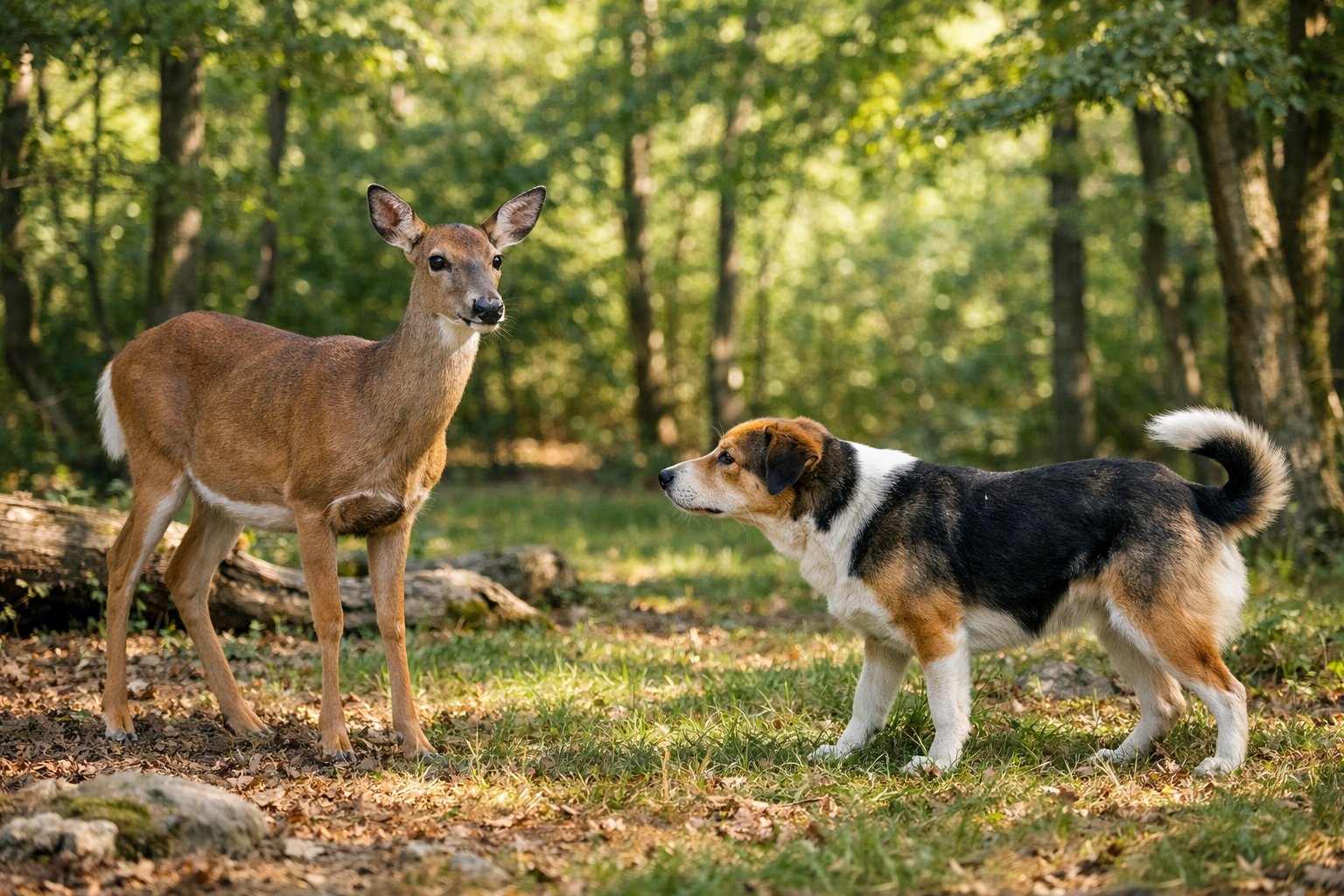
Let’s talk about why scent, sound, and sight matter, how past exposure can change deer behavior, and what you should do if your dog and a deer cross paths. Stick around for some practical tips so you can keep both animals safe—hopefully without any drama.
Why Are Deer Afraid of Dogs?

Let’s break down why deer run from dogs and what senses or risks drive that reaction. It all ties back to a long predator history, sharp senses, and the place where deer live.
Instinctive Fear and Evolutionary Roots
Deer have evolved as prey for canids like wolves. Over thousands of years, white-tailed deer and other species learned to treat any canid shape, movement, or group hunting as a real threat.
That hard-wired fear shows up as a quick flight response when a deer spots anything that looks or moves like a predator. It’s not personal—honestly, even the friendliest pet can trigger the same reaction since that instinct comes from real predation risk.
When you see deer freeze, flick their ears, or bolt, you’re watching a survival reflex shaped by wolves, coyotes, and other hunters.
Scent, Sight, and Sound Triggers
Deer rely on three main cues: smell, sight, and sound. Their noses pick up canine scent from far away.
If the wind carries your dog’s scent, deer will get alert before they even see you. Visual cues like a dog’s shape, quick movements, or chasing behavior push deer to run almost instantly.
Barking and the sound of running paws set off alarms for deer. Even playful barking can sound like pursuit to them.
Try to keep your dog under control in deer habitat. Scent plus noise really increases the odds of a chase and can stress out local deer.
Impact of Environment and Habituation
Where deer live changes how they react to dogs. In rural areas with more predators, deer stay jumpy and run off fast.
In suburbs, some deer get used to seeing dogs and people, so they might tolerate a closer approach. Still, if they feel threatened, they’ll bolt.
Habituation only lowers stress a little. Even deer that seem used to dogs will still run if startled.
Repeated dog encounters can disrupt feeding, stress out fawns, and hurt the overall health of the population. Keeping dogs leashed and away from core deer habitat just makes sense for everyone.
Key Deer-Dog Interactions and Safety

Let’s look at how deer react to dogs, when things get risky, and what you should do to protect pets and wildlife. The main thing? Keep dogs under control, avoid fawn areas, and watch out during rutting season.
Deer Defensive Behavior and Attack Risks
Deer usually run from dogs. But if you trap or corner them, they’ll defend themselves.
A doe with a fawn might charge, kick, or even gore a small dog. Larger bucks can strike with antlers if they feel threatened.
Watch for warning signs like a stiff body, ears pinned back, stomping, snorting, or a lowered head. If your dog approaches a deer, call it back right away and step between them.
Never let your dog chase or harass wildlife. Chasing just raises the risk of injury for both animals.
Certain dog breeds—like hounds, terriers, and some herding dogs—have stronger instincts to chase deer. Even small dogs can get seriously hurt.
Keep your dog leashed where you know deer live. At home, a secure fence helps prevent sudden escapes.
Seasonal Factors: Fawns and Rutting Season
Spring and early summer bring fawns that hide and rely on camouflage. You might not notice a fawn until your dog finds it.
If a dog gets too close to a fawn, the mother often returns quickly and can get very aggressive. Try to avoid spots with tall grass or brush where fawns bed down.
During rutting season—usually in the fall—bucks chase does and fight each other. If a dog interrupts, a buck might act defensive or territorial.
Antler wounds to dogs happen more often during this time. Stay extra cautious from late summer through fall when rut activity ramps up.
Time your walks to avoid dawn and dusk when deer are most active. Respect wildlife signs and give deer plenty of space.
If you spot fawns or see signs of mating behavior, just leave the area calmly and keep your dog close.
Responsible Pet Ownership and Prevention
You’ve got to keep your dog under control to protect both your pet and the deer. Grab a leash, work on voice recall, or use a fenced yard—anything that stops those unsupervised run-ins.
A sturdy 6-foot leash helps a lot. Reliable recall training? That’s even better. These steps cut down the chances your dog will chase deer into roadways or your neighbor’s yard.
If you’re living near deer habitat, try to get rid of things like bird seed or fruit trees that pull deer in close to your house. Maybe set up some motion-activated lights or try scent-based deer repellents around your yard. Just make sure you check your local wildlife rules before you use any repellents.
If you spot injured wildlife, call your local wildlife management or a conservation group. Don’t try to handle wild deer on your own.
If your dog gets hurt, get them to the vet right away. Let the vet know about any possible puncture wounds or tick exposure from the deer.


