
Ever watched a deer leap across a yard and wondered if your 6-foot fence stands a chance? Honestly, most deer can and will jump a 6-foot barrier if they’re spooked or really want what’s on the other side. So, a basic 6-foot fence isn’t a sure thing. That changes how you have to think about protecting gardens, young trees, or any landscaping you care about.
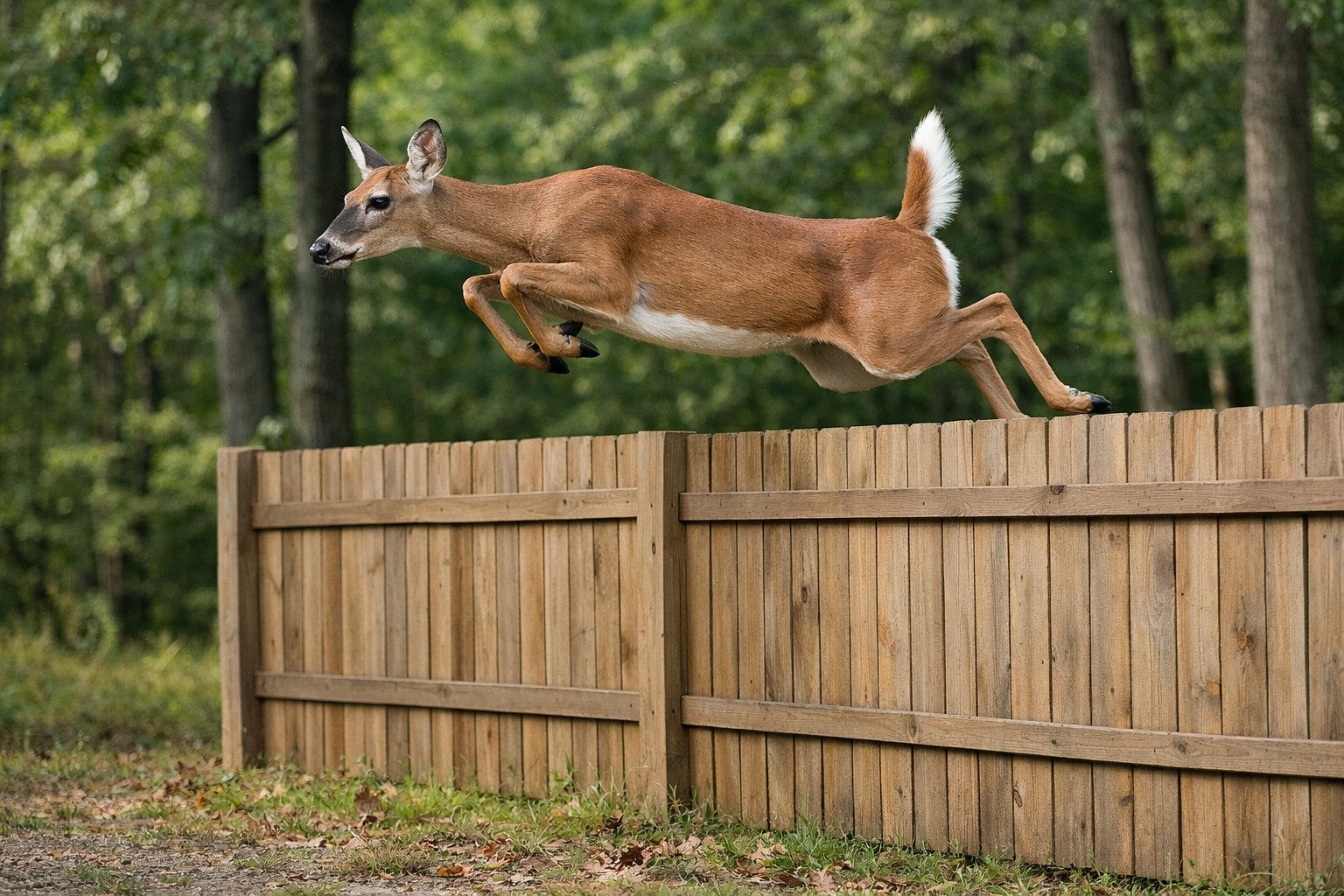
Let’s look at why deer jump fences, when they usually don’t bother, and what tweaks actually help keep them out.
You’ll get some practical tips on fence height, construction, and extra deterrents that really work for your yard.
Can Deer Jump a 6ft Fence?

A 6-foot fence stops plenty of deer, but it really depends on the species around you, how much they want to get in, and what kind of fence you put up.
You’ll need to think about their jumping skills, how many deer are in your area, and even the slope of your land before deciding if 6 feet is enough.
Deer Jumping Ability and Species Differences
White-tailed deer and mule deer show up the most often.
White-tails can clear about 8 feet when they’re determined, but a lot of them stop at 6 or 7 feet if nothing’s chasing them.
Mule deer sometimes go even higher, especially if they get a running start.
Elk and moose are bigger, but elk can still clear similar heights—though you probably won’t see them in most backyards.
It helps to figure out which deer you’ve got before picking a fence height.
If white-tails or mule deer visit often, you’re going to need to plan for more jumping power.
Body size and leg length matter a lot.
Fawns and younger deer can’t jump as high.
A 6-foot fence will turn away some, but healthy adults can still get over it if they’re motivated.
Factors Affecting Deer Jump Height
Motivation, terrain, and what they can see all change how high deer jump.
If a deer gets a long, flat run-up, it has more speed and can clear a higher fence.
Slopes, ramps, or even big rocks nearby can help them get over taller barriers.
Hunger, mating season, or being chased crank up their motivation.
Lots of deer in your neighborhood? That means someone’s more likely to risk a big jump for a snack.
If they can’t see through the fence, they usually hesitate—so solid barriers cut down on jump attempts.
Fence design matters too.
If you angle the top outwards or use tensioned wire, it’s harder for them to clear.
Burying the base or adding mesh stops them from digging under or squeezing through gaps.
Likelihood of Deer Clearing a 6ft Barrier
Most deer won’t bother jumping a 6-foot fence for regular food if things are calm.
Wildlife agencies say deer usually avoid big jumps unless they’re really desperate.
So, a 6-foot fence might work well if you don’t have tons of deer passing through.
But if you see lots of white-tails or mule deer, expect a few to try anyway.
A spooked or chased deer can blast over 6 to 8 feet, so determined ones might make it.
Adding things like double-fencing, visible obstructions, or raising the fence to 7 or 8 feet cuts the odds of a breach.
If you want to keep deer out almost entirely, go for at least 8 feet or use angled extensions and ground barriers.
For most yards, a 6-foot fence plus some smart add-ons gives pretty solid protection without draining your wallet.
Effective Deer Fencing and Deterrent Solutions

Choose the right height, sturdy materials, and a mix of physical and active deterrents to keep deer out.
You’ll find out which fence heights work best, which materials actually last, and which non-fence tricks help reduce deer damage.
Recommended Fence Heights for Deer Exclusion
Most experts suggest a fence between 7.5 and 8 feet if you’re dealing with white-tailed or mule deer.
If you’ve got lots of deer or mule deer specifically, aim for 8 feet.
A 6-foot upright fence might stop some deer when things are calm, but they can jump it if they get a good run or really want in.
If you angle a 6-foot fence outward by 30 to 45 degrees, it’s tougher for deer to clear without using more materials.
A double-fence setup works when height is limited.
Set up two 4–5 foot fences about 4–5 feet apart—this messes with their depth perception and they usually won’t try to jump both.
It’s a neat trick that often works as well as a single 8-foot fence, plus it uses shorter posts and holds up better in wind.
Types of Deer Fences and Key Materials
Woven wire fence (heavy mesh) and high-tensile wire are the most common picks.
Woven wire with 2–4 inch mesh keeps deer from squeezing through and stands up to them leaning or rubbing.
High-tensile wire works for tall, strong fences and for electric setups if you stretch it tight.
Fiberglass posts won’t rot and go in easier than wood for woven wire.
Steel T-posts add strength for high-tension runs.
For visibility, add a top rail or flagging so deer don’t try to jump blind.
Here’s a quick rundown:
- Woven wire: Tough, solid barrier.
- High-tensile wire: Strong, doesn’t stretch much, great for tall fences.
- Electric fencing: Lightweight, cheaper, works well as a single-strand top or multi-strand line.
Pick your materials based on your budget, how windy it gets, and whether you want a permanent or seasonal barrier.
Alternative Barriers and Deterrents
If you can’t build a tall fence, try mixing things up. Motion-activated sprinklers can startle deer and might make them think twice about coming back.
Plant some deer-resistant plants around the edges to lower the appeal, but honestly, don’t count on plants alone—especially if deer are already hungry.
You could set up electric fencing as a humane shock deterrent. Use a single top line or a low double line, and it actually works even better if you pair it with woven wire.
Motion-activated lights or ultrasonic devices? Results are all over the place. You’ll probably want to test them in your own yard before trusting them.
Think about burying 6–12 inches of mesh or adding an outward skirt if you’re worried about digging. Combining a double fence, an electric line, and some smart planting gives you the best shot at keeping deer out and cutting down on damage.


