
Most folks assume deer stick to plants, but that’s not always the case. Sometimes, when they’re hungry or lacking nutrients, deer will actually eat meat or carrion—even if it’s pretty rare.
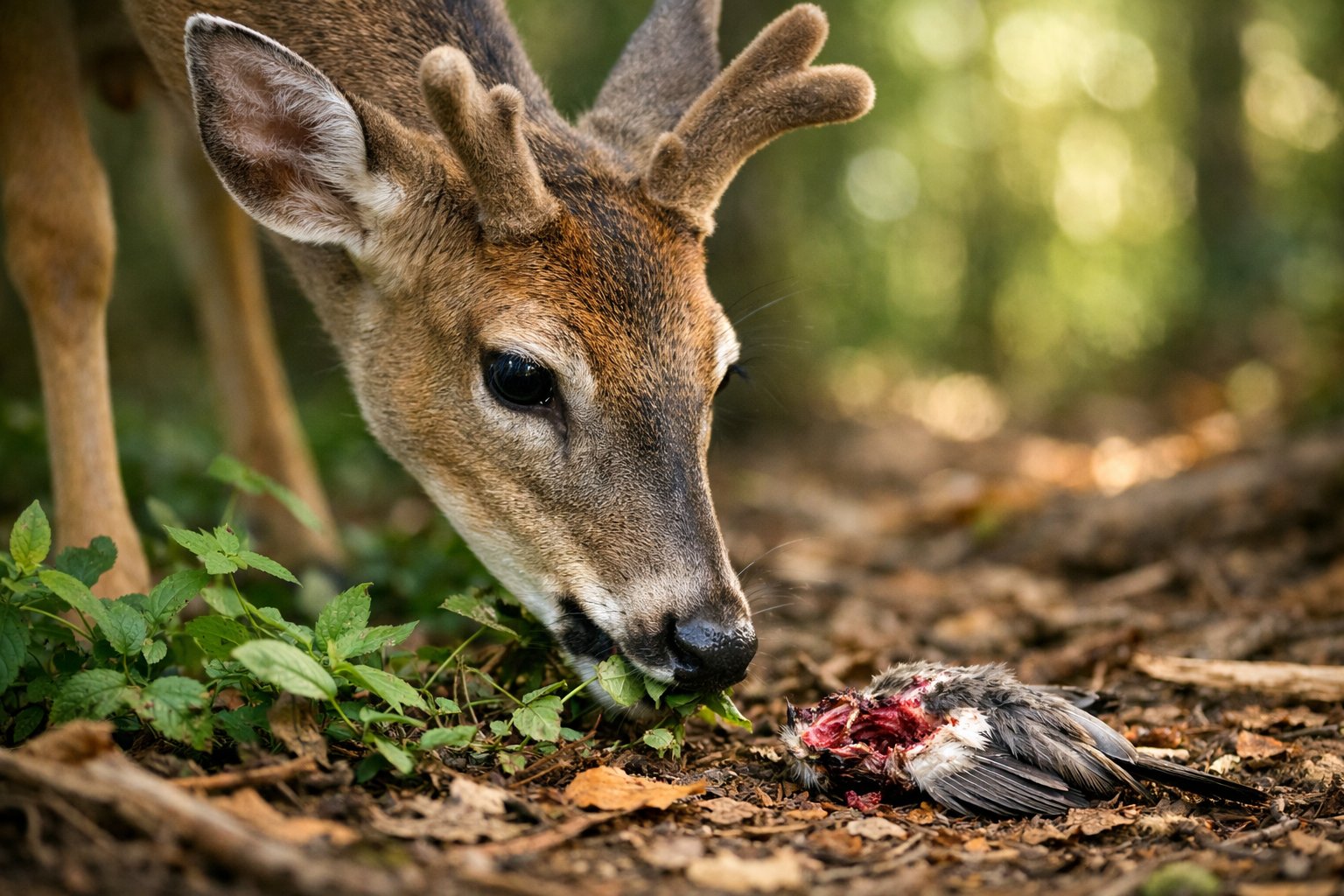
People have caught deer nibbling on fish, birds, or even scavenged remains. We’ll look at how often this happens, why they do it, and what it means for their health and digestion.
Do Deer Ever Eat Meat? Evidence, Frequency, and Reasons

Deer mostly eat plants, but sometimes they’ll go for animal matter if they need certain nutrients. This behavior pops up in specific places and times—usually when there’s a shortage of minerals or protein.
Documented Cases of Deer Eating Meat
Researchers and trail cameras have actually caught white-tailed deer and others eating animal matter. You’ll find photos of deer grabbing nestling birds, eggs, or small carcasses.
Deer also gnaw on bones and shed antlers for calcium and phosphorus. Scientists call this osteophagia.
Some reports mention deer eating dead rabbits, squirrels, snakes, and even fish. Trail cameras have caught them at hunter gut piles too.
Universities and wildlife groups have looked into these events and confirmed they happen, though it’s not common at all. If you want to see more about this, check out field observations and camera evidence from ScienceInsights.
How Often Do Deer Consume Animal Matter?
Deer eating meat is pretty rare, and it usually depends on the season or the local environment. You’re more likely to see it where plant food is scarce or during tough winters.
It happens more often in places with poor soil, where plants lack minerals like calcium and phosphorus. Most deer stick to plants year-round, honestly.
Sometimes, you’ll see a burst of this behavior—like chewing bones in spring for antler growth, or scavenging a carcass when food is really low. Trail cameras suggest only a small number of deer ever do this, and even then, it’s not a regular thing.
Why Do Deer Eat Meat?
Deer eat meat mainly when they need nutrients they can’t get from plants. Bucks need lots of calcium and phosphorus for antlers, and females need extra minerals during pregnancy and while nursing.
Animal matter and bones pack more minerals and protein than plants, especially when those nutrients are in short supply. After a hard winter or when forage quality drops, protein needs go up.
Eating eggs, nestlings, or carrion gives quick calories, fat, and amino acids. This is classic opportunistic feeding—they’ll take easy, nutrient-rich food when it’s there, but they don’t go hunting like predators.
Deer Scavenging vs. Hunting Behavior
Deer scavenging doesn’t look anything like true hunting. When you see deer eating carrion, eggs, or small helpless animals, they’re just taking advantage of an easy meal.
They don’t stalk or chase prey like carnivores. Active hunting of healthy, live animals almost never happens.
Most cases involve nestlings, injured critters, or trapped prey. Deer just aren’t built for hunting, so what you see is pure opportunism, not a sign they’re turning into omnivores or carnivores. If you’re interested in more details, check out research from the Institute for Environmental Research.
How Deer Digest Meat: Anatomy, Adaptations, and Health Impacts

Deer rely on a gut built for plants, but that same system affects how they deal with meat and bones. Let’s get into how their four-chambered stomach works, why they crave minerals, and what meat does to their health.
Deer Digestive System and Four-Chambered Stomach
Deer are ruminants with a four-chambered stomach: rumen, reticulum, omasum, and abomasum. The rumen is packed with microbes that ferment cellulose from leaves and grasses.
This setup explains why deer prefer plants—their teeth and stomach are designed to grind and ferment tough, fibrous stuff. When deer eat meat or bones, the rumen microbes and long fermentation process just aren’t great for breaking down animal protein and fat.
Meat can pass more slowly, and the balance of microbes might shift. Deer chew cud and regurgitate to rework plant fibers, but that doesn’t really help with animal tissues.
You’ll see deer gnaw antlers or bones (osteophagy) for minerals, not because their stomachs can easily handle meat.
Nutritional Needs and Mineral Deficiency
Deer need protein, energy, calcium, phosphorus, and salt. These needs jump during antler growth, pregnancy, and lactation.
If plants don’t have enough phosphorus or calcium, deer will look for other sources to support bone and antler growth. Chewing bones or antlers gives them concentrated calcium and phosphorus.
Carrion or eggs can add protein and fat during tough months. This is opportunistic—deer eat animal matter to fill nutrient gaps or get through winter, not as a main part of their diet.
Managed feeding or mineral licks can help reduce risky scavenging and keep antlers and fawns healthy.
Effects of Meat Consumption on Deer Health
Sometimes, when a deer eats meat or carrion, it gets a quick boost of calories and minerals. That might sound helpful in the short term.
But if deer eat meat regularly, it messes with the microbes in their rumen. This can also raise the chances of infection from pathogens found in carrion.
Spoiled meat often contains bacteria, parasites, or toxins. These things can really harm a deer’s digestion and overall health.
Gnawing on bones or antlers gives deer extra minerals. Still, if they chew too much, it can wear down their teeth or even injure their jaws.
Have you noticed deer scavenging more often? That could be a sign their habitat isn’t great or that the soil lacks important minerals.
If you’re managing deer habitat, it’s better to offer a variety of browse and mineral supplements. Encouraging scavenging isn’t the way to go.
You can find more about deer diets and their odd feeding habits from Mississippi State University: white-tailed deer nutrition.


