
You might assume deer sleep through the night like we do, but that’s not really how it goes. Deer mostly rest during the day and keep their guard up at night, so you’re way more likely to spot them moving around at dawn and dusk instead of just snoozing after dark.
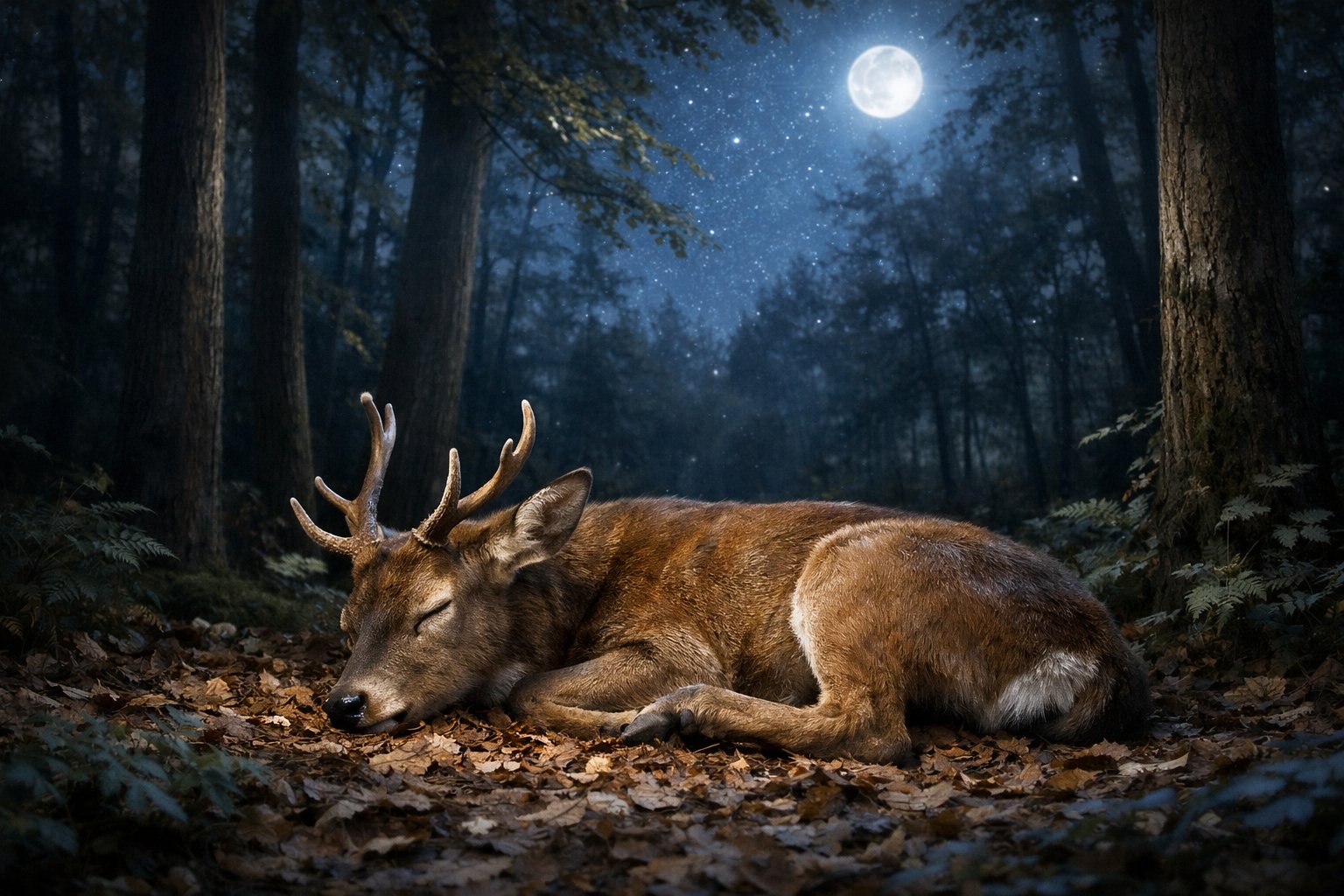
If you want to actually see deer or get a handle on their habits, it helps to know when and where they rest. The rest of this article digs into whether deer sleep at night or during the day, how their sleep cycles tick, and where they pick safe bedding spots—so you can start to predict their movements a bit better.
Do Deer Sleep at Night or During the Day?

Deer split up their rest across both day and night. They’re most active at dawn and dusk, grabbing short naps here and there throughout the whole day.
Crepuscular Behavior Explained
Deer act mostly crepuscular, which means they get moving at sunrise and sunset. This odd habit makes it easier for you to spot them near field edges or wooded borders in those dim hours.
For whitetail deer especially, this schedule helps them dodge daytime predators and people. Being crepuscular changes how you see their sleep cycles too.
Instead of one long snooze, deer nap in short bursts—what scientists call polyphasic sleep. These quick rests let them chew cud, keep an ear out, and leap up if something spooks them.
You’ll often catch deer bedding down in tall grass or brush before sunrise and after dusk. They pick these spots for cover and so they can keep an eye (and ear) on things while they rest.
Nighttime Rest vs. Daytime Sleep
Deer don’t stick to just night or day for sleep. You’ll notice they slow down around midnight and again near midday.
That’s usually when they lie down and ruminate a bit deeper. At night, they pick safer, more hidden bedding if predators or humans are nearby.
During the day, they might take lighter, shorter naps and stay closer to food. The timing really depends on the deer species, what predators are around, and how busy people get in the area.
Researchers see that deer sleep in short chunks—sometimes just a few minutes, maybe up to a couple hours total but always broken up. If you’re watching, expect them to wake up a lot, move, and switch bedding spots all day and night.
How Sleep Patterns Change with Seasons
Season makes a difference in deer sleep. In winter, deer bed down longer and pick sheltered spots to save heat and energy.
They’ll tuck their legs under to keep warm and often choose south-facing slopes or thick conifers to block the wind. In spring and summer, they take more quick naps.
You’ll spot them lying in the shade on hot afternoons to avoid overheating. When food’s scarce, deer move around more and don’t rest as long in one go.
During the rut, bucks barely rest—they’re too busy searching for mates. Fawns and does switch up their patterns too; fawns hide and sleep alone for hours, while does stay nearby and keep watch for danger.
These seasonal shifts definitely change your odds of seeing deer asleep at different times.
How and Where Deer Sleep

Deer pick spots that hide them, block the wind, and let them listen for trouble. You’ll see them use thick cover, little rises, or the downwind side of trees to stay hidden and keep their scent from spreading.
Bedding Areas and Sleep Locations
Deer like dense cover—evergreen thickets, brush piles, tall grass, or spots with fallen logs. These places block wind and make it harder to see them.
Does usually bed near food and water but still pick covered spots so fawns stay hidden. Bucks sometimes pick more open edges to watch for rivals or danger.
In farmland or suburbs, deer might use hedgerows, fence lines, or yards with shrubs. In forests, mule deer and whitetails scrape out little beds under saplings.
Bigger deer like elk and moose bed down in sheltered saddles or along timber edges, where they can rest but still see what’s coming.
Deer Sleep Habits and Body Positions
You’ll catch deer dozing both standing and lying down. For quick naps, they stand with their knees locked so they can run if needed.
For deeper sleep, they tuck their legs under (sternal recumbency) or sometimes flop on their side to get a bit of REM-like rest. Even when lying down, deer keep their head up, ears moving, and nose in the wind.
That constant alertness means they rarely get true deep sleep. Elk, for example, might lie with their heads down if they’re in a safe herd, but a lone deer usually stays more upright and watchful.
Group and Solitary Sleeping
Sometimes deer bed in groups, sometimes alone. Does and fawns often stick together in family groups, each one facing a different way to watch for threats.
Older does might leave fawns hidden in small scrapes while they feed nearby, coming back now and then. Bucks, especially when it’s not breeding season, usually bed alone to avoid fights.
Big species like elk form herds and pick communal bedding fields so lots of eyes can spot danger. When cover is thick, a deer might bed solo and count on stealth instead of group safety.
Sleep Duration and Sleep Cycles
Deer don’t sleep all at once—they nap in short bursts throughout the day and night. Usually, they doze off for just a few seconds or maybe a few minutes, and then snap back to alertness.
How much rest they get each day can shift a lot. It depends on the season, how safe they feel, and whether there’s enough food around.
Some deer, like certain cervids, even sneak in quick REM sleep phases. That gives them a bit of deep rest, but only for a moment.
When predators lurk nearby or the weather turns rough, deer cut their sleep short and stay on guard. If they feel secure, you might catch them bedding down more during the day. When people are out and about, they’ll often rest more at night instead.
Different types of deer—and their habitats—shape these patterns, too. If you watch local white-tailed deer, mule deer, elk, or moose, you’ll notice they all have their own quirks when it comes to where and how long they rest.


