
You spot deer in your yard or out in the woods and probably find yourself wondering, what exactly do they eat all day? Deer mostly go for plants—leaves, shoots, fruits, nuts, and young herbs. They pick out the tastiest, most nutritious bits they can find. That’s the short answer, but there’s a lot more to the story about why certain plants attract them while others don’t.
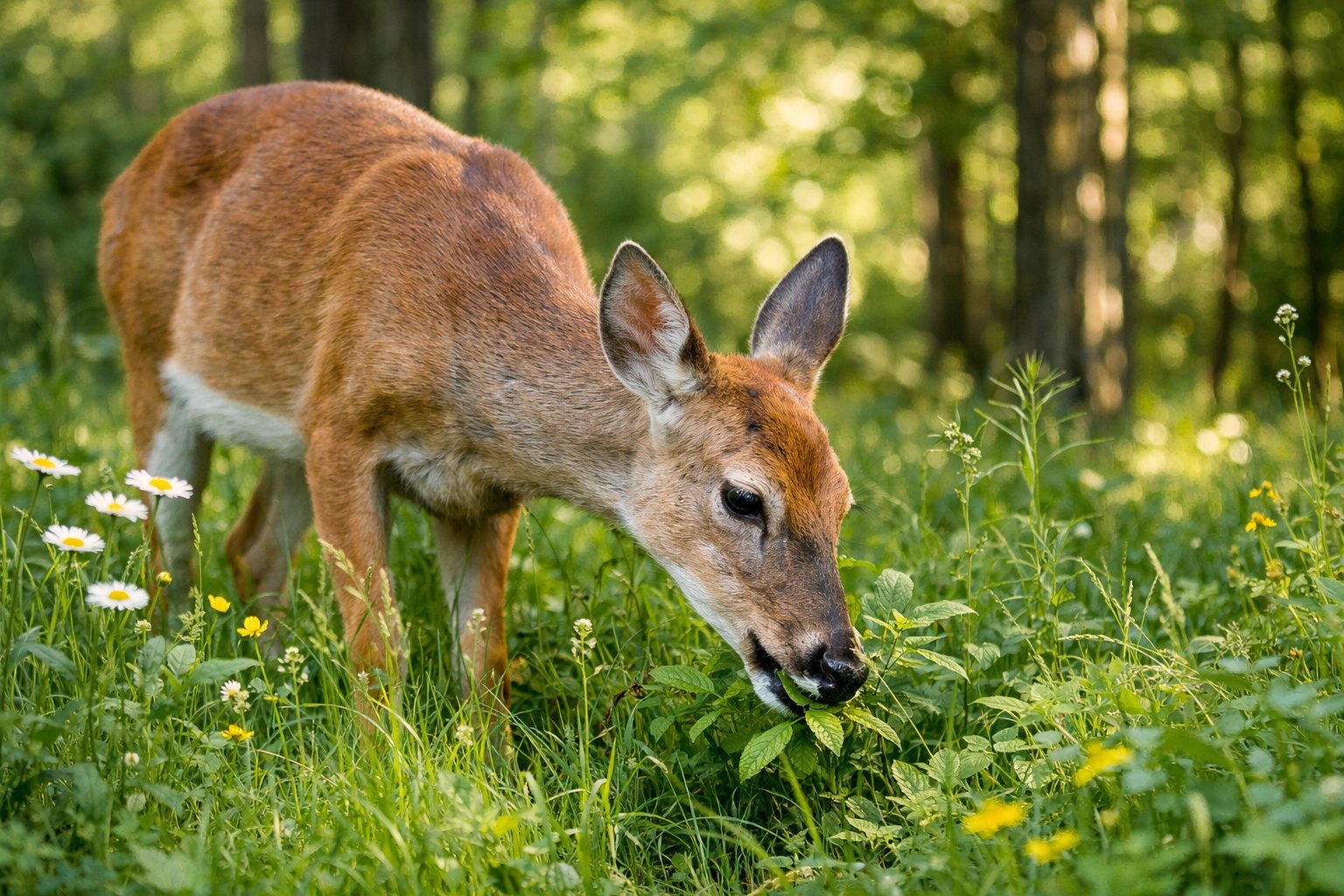
As you dig in, you’ll notice how their choices shift as the seasons change. Their stomachs let them handle tough plant stuff that most animals wouldn’t touch.
That explains why deer love forbs and browse at some points, but then they’ll hunt for acorns and other mast when fall rolls around.
This matters for gardeners, hikers, and honestly, anyone who’s curious about wildlife or wants to protect their property. You’ll get a better sense of what foods deer seek out and how habitat and the calendar shape their diets.
What Do Deer Eat? Primary Foods and Dietary Preferences
Deer eat all sorts of plants and swap foods by season to get enough protein, fat, and energy. In spring, you’ll see them go after tender greens. By fall, they’re after nuts and fruits that pack in calories.
Herbivorous Ruminants and Concentrate Selectors
Deer are herbivores with a four-part stomach. That stomach lets them break down cellulose and pull nutrients out of leaves, stems, and even tough browse.
They chew their cud and count on a mix of microbes and slow digestion to get enough protein and fiber.
As concentrate selectors, deer look for the most digestible, nutrient-packed plants they can get. In spring and summer, they go for clover, alfalfa, young legumes, and tender shoots. These foods support antler growth, new fawns, and milk production.
Avoid dumping a bunch of grains or high-starch feed their way. If deer suddenly get a lot of corn, wheat, or soybeans, their gut microbes can get thrown off and they might get sick. In managed settings, keep feed changes slow and balanced.
Browse: Woody Plants, Leaves, and Tender Shoots
Browse makes up a big chunk of the deer’s diet, especially in winter and those in-between seasons. They munch on leaves, twigs, buds, and even young bark from shrubs and trees like willow, maple, dogwood, ash, and aspen.
When snow covers low plants, evergreen browse and young saplings become more important.
You’ll catch deer nibbling on oak leaves, willow shoots, and honeysuckle. Sometimes they strip buds right off woody stems or turn to bark when there’s not much else.
Shrubs like elderberry and bitterbrush draw them in for both leaves and fruit.
Deer can be rough on landscape plants. They’ll eat roses, tulips, hostas, and even arborvitae or holly if they’re hungry enough. Planting resistant species is one way to protect your garden, though it’s never a perfect fix.
Forbs: Broadleaf Weeds and Wildflowers
Forbs are a deer favorite when they’re green and soft. Think clover, legumes, wildflowers, sunflowers, peas, brassicas, beets, turnips, and a bunch of garden crops.
Forbs offer easy digestion and good protein, especially in spring and summer.
You’ll often see deer grazing at the edges of fields where clover and alfalfa grow. If they can get in, they’ll eat garden veggies like pumpkins, tomatoes, and sweet potatoes.
Flowerbeds with tulips and daylilies? Those don’t usually last long if deer are around.
Forbs vary by region, but deer pretty much always prefer legumes and low-growing herbs over tough, mature grasses.
Mast: Acorns, Nuts, and Fruits
Mast keeps deer going in the fall and helps them build fat for winter. Hard mast—acorns, hickory nuts, pecans, beechnuts, chestnuts, walnuts—are full of fat and carbs.
White oak acorns are less bitter and rot faster, while red oak acorns have more tannins and stick around longer. Deer eat both when they’re available.
Soft mast includes apples, pears, persimmons, grapes, blackberries, and raspberries. You’ll spot deer under apple trees or picking through bramble patches for berries.
Farmers sometimes notice crop damage in corn and soybeans during the growing season, and fruit trees really take a hit in good mast years.
If mast is hard to find, deer go back to browse and forbs, which puts more pressure on forests and gardens. It’s worth checking local oak and hickory crops to predict deer movement in your area.
Understanding Deer Digestion and Seasonal Diet Changes

Deer use a complex stomach to pull nutrients from tough plants. Their diet changes with the seasons—protein in spring, fat and carbs in fall, and woody browse in winter.
The Ruminant Stomach: Rumen, Reticulum, Omasum, and Abomasum
Deer have a four-chambered stomach built for fibrous plants. The rumen acts like a fermentation vat, where microbes start digesting cellulose.
A healthy rumen gives them energy when food quality drops.
The reticulum works with the rumen to sort food and form cud. Deer cough up and re-chew that cud to break down fibers even more.
This process lets microbes finish digesting the food.
The omasum absorbs water, fatty acids, and minerals. It also filters out tiny particles before they reach the abomasum.
The abomasum is the “true stomach,” where acids and enzymes break down proteins, kind of like what happens in humans.
Here’s a quick breakdown:
- Rumen = microbial fermentation.
- Reticulum = cud formation and sorting.
- Omasum = absorption and filtration.
- Abomasum = acid digestion.
Adaptations for Seasonal and Regional Food Sources
Deer change their diet as plants grow, ripen, or die off. In spring and summer, they focus on high-protein forbs and new shoots to help with antler growth and milk production.
In fall, they switch to mast like acorns and nuts to build up fat reserves.
When winter hits, they turn to browse—twigs, buds, and bark that stick around through the cold. Regional plants make a difference too: mule deer in the West eat sagebrush and bitterbrush, while white-tailed deer in the East go for oak and maple browse.
You might notice deer change how much they eat or how long they spend feeding to get the most out of whatever’s available.
Those seasonal shifts help keep their rumen microbes stable. If deer suddenly get a bunch of high-carb crops, their digestion can go haywire and they might get sick. Gradual changes in diet keep things running smoothly.
Risks of Feeding Deer and Wildlife Management Considerations
Feeding deer might seem like a good idea at first, but it actually brings some serious risks to their health and the environment. When people give deer things like grain, bread, or dairy, their digestive systems can’t handle the sudden change—those rumen microbes just get overwhelmed, and it can lead to real trouble.
If you throw in feed that’s moldy or gone bad, that’s even worse. Deer can get sick fast from spoiled food.
When folks feed deer, it tends to bunch them up in groups they’d never form in the wild. You end up with a higher risk of diseases spreading, like chronic wasting disease. Plus, more deer in one spot means more chances they’ll wander into roads and get hit by cars.
Feeding also messes with how deer graze. They might put too much pressure on young trees and understory plants, which can really set back forest growth in your neighborhood.
Wildlife managers usually say it’s better to work on the habitat itself. Plant some native trees that produce nuts or berries, create more edge spaces, and take care of the understory so deer have natural food all year.
If you feel like you have to supplement during harsh winters, maybe talk to your local wildlife agency first. They can help you figure out the safest way and what kind of feed won’t harm the deer.


