
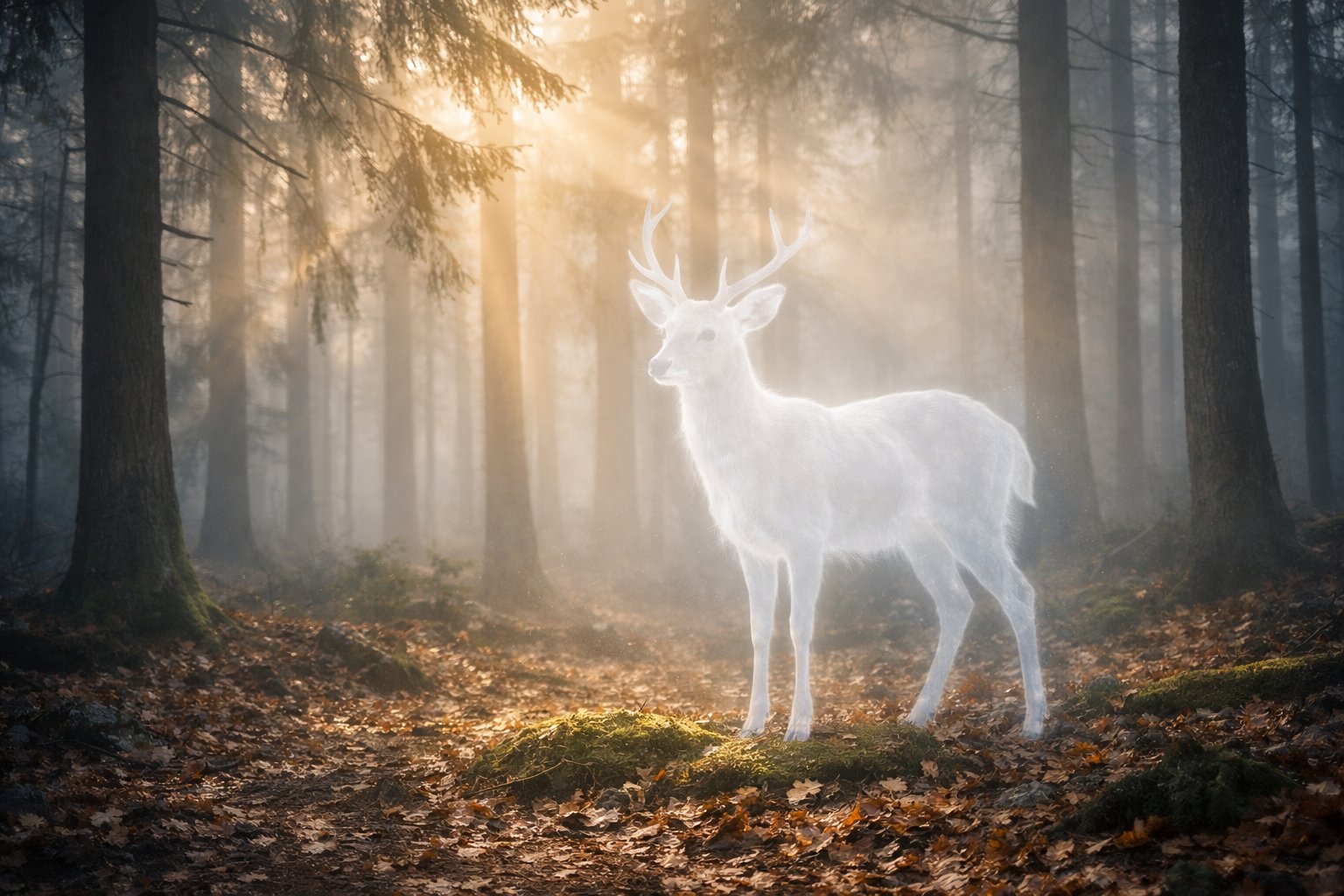
Maybe you’ve seen a photo of a pale deer or heard someone talk about a strange white deer in the woods. A “ghost deer” is just a deer with very little or no pigment—usually because of albinism or leucism. That’s why it looks so white or pale and stands out so much in the wild.
Let’s dig into how these genetic quirks work, why white deer spark so many stories, and how real cases—like the Texas breeding and smuggling investigation—shape how folks see and treat these animals.
You’ll get a look at the science, the legends, and the laws that swirl around these rare creatures.
Ghost Deer: Definitions, Origins, and Mystique

People usually call a white or pale wild deer a “ghost deer” when they spot one in the woods or out in a field. Some of these deer owe their color to genetics, while others live on in stories and myths that shape how we see them.
Meaning and Usage of “Ghost Deer”
You’ll hear “ghost deer” in a couple of different ways. Some folks use it for a white wild deer—often a white-tailed deer—that really stands out in a group.
Others, like hunters or storytellers, use “ghost deer” for rare white deer because they just look so strange or even spooky.
If you see the phrase in an article or someone brings it up, context matters. In a wildlife report, it probably means a real white-tailed breeder deer or a free-range whitetail with odd coloring.
But in a story or legend, it might mean a ghostly or symbolic animal.
Albinism, Leucism, and White Deer in Nature
You can spot real white deer by looking at things like their eye color and skin. Albino deer don’t have melanin, so they usually have pink eyes and pale skin.
Leucistic deer, meanwhile, have less pigment but usually keep normal-colored eyes.
Both conditions show up in whitetail deer and a few other species.
Don’t expect to see many, though. These genetic quirks are rare in wild deer.
If you run across a white whitetail deer, it probably deals with more predators and sun issues than the average deer.
White deer sometimes breed with normal-colored partners, so their fawns might be a mix.
Legends and Cultural References
White deer pop up in all sorts of myths and old stories. Native American legends—like the Chickasaw’s “Ghost of the White Deer”—see them as signs from the spirit world.
Modern folklore sometimes describes a “ghost deer” as a glowing or even see-through creature deep in the forest.
If you hear a tale about a ghost deer, it might blend real traits of free-range whitetails with a bunch of symbolism.
People react differently—some protect them, some hunt them, and some just celebrate seeing one. Local laws and beliefs play a big part.
If you want the details of a regional legend, check out local wildlife or cultural sites since the stories can change a lot from place to place.
The Texas ‘Ghost Deer’ Investigation: Deer Breeding and Smuggling

This Texas case shows how illegal deer trading can spread disease, break wildlife laws, and rack up a long list of criminal charges.
Investigators focused on people moving breeder deer around, faking records, and skipping required CWD tests. The whole mess touched a bunch of counties.
History and Scope of the Ghost Deer Investigation
The whole thing kicked off in March 2024, after Texas Game Wardens stopped a vehicle and found evidence of bigger problems.
Officers dug deeper and found what they call one of the biggest deer smuggling rings in Texas.
They named about 24 suspects and filed around 1,400 charges across 11 counties.
Cases are still open in places like Tom Green and Travis County, with charges ranging from license violations to felonies.
Texas Parks and Wildlife officers checked records and visited ranches to trace how breeder deer moved between different places.
The operation included both captive breeder deer and free-range whitetails moved without proper paperwork in the Texas Wildlife Information Management System (TWIMS).
You can read the official details here: Texas Game Wardens near conclusion of the “Ghost Deer” case (https://tpwd.texas.gov/newsmedia/releases/?req=20250814c).
How ‘Ghost Deer’ Are Created in Illegal Breeder Operations
Breeders create “ghost deer” when they move animals without matching TWIMS records or report fake identities for the deer.
Some folks smuggle breeder deer from one facility to another, or from breeder sites to hunting ranches, to dodge quarantine and testing rules.
In a few cases, they used sedation drugs—some of them controlled substances—to move or handle the deer, which brings up even more legal trouble.
Breeders sometimes mix captive genetics into wild herds by illegally releasing or swapping deer.
That makes it hard to track animals and lets infected or misidentified deer get into hunting markets.
People tamper with TWIMS, fake transport records, and hide transfers—all to make these so-called ghost deer.
Chronic Wasting Disease Risks and CWD Testing Violations
CWD is a deadly brain disease in deer, and it spreads through contact and contaminated places.
Investigators found that some folks skipped CWD testing or didn’t follow the rules. That means infected deer could move between facilities or get released onto ranches, spreading the disease to wild and commercial herds.
CWD testing rules exist to slow the spread and protect hunting and wildlife management.
If people skip or fake those tests, everyone faces a bigger disease risk and can lose trust in herd health.
Investigators found both testing violations and bad handling of samples, which can ruin results and hide infections.
Legal Consequences and Key Individuals Involved
Authorities have brought charges like misdemeanor breeder-license violations and felony tampering with government records. Ken Schlaudt and facility manager Bill Bowers, two names you might recognize, turned themselves in after facing felony tampering charges for entering false data into TWIMS.
Prosecutors in Travis County and several other counties went after cases involving unlawful possession or mishandling of sedation drugs. The Texas Parks and Wildlife Department, along with Texas Game Wardens, teamed up with county district attorneys to file charges such as felony tampering, license violations, and drug offenses.
This investigation pulled in people connected to the deer breeding industry—folks from breeder facilities and local deer associations. It’s really shaken up operations at several breeder sites and ranches.
For more details, you can check out this local report: Prominent Texas Breeder Charged As “Ghost Deer” Investigation Grows (https://www.publicdomain.media/p/texas-breeder-charged-ghost-deer).


