
You’ll find six wild deer species in Britain: red, roe, fallow, sika, muntjac, and Chinese water deer.
These names cover the native species—red and roe—and the introduced ones that arrived later. So, if someone asks “what are British deer called?” you’ve got a short, clear list.
If you want to spot them or just figure out which are native and which aren’t, this article’s got you. I’ll give you quick ID tips, a bit about where they live, and some facts to help you tell them apart.
What Are British Deer Called? Native and Introduced Species
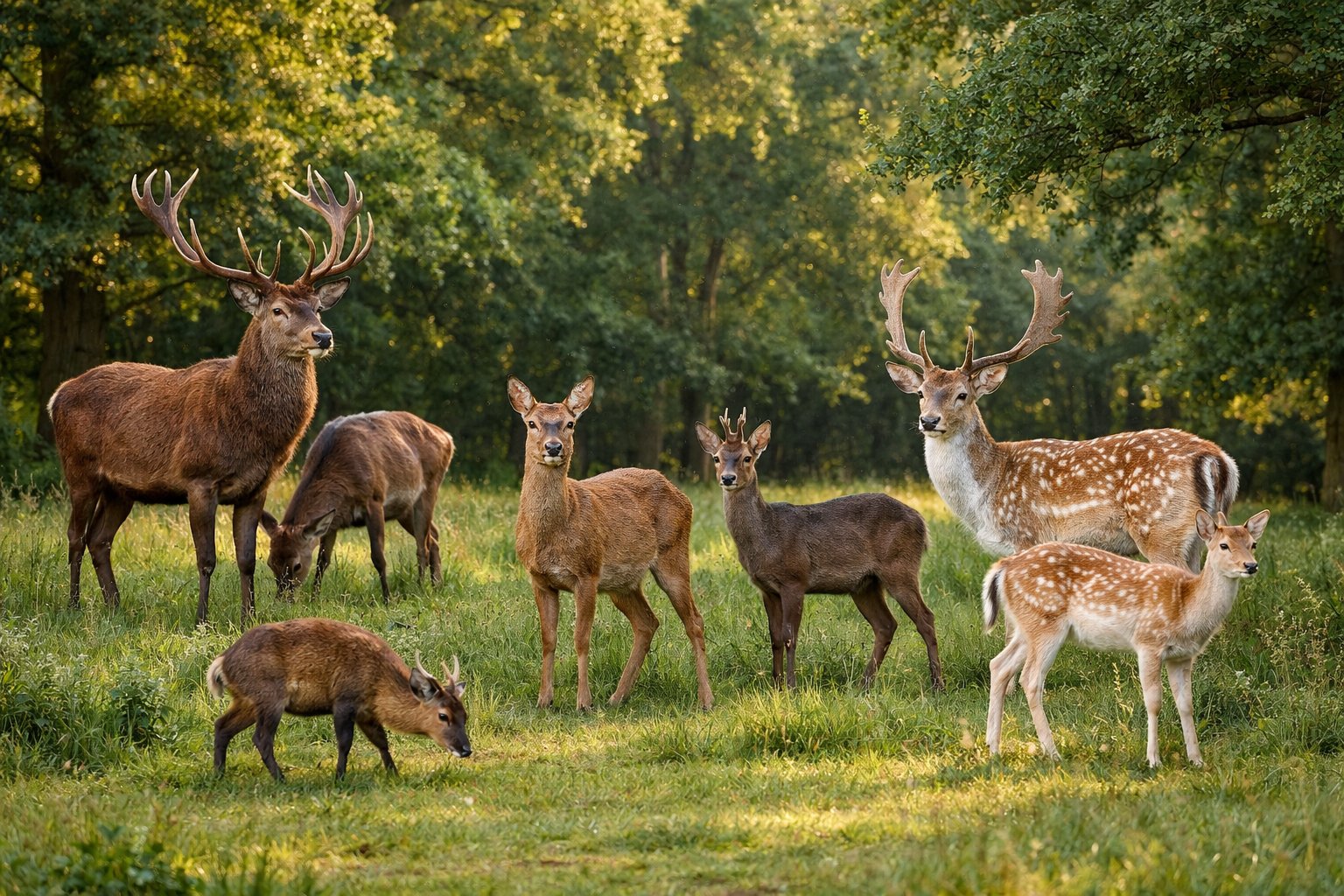
You’ll meet two native deer that have lived in Britain for thousands of years. Four others arrived later and settled in.
Each one’s got its own size, coat, and favourite hangouts—handy for telling them apart.
Native Species: Red and Roe Deer
Red deer (Cervus elaphus) stand as the largest wild deer in the UK. Males, called stags, grow those big, branching antlers.
You’ll usually find them on moorland, in big woods, or wandering the Scottish Highlands. Their coats are reddish-brown, but they go darker in winter.
Roe deer (Capreolus capreolus) are much smaller. Bucks have short, upright antlers, and both sexes wear a grey-brown winter coat.
You’ll spot roe at woodland edges, hedgerows, or out on farmland. They move quickly and keep to themselves, popping up at dawn or dusk if you’re lucky.
Size and antler shape set red and roe deer apart more than anything else.
Introduced Deer: Fallow, Sika, Muntjac and Chinese Water Deer
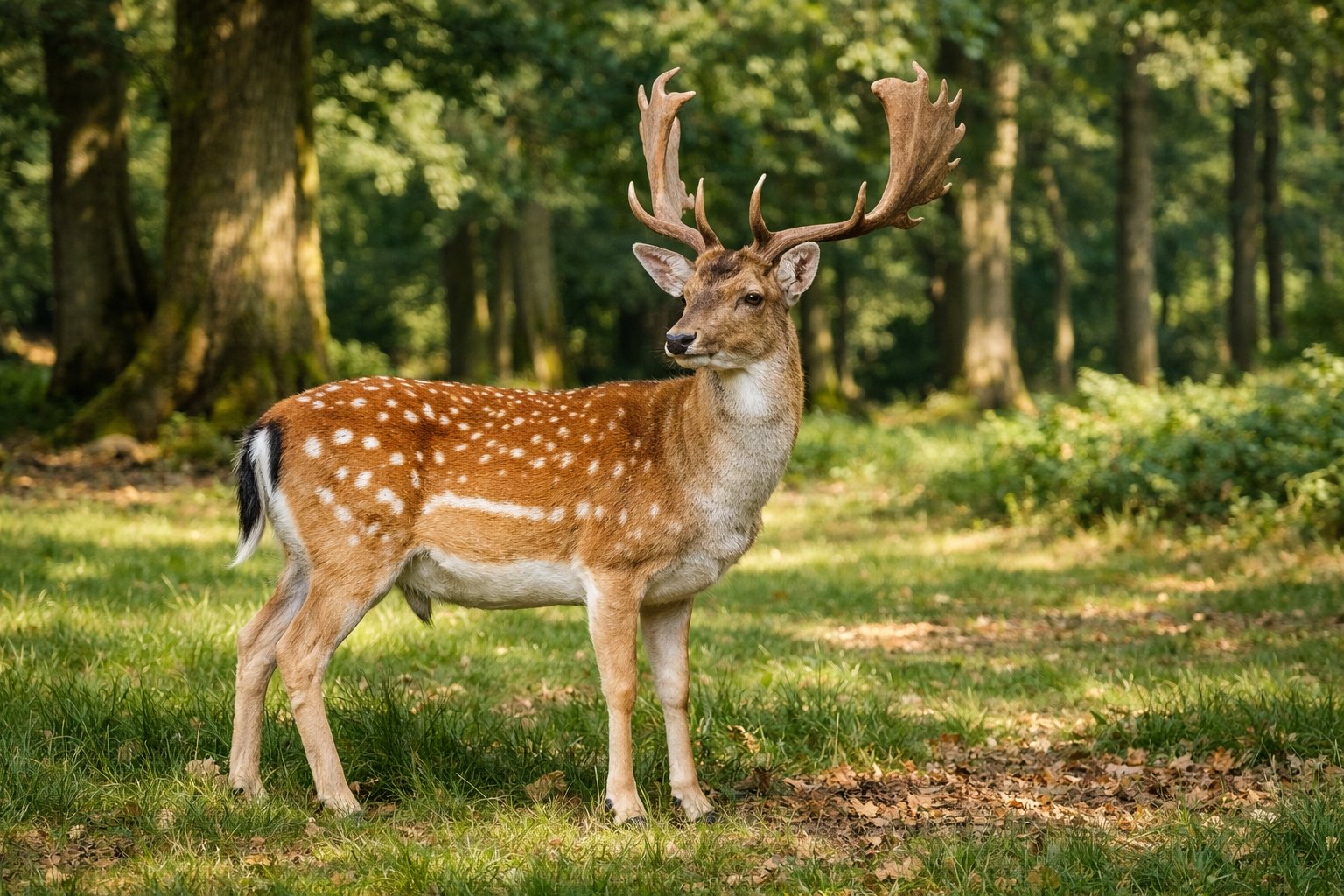
Fallow deer (Dama dama) probably arrived with the Normans ages ago. They come in a bunch of coat patterns, but the spotted one’s most common.
Bucks have broad, palmate antlers. You’ll see fallow in parks, woodlands, or out in open farmland.
Sika deer (Cervus nippon) came over from East Asia. Now, they live in parts of Scotland, England, and Northern Ireland.
Sika look a bit like fallow in size, but they’re darker and can get pretty noisy at night. Sometimes, they even hybridise with red deer.
Reeves’ muntjac (Muntiacus reevesi) is small and almost dog-like. Muntjac spread fast after escaping or being let loose in the 20th century.
Males have short antlers and visible canine tusks. Chinese water deer (Hydropotes inermis) don’t grow antlers at all.
Instead, the males sport long canine tusks. You’ll find them in reed beds, river margins, and fenland, especially in East England.
These four aren’t native, but they’re now established and pretty common in lots of regions.
Scientific Names and Identifying Features
If you want to be precise, here are the scientific names: red deer—Cervus elaphus, roe—Capreolus capreolus, fallow—Dama dama, sika—Cervus nippon, Reeves’ muntjac—Muntiacus reevesi, and Chinese water deer—Hydropotes inermis.
Some quick ID tips:
- Size: red are biggest, then fallow and sika, then roe, with muntjac and water deer the smallest.
- Antlers: red have big, branching antlers; fallow’s are broad and palm-shaped; roe and muntjac have short, upright antlers; water deer don’t have any.
- Tusks: muntjac and Chinese water deer males have canine tusks; the others don’t.
- Coat and habitat: fallow are often spotted; sika are darker and noisier; roe stick to woodland edges; water deer hang out in reeds and wetlands.
These details should help you figure out which deer you’re looking at. For maps and more info, check out the British Deer Society’s UK deer species page: https://bds.org.uk/information-advice/about-deer/deer-species/.
Recognising and Understanding the Types of British Deer

You can tell the six common British deer apart by looking at their size, coat, antlers or tusks, and where they like to live.
Watch for field marks like coat patterns, antler shape, and favourite habitats.
Physical Traits and Size Differences
Start with size. Red deer stand tallest—mature stags reach over 1.2 m at the shoulder.
Roe deer are much smaller and slimmer, usually under 0.8 m. Fallow deer land somewhere in the middle and often show a spotted coat in summer.
Coat colour gives you a clue. Muntjac are small and keep a reddish-brown coat all year.
Chinese water deer have no spots and look pale brown. Sika can be dark or spotted, depending on where and when you see them.
Body shape hints at their behaviour. Red deer have heavy chests and long legs—built for open hills and forests.
Roe and muntjac are compact, perfect for hiding in hedgerows and undergrowth. Keep these in mind when you see deer in woodlands or open country.
Antlers, Tusk and Other Special Features
Antlers really help with ID. Red deer stags grow big, branching antlers for the rut.
Fallow bucks show off broad, palm-shaped antlers. Roe bucks carry short, upright antlers with just a few tines.
Don’t forget the non-antler features. Muntjac males have little tusk-like canines you might notice when they bark or feed.
Chinese water deer males also grow tusks instead of antlers. Females mostly don’t have antlers, but their body shape and size still help.
Antler condition tells you a bit about health and population, too. Heavy, well-formed antlers usually mean good nutrition and a healthy group.
During rutting season, stags often have worn antlers and scuffed necks from fighting—those are clues to both species and time of year.
Habitats and Distribution Across the UK
Different deer species really have their own favorite spots. You’ll mostly find red deer in Scotland and upland areas, but they also pop up in some parts of England—especially where there’s moorland or big woods.
Roe deer? They’re pretty much everywhere in England and Wales, though they tend to skip a few areas in Northern Ireland.
Fallow deer seem to love mature broadleaf woodland, parkland, and open fields. Muntjac have spread fast through southern and central England. They’ll settle in small copses, hedgerows, or even gardens if they can.
Chinese water deer stick to fenland reed beds, riverbanks, and lowland wetlands.
Sika deer have been expanding mostly in western Scotland, with some groups in parts of Northern Ireland and England. They prefer acidic soils and coniferous woodland, which makes them a bit different from the others.
If you want the latest maps or updates on where to spot them, the British Deer Society keeps pretty solid local records and trends. Maybe check their work for more details.


