
You spot a deer and, honestly, your first thought might be how quickly it bolts. Deer fear pretty much anything that hints at danger: predators, sudden human activity, odd scents, loud noises, or strange shapes.
They’re most afraid of anything that could make them prey—like predators and unpredictable people—so they react fast and steer clear of risky places.
Let’s dig into why smells, noises, and movement matter so much to deer. These senses shape almost every choice they make.
You’ll also get some practical ideas for keeping deer out of your yard by using what they naturally avoid.
Top Fears of Deer: Predators, People, and Senses
Deer react most to anything that threatens their body or their young. Certain threats make them run instantly, while others change where they eat and sleep.
Their senses pick up on danger fast. Sometimes it’s a smell, sometimes a sound, sometimes just a weird shape in the brush.
Humans as the Primary Threat
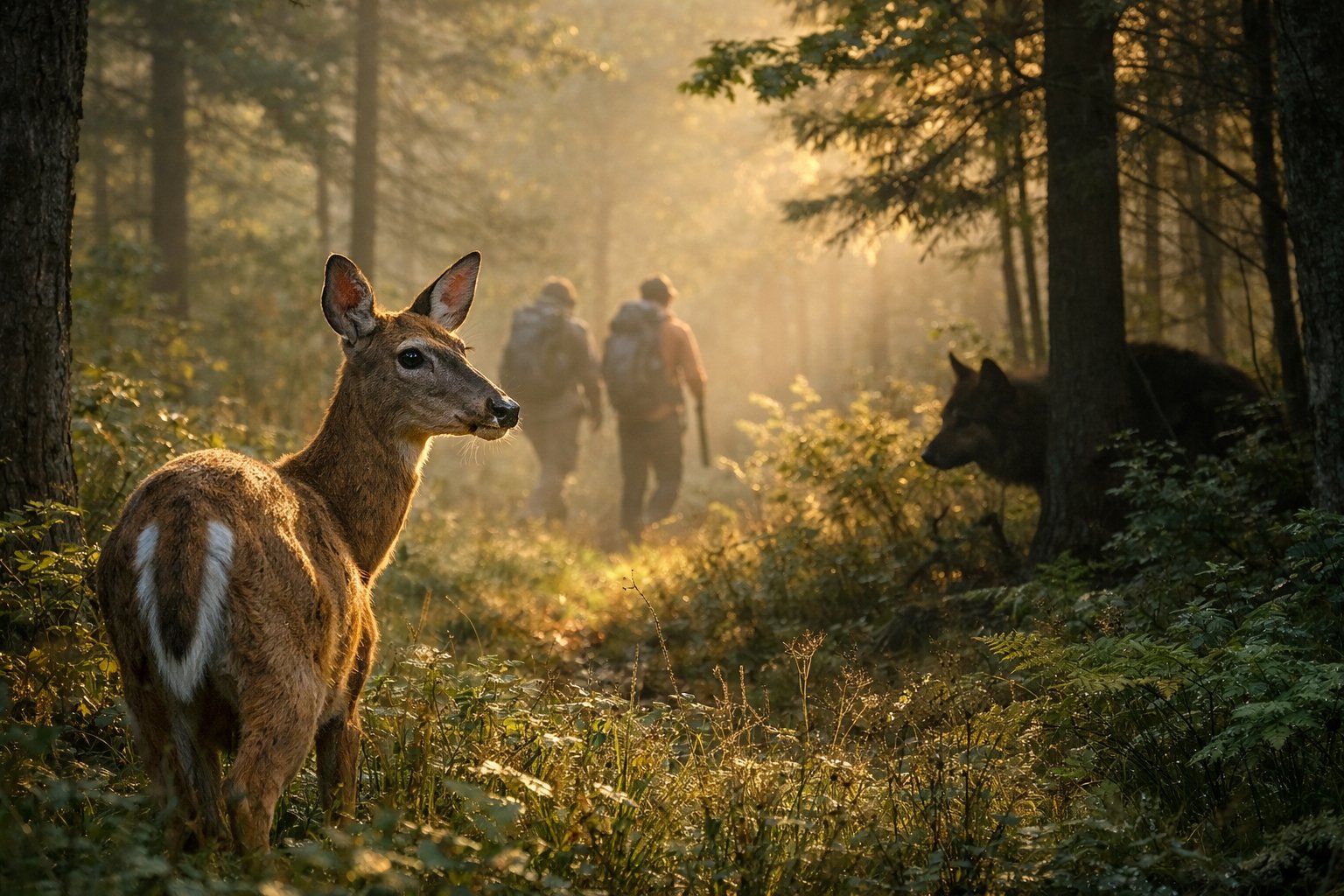
Deer usually see people as the biggest threat, especially in busy neighborhoods or hunting areas. When hunters or lots of people are around, deer shift their routines and move more at night.
If they catch your scent, hear your voice, or spot your clothes, they’ll snap to attention—ears up, heads high, ready to bolt.
Even if deer see people often and nothing bad happens, they don’t exactly trust us. In hunting zones, they’ll flee sooner and avoid open spaces.
In parks, they stick close to cover and dash away if a dog barks or someone moves too quickly.
If you own land or a yard, keep pets leashed and avoid sudden activity near spots where deer rest. That helps local whitetails stay calm and less likely to leave good forage behind.
(See research on how humans influence deer fear and reproduction at The Predator That Deer Fear Most: MeatEater.)
https://www.themeateater.com/wired-to-hunt/whitetail-management/the-predator-that-deer-fear-most
Natural Predators and Their Impact
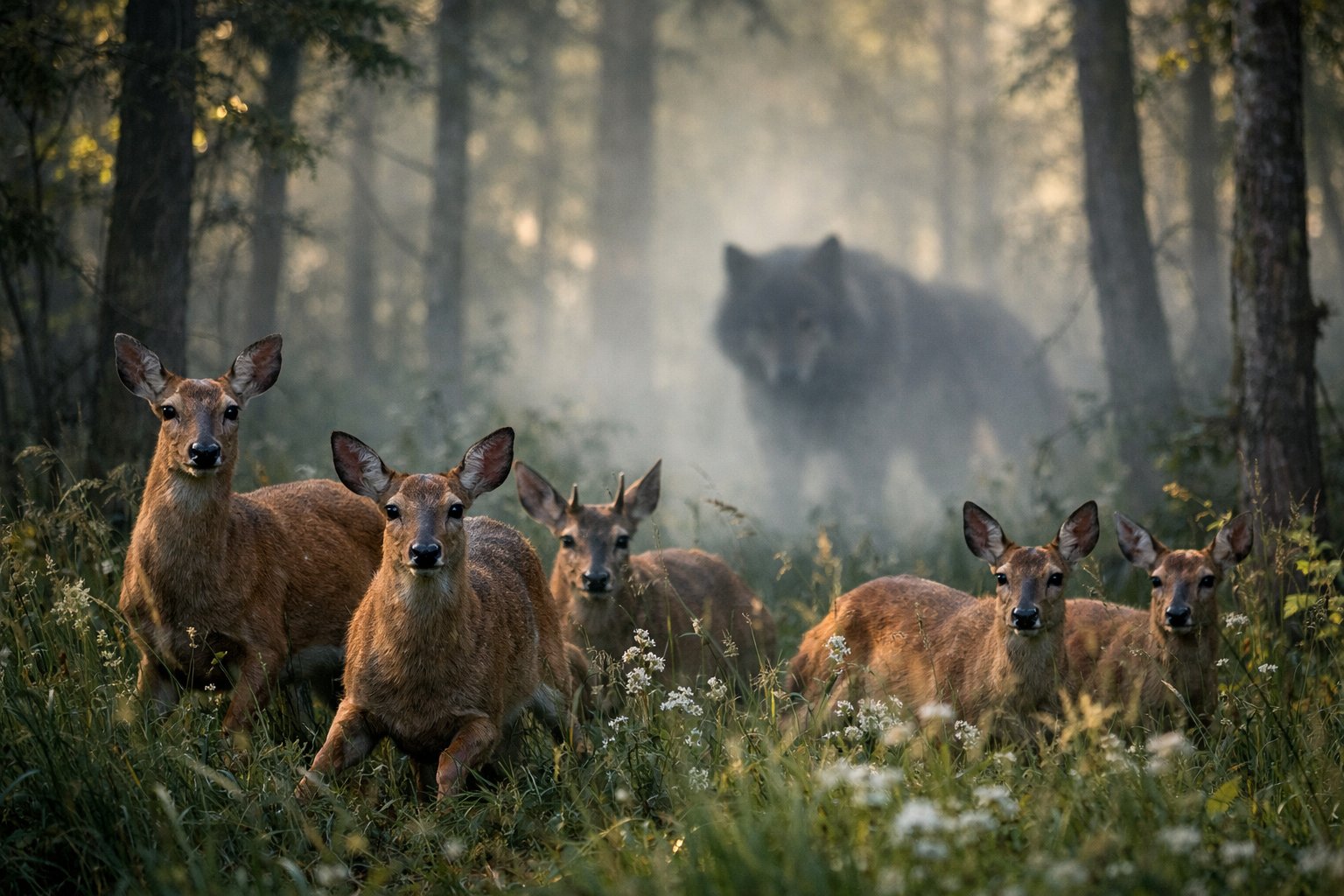
Wolves, coyotes, cougars, bears, and bobcats all shape deer behavior. When deer pick up on predator scent or tracks, they avoid those valleys, creek lines, or forest edges—especially if they have fawns.
Adult deer stay alert and ready to run, while does stash fawns in thick cover.
Predators change where deer live and how many survive. In places with lots of wolves or cougars, deer stick to thicker cover or higher ground.
Coyotes and bobcats mostly go after fawns, so where and when fawns are born really matters.
You can spot the effects of predators if you watch how deer move—more nighttime foraging, sticking to safer patches, and fewer deer in open fields when predators are active.
(For more on predator signals like scent and sound, see Deer Senses and Fear.)
https://scienceinsights.org/are-deer-scared-of-humans-the-science-of-fear/
Sudden Movements and Loud Noises
Deer get startled by sudden movement or loud noise in a split second. You’ve probably seen a deer freeze, stomp, snort, and then take off when a truck backfires or a chainsaw fires up.
Because their eyes are on the sides of their heads, deer spot motion from far away. Quick gestures, running dogs, or someone stepping out of cover can send them running.
Loud sounds like gunshots, horns, or construction noise make deer scatter, sometimes for hundreds of yards.
If you want deer to stick around, move slowly, keep your voice down, and avoid sudden loud noises where they eat or sleep.
Deer get used to predictable human activity, but random loud events keep them nervous.
(Research on sound-triggered flight distances can be found at Chainsaws.io.)
https://chainsaws.io/what-scares-deer-the-most/
Unfamiliar Objects and Scents
Deer react quickly to new shapes and strange smells. Leave a bright tarp, set up new fencing, or drop a weird sculpture near their path, and you might spook them for days.
Scent really matters. Human odor, dog smell, or predator scents can make deer avoid a spot for a long time.
Farmers and landowners notice deer will skip good food if something smells off. Even your clothes and boots can tip them off.
If you want deer to hang around, keep things neutral and low-scent. Wash hunting clothes separately, don’t leave new stuff near trails, and control your pets.
Small changes can make a big difference in keeping deer from leaving good habitat.
(See details on how scent and unfamiliar items affect deer behavior at the Institute for Environmental Research.)
https://iere.org/what-do-deers-get-scared-of/
Deer Deterrents: Effective Repellents and Scare Tactics

Mix up smell, sound, and physical barriers to keep deer away from your space. Change things up, put deterrents where deer travel, and start with your most valuable plants.
Deer Repellents and Scented Plants
Scent-based repellents make plants taste or smell bad to deer. Use commercial sprays with putrescent egg or capsaicin on new growth and shrubs.
Reapply after rain and every few weeks during high-pressure seasons.
Planting scented herbs and flowers helps, too. Try mint, lavender, rosemary, thyme, oregano, and sage on your garden edges.
Marigolds and daffodils also keep deer away; daffodils are even toxic, so they’re great for borders.
Set potted herbs near young trees and sprinkle crushed leaves where you can. Rotate sprays and plants so deer don’t get used to any one scent.
Auditory Deterrents and Motion Devices
Sound and sudden movement break up deer feeding. Wind chimes, radios, and motion-activated sound devices can scare deer, at least for a while.
Don’t rely on one fixed, repeating noise—deer figure that out fast.
Motion-activated tools work better. Motion sprinklers use water and movement to startle deer.
Infrared sensors can trigger lights, alarms, or propane exploders in rural areas. Propane exploders make loud bangs and work best if you space them along deer trails.
Put devices where deer usually come in, and move them around or change the timing to keep deer guessing.
Physical Barriers and Scare Objects
If you want to keep deer out, nothing beats a strong barrier. Most folks build fences at least 8 feet tall, or sometimes they set up double fencing—deer just don’t like jumping into tight spots.
You can throw netting or tree guards around young plants and saplings. That usually keeps them safe from nibbling and rubbing.
Scare objects work, but only for a little while. Try scarecrows or some shiny reflective tape, but remember to move them around or deer catch on pretty fast.
Some gardeners plant heavy-mast trees like oaks away from their gardens. The idea is to tempt deer with natural food, so they leave your beds alone.
Mixing barriers with repellents and motion gadgets gives your veggies and young trees the best shot. High-value spots need a little extra protection, honestly.


