
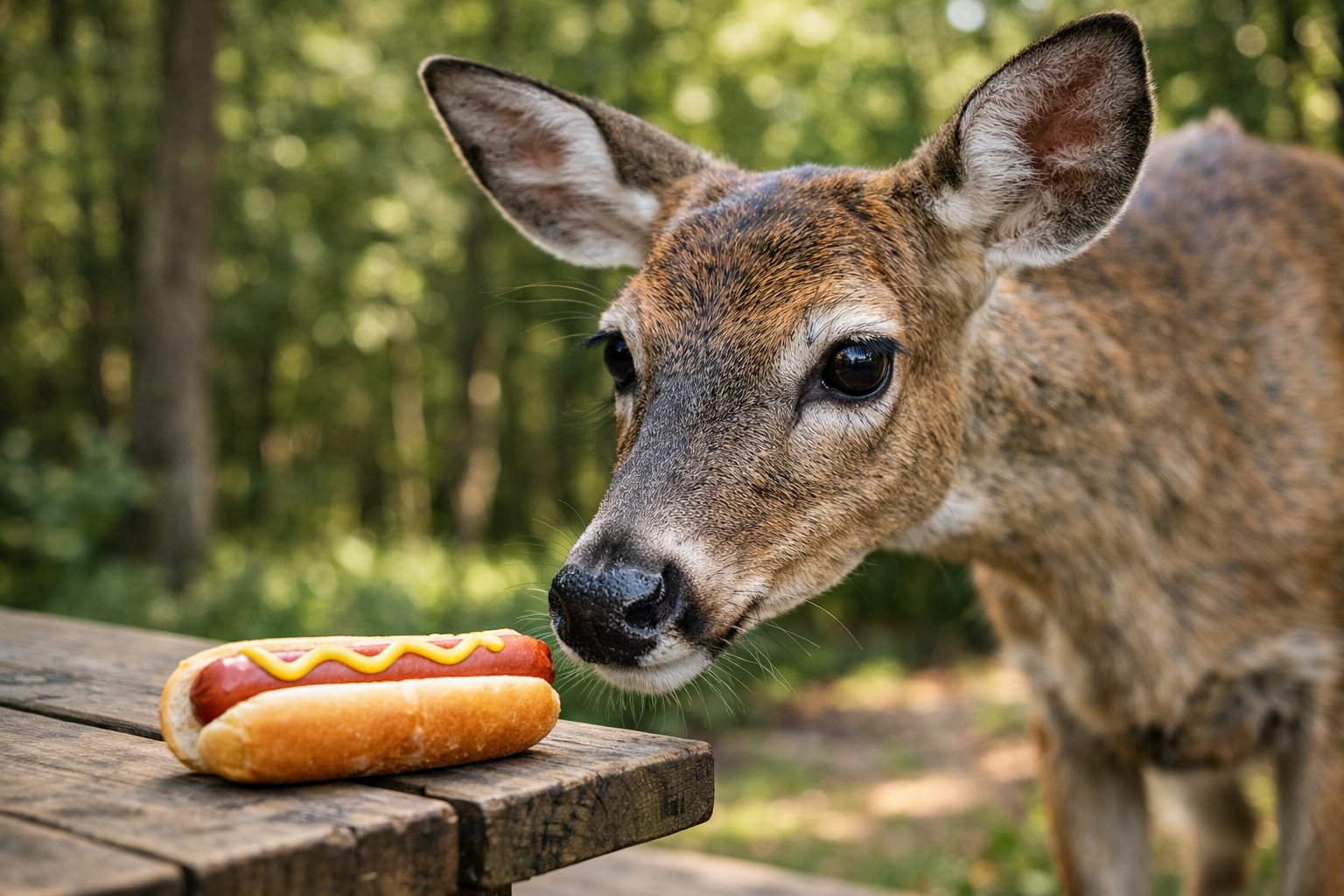
Ever see a deer munching on something weird and wonder if it could be a hot dog? Yep — deer sometimes eat hot dogs, but that’s definitely not what they should be eating on the regular. Let’s dig into why deer go for human food, what problems that causes for both them and us, and how all this connects to making venison hot dogs safely if you’ve got deer meat on hand.
We’ll look at why deer turn to processed foods, what could go wrong if people feed them, and some practical tips for making venison hot dogs that are both safe and tasty. There are real-world examples, science-y concerns, and some common-sense steps you can use around wild deer or when handling deer meat.
Will Deer Eat Hot Dogs?

Deer will try a lot of foods you leave out, but they’re built for plants. Processed meats like hot dogs can tempt them because of the salty, fatty smell, but those foods don’t have what deer really need.
Natural Deer Diet and Food Preferences
Deer mostly eat leaves, twigs, grasses, fruits, and nuts. You’ll spot them browsing shrubs, crunching acorns in the fall, or grazing on spring grass.
Their stomachs ferment plant fiber, so they need roughage like alfalfa or hay to stay healthy. They get protein from plants and seasonal browse, not from processed meats.
Venison from other deer isn’t something they’d eat. You can expect deer to pick foods that fit their plant-based needs, not meat.
Why Hot Dogs Might Attract Deer
Hot dogs have salt, fat, and strong smells, which can draw deer when natural food is hard to find. If you leave a hot dog by a campsite, deer might sniff it out and take a bite because those quick calories are tempting.
Garbage or a grill makes it even more likely they’ll find processed meats. Deer act opportunistically, so they’ll try human foods like bread, corn, or a dropped hot dog if they find them, even if that’s not good for them.
Risks of Feeding Deer Processed Meats
Feeding hot dogs or other processed meats to deer can mess up their digestion. They need high-fiber plant matter, and processed meats are loaded with salt and fat but have almost no fiber.
This can cause bloating, diarrhea, or worse digestive problems. When deer start getting food from people regularly, they get bolder and more dependent.
That raises the risk of car accidents, property damage, and spreading diseases like chronic wasting disease. It’s best to avoid giving them things like hot dogs, onions, or garlic.
Common Natural Foods Compared to Hot Dogs
Think about what deer actually eat: acorns and nuts for fats and minerals, alfalfa and grasses for fiber and plant protein, corn and fruits for energy and sugars. All those fit their digestive system way better than processed meats.
If you’re thinking about supplemental feeding, stick with plant-based options like alfalfa or deer feed that fits your region. Always check local rules first.
Feeding corn in moderation can work for short-term energy, but it shouldn’t replace fiber-rich forage.
Making and Cooking Deer Hot Dogs

You’ll need the right meat-to-fat ratio, cold equipment, and some basic spices. Get your casings ready and set up a clean workspace.
Grind, season, stuff, and cook everything to 160°F for safe, juicy hot dogs.
Essential Ingredients and Tools
Grab 5 lbs ground venison and 1–1.5 lbs pork fat for a mix that’s around 80/20 or 75/25 meat to fat. If you want that cured color and longer shelf life, use pink curing salt (Prague Powder #1).
Keep kosher salt and black pepper around for seasoning. For tools, you’ll want a meat grinder or food processor, a sausage stuffer, and either hog casings or cellulose casings.
Have an ice chest and an ice bath ready to keep everything cold. A reliable meat thermometer is a must.
Binders like nonfat milk powder help the texture. Chill your fat, meat, grinder parts, and bowls to near freezing to prevent smearing and keep the texture smooth.
Step-by-Step Guide to Homemade Deer Hot Dogs
Cut venison and pork fat into 1-inch cubes and chill or freeze until firm. Grind the cold meat twice through a fine plate for a smooth texture.
If you want it even smoother, use a food processor in small batches and keep everything cold. Mix in your seasonings and add ice or ice water slowly as you mix to form an emulsion.
Add curing salt if you’re using it. Load the mix into your sausage stuffer and fill hog casings or cellulose casings evenly, avoiding air pockets.
Twist the links to the length you want. Poach or smoke the links until they hit 160°F (71°C) inside.
If you’re smoking them, set the smoker to 225°F and use apple or hickory wood. Cool the links in an ice bath after smoking to stop the cooking and set the texture.
Popular Seasonings and Flavor Tips
Start simple: kosher salt, black pepper, garlic powder, onion powder, mustard powder, and paprika. For extra smoke, toss in some smoked paprika.
If you’re curing, use 1 tsp Prague Powder #1 per 5 lbs meat. Want some heat? Add cayenne pepper or diced jalapeños.
For a little brightness, ½–1 tsp ground coriander works well. Nonfat milk powder helps the hot dogs hold together and keeps the fat suspended.
Cook up a small patty before stuffing to check the seasoning. Keep the spices light so the venison flavor comes through.
Freshly ground spices are always better if you have the time. If you like milder links, just dial back the mustard and garlic powder.
Grilling and Serving Suggestions
Fire up the grill to medium heat and toss on those venison hot dogs, but don’t leave them too long—nobody likes a dry dog. Sear each one until the casing browns; just keep an eye on them.
I like to use a meat thermometer and pull them off the heat at 160°F. If you’re after a smoky vibe, you can smoke them at low heat for a few minutes and then finish them up on the grill.
Serve on toasted buns and pile on whatever classic toppings you’re into: mustard, ketchup, relish, or maybe some coleslaw for extra crunch. I sometimes add sliced jalapeños or pickled onions when I want a little kick.
Got leftovers? Just toss the cooked links in the fridge—they’ll keep for about 3–4 days. Or freeze them if you want them to last longer.


