
You probably want straight-up facts about venison versus beef, not just vague opinions. If lean protein, less saturated fat, and more iron matter to you, venison usually wins out for health-conscious folks. Still, taste, cooking style, availability, and how the animals lived all play a part in what ends up on your plate.
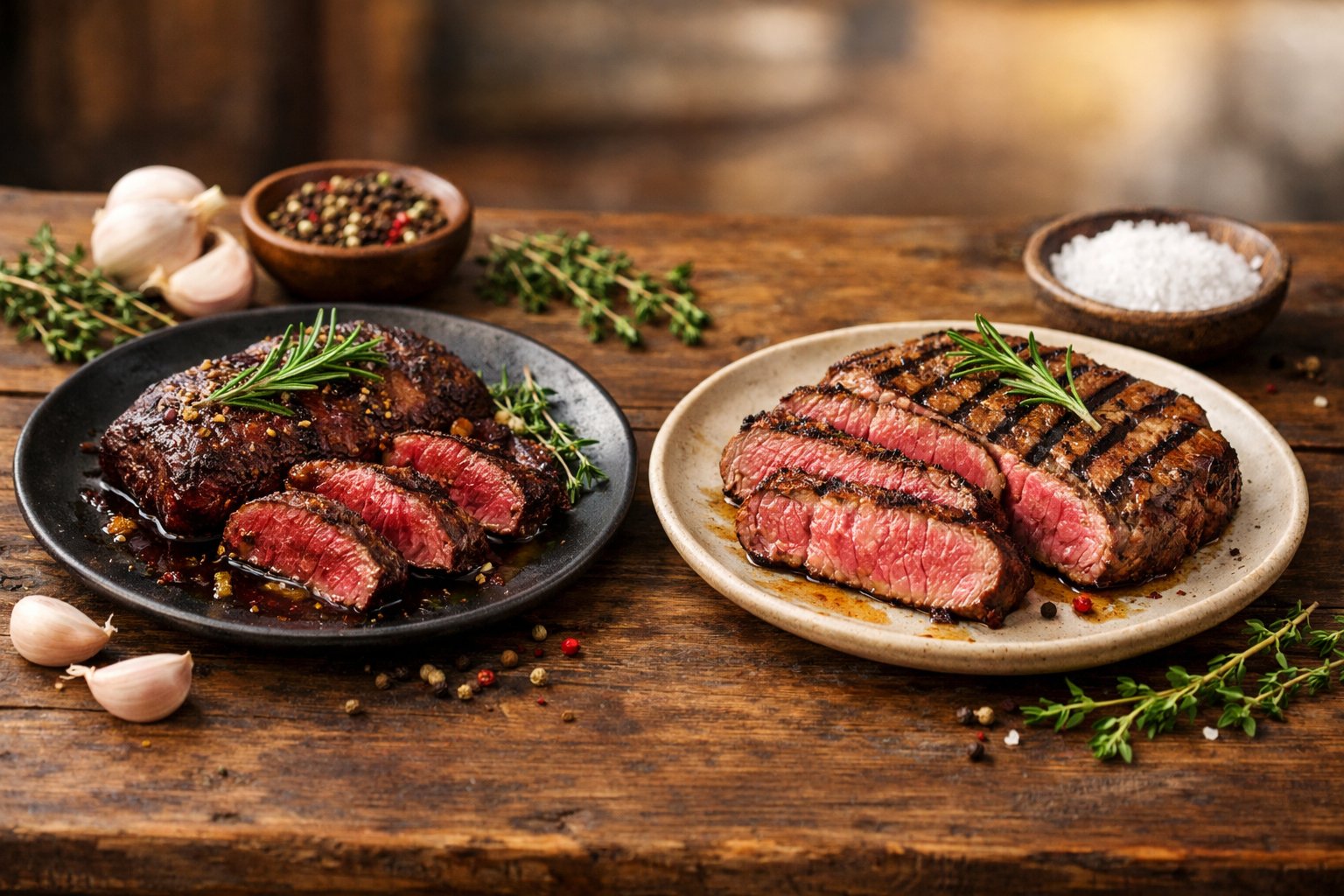
Let’s check out a quick nutrient comparison, see how flavor and cooking stack up, and touch on the sustainability or sourcing stuff that might sway your choice.
Nutritional Comparison of Deer Meat and Beef
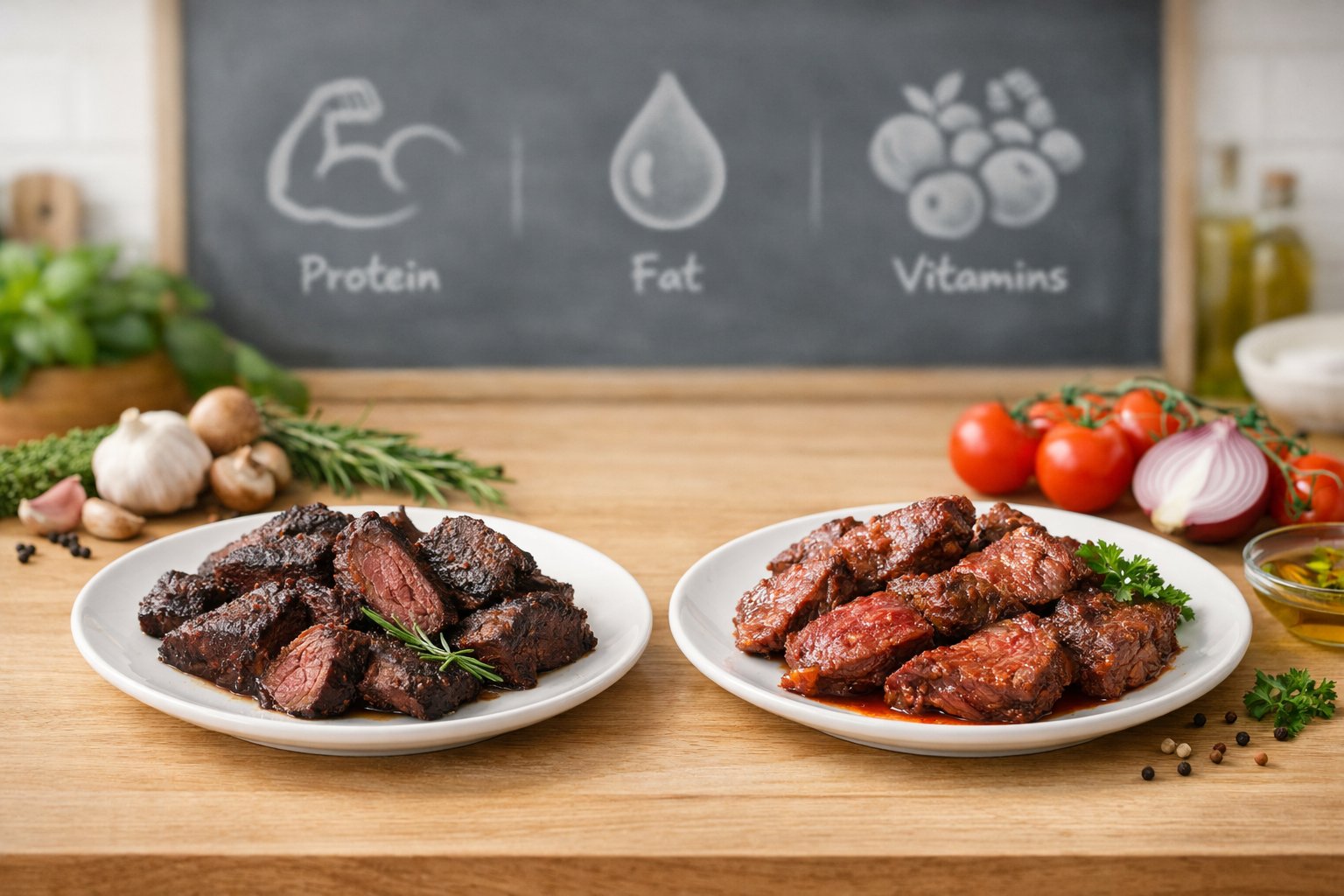
Deer meat (venison) and beef stand apart mostly in fat, iron, and some B vitamins. Venison’s leaner, packs more iron and certain B vitamins, while beef brings more saturated fat and usually higher vitamin B12 and selenium.
Protein and Fat Content Differences
Both meats deliver solid protein: venison clocks in at about 29–30 g per 100 g, and trimmed beef hits 27–28 g. So, venison gives you a bit more protein per calorie.
Fat’s where things really split. Venison usually has just 2–3 g fat per 100 g. Beef? Often 6–7 g or even more, depending on the cut. Saturated fat is about double in beef compared to venison, so venison’s the go-to if you’re cutting back on that.
If you mix ground venison with beef, you’ll see the fat and calorie numbers change quite a bit. Trim off extra fat or pick lean cuts to keep things light. Venison dries out easy, so gentle cooking really helps since it’s got less marbling.
Micronutrient Breakdown
Venison tends to bring more iron and some B vitamins like thiamine (B1), riboflavin, and niacin. For iron, venison usually beats out most beef cuts, which is handy if you’re low in iron.
Beef, on the flip side, often gives you more vitamin B12 and selenium. B12 is crucial for nerve health and red blood cells, so beef’s helpful if you rely on meat for that. Both meats have zinc and phosphorus, but beef can edge ahead a bit.
Check nutrition labels or trusted sources for exact numbers by cut. Wild venison can vary a lot from farmed, depending on what the animal ate and how old it was. Pick what matches your needs best.
Calories and Cholesterol Levels
Calories mostly follow the fat. Venison usually lands around 140–150 kcal per 100 g. Trimmed beef? More like 160–170 kcal per 100 g. So if you want to shave off calories, venison helps.
Cholesterol is pretty similar in both, often 80–90 mg per 100 g. Swapping beef for venison mainly cuts calories and saturated fat, not cholesterol. If cholesterol’s a concern, watch your portions and how you cook it, not just which meat you pick.
Lean beef cuts (like tenderloin) can help close the calorie and cholesterol gap a bit. Ground blends, added fats, and whether you fry or broil all change things a lot, so check your recipes.
Nutritional Benefits for Different Dietary Needs
Need iron and lean protein? Venison’s a strong choice. It’s got more iron, a touch more protein, and less fat, which is great if you’re watching calories or want to keep your iron up.
If you’re after B12, selenium, or zinc for immune support, beef might fit better. Pregnant folks or those with B12 deficiency should look at beef or supplements, but always ask your doctor.
Venison works well for low-saturated-fat diets, heart health, or lower-calorie plans. Athletes who need more calories and zinc for recovery might lean toward certain beef cuts. Pick your cut, portion, and cooking style to fit your goals.
For more detail, check out FoodStruct’s venison-versus-beef breakdown for vitamins, minerals (like iron, B1, B3, selenium), and fat: venison vs beef comparison.
Taste, Cooking, and Sustainability Considerations
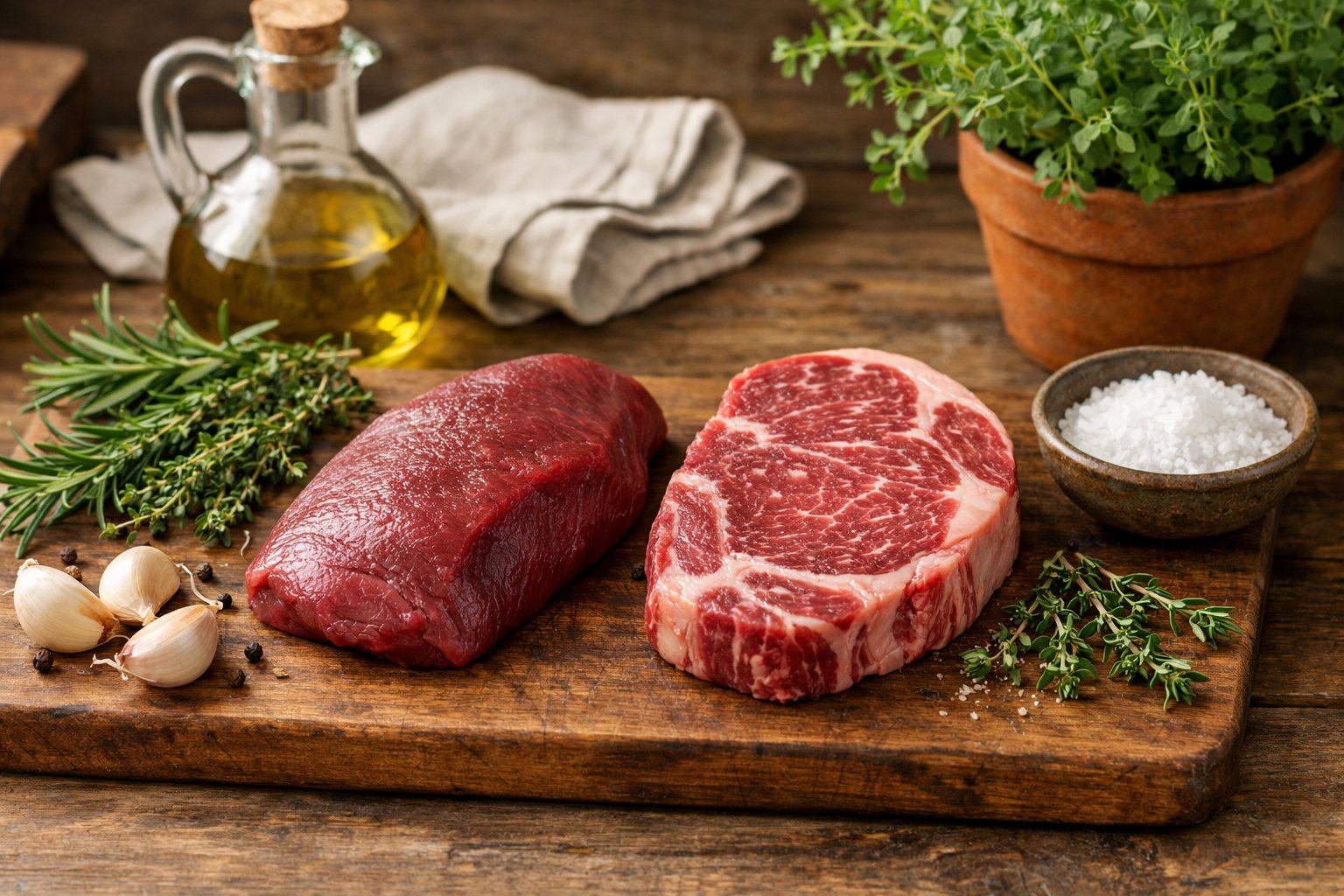
Venison tastes leaner and a bit more mineral-forward than beef, and it cooks differently since it doesn’t have much fat or marbling. You’ll want to pick different cuts and methods for steaks, roasts, or ground meat, and your sourcing choice matters for the environment and ethics too.
Flavor Profile and Gamey Taste
Venison brings a clean, earthy flavor with mineral hints. Backstrap and tenderloin are the mildest cuts; they’re a bit like lean beef loin but with more punch. Older bucks or animals taken during rut season can taste way gamier.
Diet and age shape the gamey flavor. Wild deer that eat acorns or sagebrush taste different from farmed deer on grain. Trimming fat and aging the meat can mellow out the strong notes.
If you’re not into gamey flavors, try marinades with vinegar, wine, or herbs. Ground venison hides gamey notes in burgers and sauces, especially if you add 10–20% beef or pork fat for juiciness.
Popular Cooking Methods and Cuts
For steaks, go with high heat and a short cook: pan-sear or grill backstrap and tenderloin to rare or medium-rare. That way, you keep things tender and flavorful.
Tougher cuts like shoulder or shank need slow-cooking—think braising, stewing, or slow-roasting to break down the tough bits. Venison stew or a slow-braised roast really pays off if you’re patient.
Ground venison works well for burgers and meatballs. Mix in some fat or blend with ground beef to avoid dry burgers. Wrapping venison steak in bacon or adding a bit of oil when pan-searing helps keep it moist.
Environmental and Ethical Factors
Wild venison can actually shrink your diet’s carbon footprint compared to regular beef. In a lot of areas, too many deer damage local habitats.
Hunters help restore ecosystem balance and ease grazing pressure by harvesting deer. Curious about the climate perks of wild venison? The BBC’s article on venison and climate-friendly swaps covers it pretty well (https://www.bbc.com/future/article/20250903-why-wild-venison-is-a-climate-friendly-swap-for-beef).
Most farmed deer need less intensive inputs than cattle. Still, practices can differ a lot from farm to farm.
Look for suppliers who skip antibiotics and hormones. If you’re buying wild venison, it’s wise to pick folks who test for chronic wasting disease (CWD).
Ethical sourcing also means hunters should follow local rules and safety guidelines. That’s just good sense.
If you care about sustainability, go for locally harvested or responsibly farmed venison instead of imported beef. That swap can lower greenhouse gas emissions, cut down on water pollution, and ease the strain on natural habitats.


