
You’ll usually spot deer bedding down on soft, sheltered ground—think tall grass, piles of leaves, or tucked under evergreen branches where they can stay hidden and warm.
Deer really like spots that give them cover, a clear view of danger, and an easy escape route.
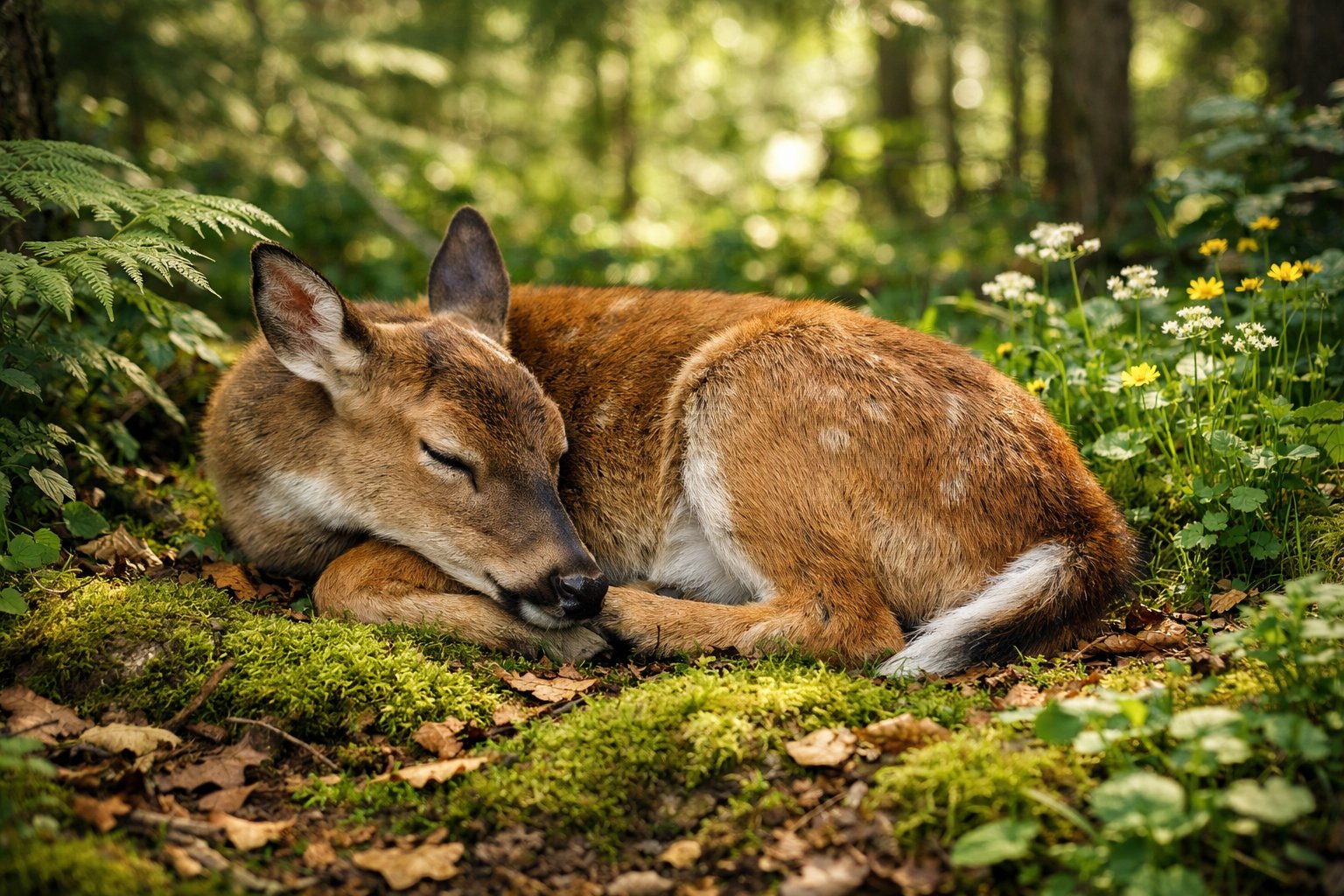
Picture yourself walking a trail and stumbling across a low, oval depression in the grass. That’s a sign of how deer balance safety, comfort, and getting to food easily.
We’ll look at what deer sleep on, how their sleep habits shift by season and type (bucks, does, fawns), and how you can spot fresh bedding without messing with wildlife.
What Do Deer Like to Sleep On?
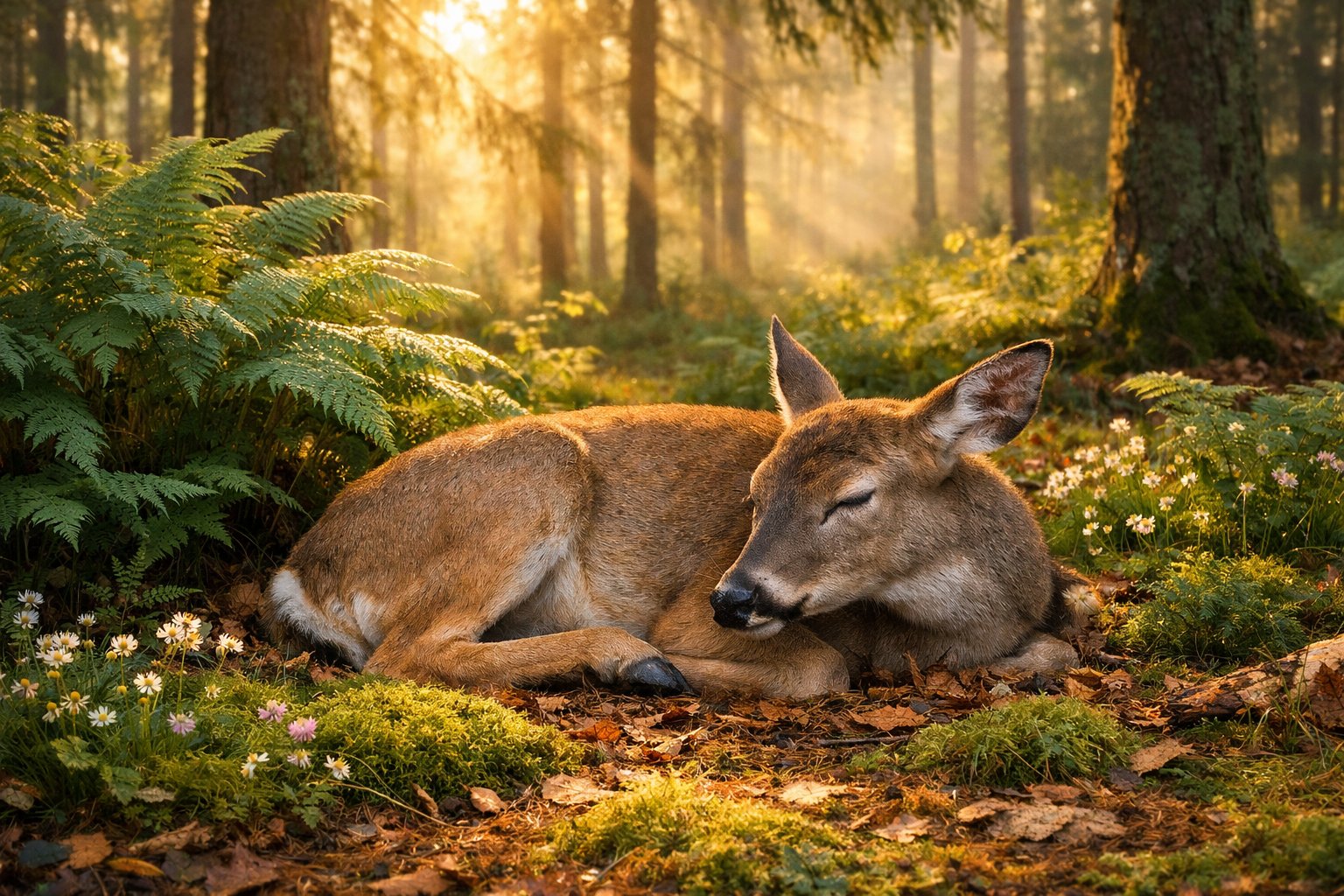
Deer pick beds that hide them but also let them see or smell danger. They want to stay warm or cool too.
You’ll often find them lying on soft ground under plants, in thick cover, or on little rises that make for a quick getaway.
Typical Bedding Materials and Substrates
Deer usually bed down on soft, insulating stuff. Watch for flattened patches of tall grass, leaf litter, or moss—those shallow, oval depressions are where deer have rested.
In the woods, they use loose leaves and pine needles for a softer spot. If you’re near marshy ground, deer go for raised hummocks or mats of sedge and cattails to keep dry.
Sometimes, deer choose bare soil, especially if it’s still holding warmth from the sun. When winter comes, evergreen duff under pines or cedars blocks wind and helps them stay warm.
You can spot bedding by looking for bent (but not broken) plants and little landing spots where deer came and went.
How Habitat Affects Bedding Choices
Habitat really shapes where deer sleep, maybe more than any single bedding material.
In open prairies or CRP fields, tall grass and brushy clumps help deer hide and offer quick escape lanes. In the woods, they like edges where trees meet fields, so they get both cover and a good view.
Wetlands and swamps force deer onto raised islands of plants or shallow ridges to avoid soggy ground. If you’re in the suburbs, overgrown yards, drainage ditches, and brushy fencerows turn into bedding sites since they’re close to food and offer cover.
Seasonal changes matter too. Whitetail and mule deer move from shady, cool beds in summer to south-facing slopes or evergreen thickets in winter to catch sun and block wind.
Identifying Deer Beds in the Wild
If you want to spot a deer bed, you have to look for small clues. Search for oval depressions about 3–4 feet long with grass bent over, not snapped.
Fresh beds have sharp edges, visible hoof prints, and maybe some droppings nearby. Old beds look faded, and the plants start to spring back up.
Pay attention to wind direction. Deer often bed facing into the wind so their nose and ears pick up scents and sounds.
Use binoculars from a distance so you don’t spook them. In snow, look for warm impressions or cleared spots. In leaf litter, look for compressed leaves and maybe a tuft of hair stuck to a stem.
Differences Between Buck, Doe, and Fawn Bedding Preferences
Bucks, does, and fawns all have their own preferences for bedding. Bucks usually bed alone on small rises or ridge points where they can see and escape quickly. Their beds are bigger and more oval.
Does often bed in thicker cover near food and sometimes group together to keep watch. Their beds are smaller, more circular, and closer to dense brush or cedar/pine thickets—places that protect fawns.
Fawns hide in really well-camouflaged spots: tall grass, dense brush, or under low branches. They stay still while the doe goes off to feed.
You might find fawn beds super compact and close to where the mother beds down.
Deer Sleep Patterns and Bedding Behavior

Deer rest in short naps and quick bursts of deep sleep, always ready to bolt if something startles them.
They pick beds that hide them, let them watch or smell danger, and keep them near food or escape paths.
When and How Long Deer Sleep
Deer don’t sleep all at once. Instead, they take lots of short naps.
Expect them to rest about 8–12 hours total in a day, but only around 2–3 hours are deep sleep. Most of their rest comes as tiny naps lasting just a few minutes while they’re lying down.
Their deeper sleep episodes last maybe 15–30 minutes, but only when they feel safe. Does with fawns sleep lighter and wake up more often. Bucks sleep deeper when they’re not caught up in rut activity.
Deer Sleep During the Day and Night
Deer are crepuscular, meaning they’re most active at dawn and dusk. You’ll see them feeding then, and during the day they take short naps in thick cover.
At night, they might move around more to feed and sometimes rest a bit longer in safe spots.
During daylight, deer usually keep their heads up and ears twitching. At night, they pick beds with clear escape routes and some visibility.
In open areas, they rest in thicker cover on bright nights so they don’t stand out against the moonlight.
How Seasons, Weather, and Hunting Pressure Impact Bedding
As seasons change, so do deer bedding choices. In winter, they use south-facing slopes, conifers, and leeward hillsides to stay warm.
In summer, they look for cool, shady thickets and tall grass.
Bad weather pushes deer into wind-protected hollows or thick evergreen cover. When hunting pressure increases, deer move their beds farther from trails and roads, pick denser cover, and switch up bedding spots to keep you guessing.
If food gets scarce, they bed closer to feeding areas.
Alertness and Safety Adaptations
Deer don’t fully sleep when they rest—they stay half-awake, always on alert for danger. While they’re lying down, you’ll notice them twitching their ears or sniffing the air, just in case.
If you ever watch a bedding area, you might catch a deer suddenly lifting its head at the faintest sound. They usually face into the wind when they settle in, hoping the breeze will carry any warning scents their way.
Does often bed down together, so more eyes and ears can keep watch. Bucks, though, tend to go it alone, picking ridges or hidden knolls where they can bolt away fast if something’s off.
These habits really help them dodge predators. If you pay attention to their trails and the wind, you might even start to guess where they’ll bed next.


