
It might surprise you, but deer actually trace their roots back to small, forest-dwelling hoofed mammals that wandered the earth tens of millions of years ago.
Deer came from early ruminant relatives—little antlerless ungulates like those in the Paleomerycidae family. Over time, these creatures slowly picked up the antlers, teeth, and body shape that look familiar today.
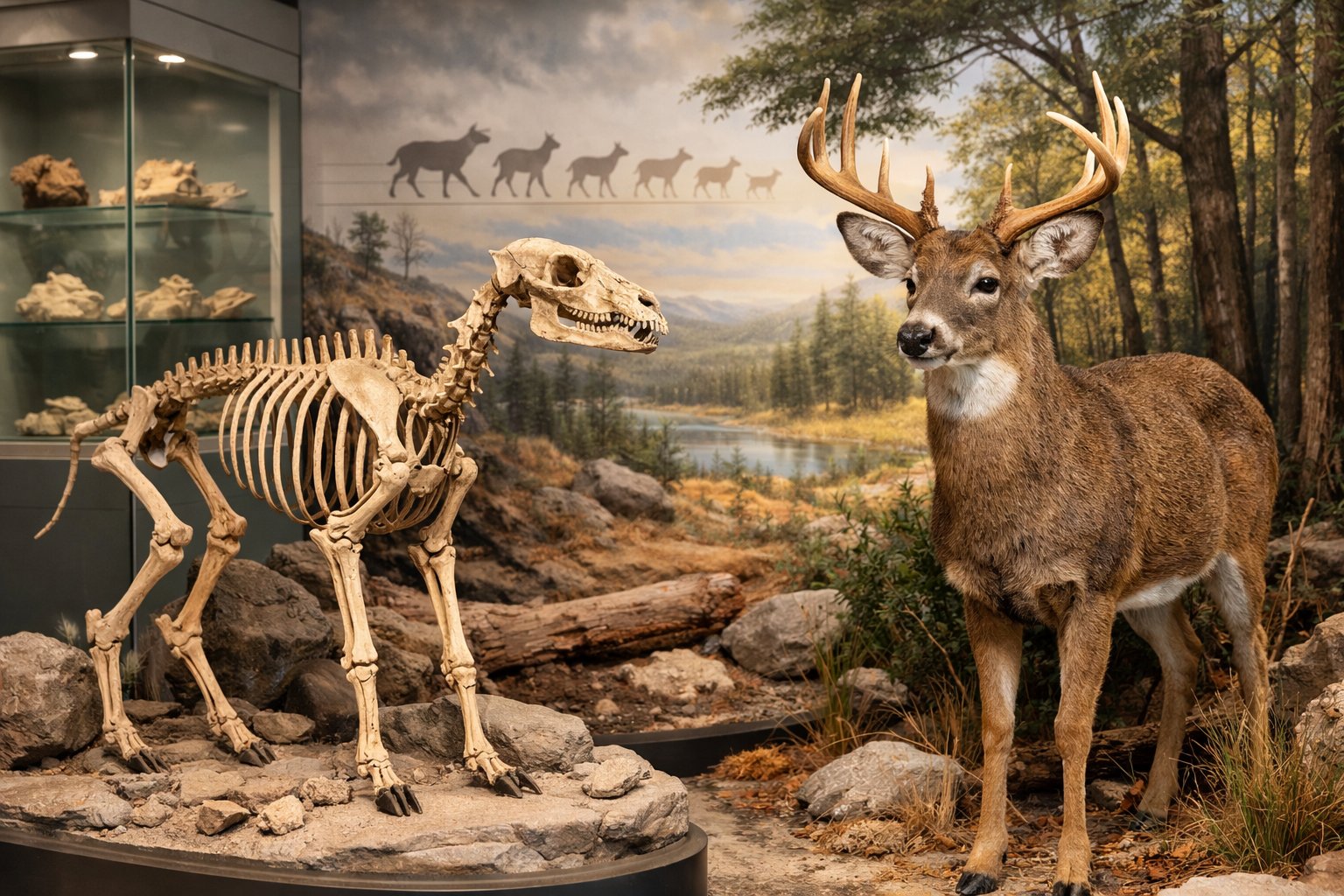
As you read on, you’ll get a sense of where those ancient ancestors lived.
Shifting climates and changing habitats pushed all sorts of changes, and antlers turned into a pretty big deal.
All of this helped transform simple forest grazers into the wild variety of deer you see around the world now.
Ancestors of Deer: Tracing Evolutionary Origins

You’ll get to know which small, even-toed mammals started the deer family tree.
Ancient ruminant groups shaped their features, and fossils help set the timeline for their rise.
Early Even-Toed Ungulates and Diacodexis
Back in the Eocene, about 50 million years ago, Diacodexis showed up as one of the earliest small, even-toed ungulates.
Picture something rabbit-sized, with slim legs and toes that pointed toward the body plan you see in deer today.
Its teeth and ankle bones put it in the Artiodactyla group—the even-toed hoofed mammals that include deer, cows, and pigs.
Diacodexis didn’t look much like a deer, though.
It offered key anatomical steps: limbs built for running and teeth set up for browsing.
Those traits ended up diversifying over the Oligocene and Miocene as the climate shifted and forests gave way to more open spaces.
The Role of Paleomerycidae and Ancient Ruminants
Paleomerycidae and other ancient ruminants showed up in the Oligocene and Miocene fossil record with features that bridged early ungulates and true deer.
Some had bony skull bumps and simple cranial outgrowths that came before modern antlers.
These projections hint at a step-by-step path from small skull knobs to the branched antlers you see on deer now.
Ruminant digestion and tooth specialization changed alongside skull evolution.
As diets shifted from soft forest leaves to tougher grasses and shrubs, teeth and jaws adapted.
That dietary change helped some lineages, including early cervids, spread across Eurasia, Africa, and eventually the Americas.
Fossil Discoveries and the Timeline of Deer Evolution
Fossils place the earliest deer-like animals in the Oligocene.
True deer (Cervidae) started showing up more in the Miocene and Pliocene.
Some Miocene fossils reveal little antlered species with early antler shedding and regrowth patterns that look a lot like what modern deer do.
Paleontologists look at skulls, teeth, and the bony labyrinth in the inner ear to separate early groups from crown Cervidae and to figure out when lineages split.
Fossil layers give physical evidence and timing, while DNA studies help clarify relationships and dates.
Both lines of evidence point to deer evolving from small, forest-dwelling ungulates into the antlered mammals that spread across continents during the Miocene through the Pleistocene.
If you want to dig deeper, you’ll find more in detailed studies on bony labyrinth morphology and big reviews of deer evolution.
Key Developments: Antlers and the Rise of Modern Deer
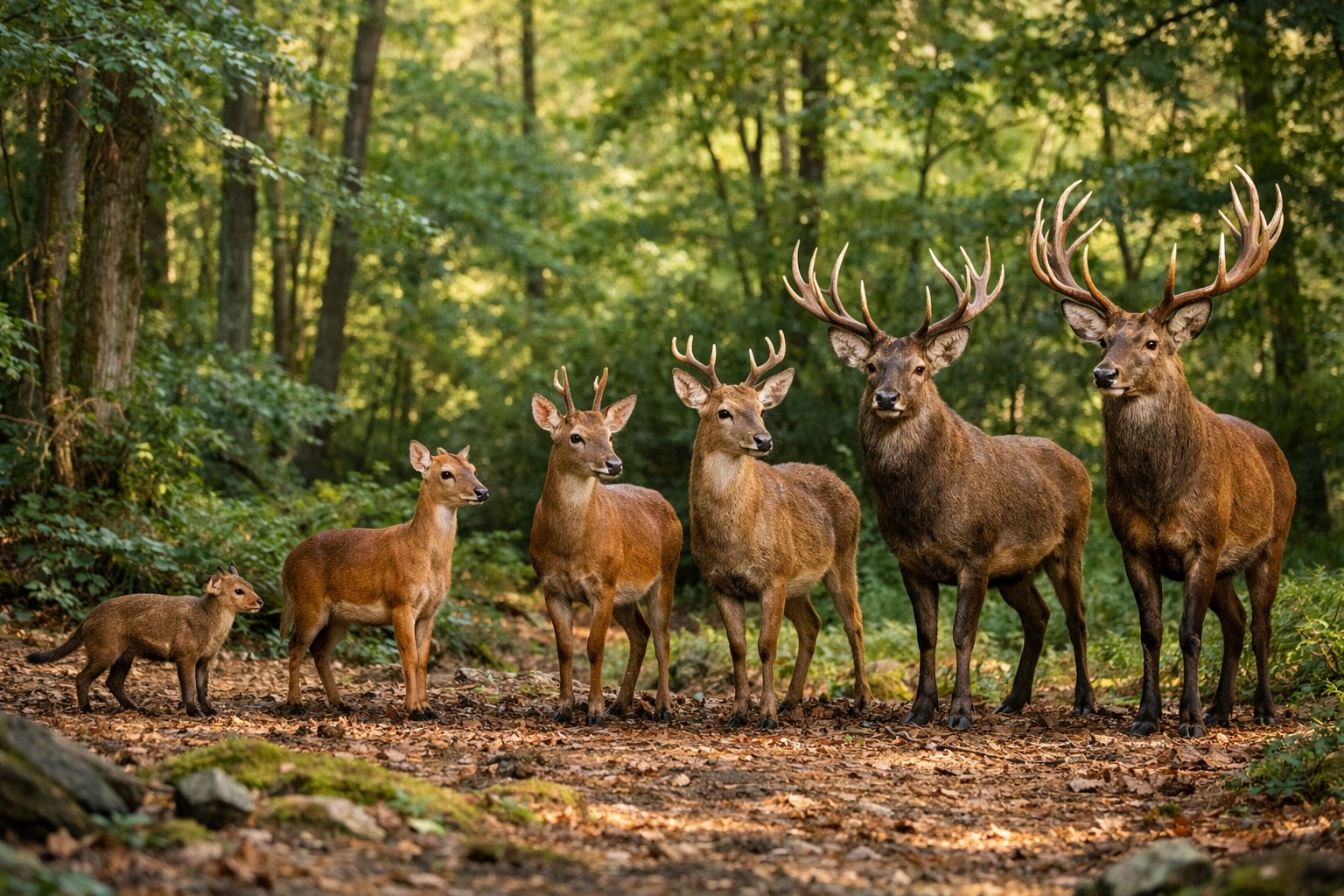
Antlers started out as small, branched skull growths.
Over millions of years, they turned into complex weapons and display tools.
These changes helped shape all the major deer groups you know today, from moose and elk to tiny pudu and muntjac.
Evolution of Antlers and Antler Growth
Antlers began as simple bony outgrowths on pedicles near the skull.
Early Miocene fossils show small forked antlers around 17–18 million years ago.
Antlers then got bigger and more branched as deer moved into open habitats.
Each year, antlers grow from velvet-covered bone.
Hormones and nutrition drive rapid mineralization, and then deer shed them.
Antlers work differently from horns—deer shed and regrow antlers, while horns (like on cattle) stick around for life.
Scientists use comparative anatomy and fossil antler shapes to piece together branching patterns in phylogenetic analyses of deer.
Antler form often lines up with mating behavior.
Bigger beams and more complex tines usually signal a healthy male and can tip the scales in mating.
Formation of the Cervidae Family
As antlered ruminants spread out in Eurasia, Cervidae split into distinct lineages.
Fossil groups like procervulinae and dicrocerinae show transitional antler and tooth traits that connect early forms to later families.
Molecular phylogeny later confirmed the main branches and clarified relationships that bones alone couldn’t quite pin down.
You can follow the Old World and New World split: Cervinae (Old World deer like Cervus and Dama) and Capreolinae (New World-leaning groups like Odocoileus and Rangifer).
Muntiacinae (muntjacs and Hydropotes) kept more primitive traits.
Genetic trees plus fossils show that deer crossed the Bering land bridge during the Miocene and Pliocene, which set up North American deer like the white-tailed deer (Odocoileus virginianus) and mule deer.
Diversification of Modern Deer Lineages
As climates shifted during the late Miocene and throughout the ice ages, deer changed their diets and habitats. Forest-dwelling species kept their slender bodies and smaller antlers.
Meanwhile, deer living in open country grew larger beams and more complex branching. You can see this split in modern deer: moose (Alces) got big and developed palmate antlers for marshes and boreal forests.
Caribou (Rangifer) took on tundra migrations and adapted accordingly. Today, you’ll spot many living species spread across three main subfamilies: Cervinae, Capreolinae, and Muntiacinae.
Humans have pushed deer ranges around, and glaciations also played a role in where they live now. The range of modern deer—from the tiny pudu to wapiti and elk—really shows off both ancient antler changes and recent genetic divergence.
Molecular studies and comparative anatomy back this up, adding some interesting details to the story.


