
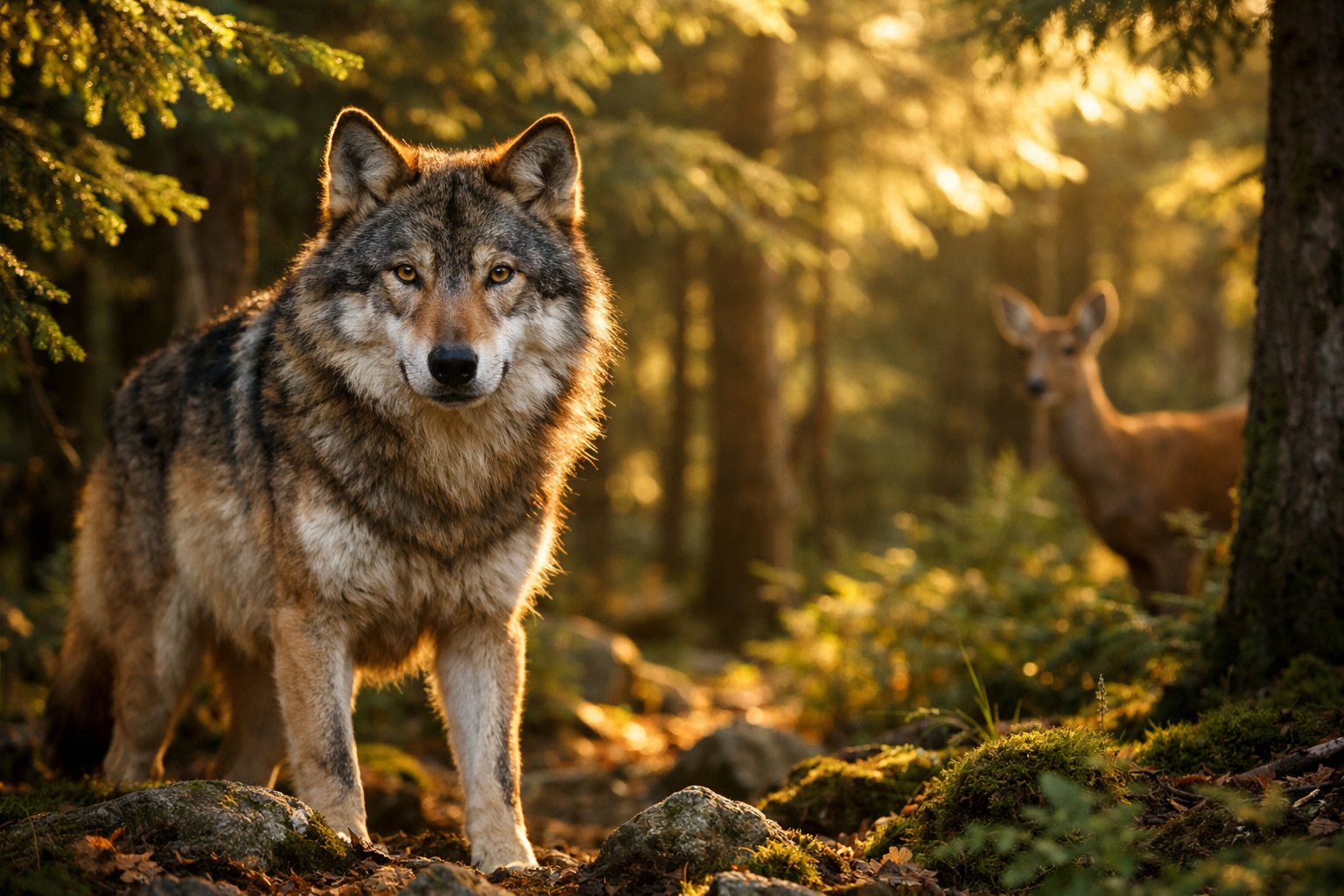
When you think about deer predators, wolves or mountain lions probably come to mind first. Wolves, hunting in packs with impressive coordination, stand out as top predators of adult deer in many regions.
They shape how deer move, feed, and even survive.
But threats to deer really depend on age and place. Fawns deal with coyotes, bobcats, and birds of prey, while bears or alligators become a problem where their habitats overlap.
Let’s take a look at how each predator hunts and why the biggest threat can change with habitat and season.
Top Predators of Deer: Who Poses the Greatest Threat?

It’s good to know which animals and people have the most impact on deer numbers. Up next, you’ll see how hunters, wolves, and mountain lions each hunt deer, the types they target, and how all that changes deer behavior and populations.
Human Hunters and Their Impact
People directly shape deer populations through hunting, car collisions, and changing their habitats. In lots of places, humans are actually the single biggest reason for white-tailed deer and mule deer deaths.
Hunting seasons remove both adult males and females, and bag limits decide how many deer get taken each year. Road kills take out thousands of deer annually, and suburban sprawl reduces cover, pushing deer into riskier spots.
Humans also change how deer act. High hunting pressure pushes deer to move at night or hide in thicker cover.
Hunting can help manage herds and limit damage to plants, but poor management or poaching can really hurt local deer numbers and age structure. When people remove big predators, coyote numbers often go up, which means more fawn deaths.
Wolves: Coordinated Pack Hunters
Wolves usually hunt in packs and can bring down adult deer, especially in open or mixed forests. Gray wolves (Canis lupus) work together to chase, tire out, and isolate deer.
They mostly target weaker, older, or young deer, which ends up keeping populations healthier by removing the most vulnerable.
Wolves change where deer go and how they act. Deer avoid risky open areas during wolf activity and stick to dense cover or even hang out closer to people.
When wolves return to an area, you might see fewer deer in open fields and less damage to certain plants. Wolves also compete with bears and coyotes for carcasses.
Bears often scavenge wolf kills during summer and fall.
Mountain Lions: Stealthy Ambush Predators
You probably won’t spot a mountain lion, but they kill deer quietly and efficiently. Puma concolor (cougar, puma) stalks and ambushes deer at close range, using cover and steep terrain.
Mountain lions usually take single adult deer, and they play a big role as predators of mule deer and white-tailed deer in western North America.
They hunt alone, relying on surprise instead of chasing. Sometimes you’ll find a deer carcass hidden under brush where a cougar has fed.
Mountain lions mostly take adults and yearlings. Coyotes and bobcats, though, focus more on fawns.
Black bears and grizzlies can kill deer when they get the chance, but they’re more likely to scavenge. Mountain lions push deer away from edges and travel corridors, so deer stick to safer, denser spots.
Other Significant Deer Predators and Predator-Prey Dynamics

Some predators go after fawns, while others hunt opportunistically or only in certain regions. These predators affect how deer behave, survive, and where they feel safe enough to feed.
Coyotes and Bobcats: Fawn Predation
Coyotes usually target fawns in spring and early summer, when does leave their young hidden. They hunt alone or sometimes in small groups.
Coyotes use scent and stealth to find bedded fawns and can really cut fawn survival in some areas. When snow gets deep or deer are in bad shape, coyotes will even go after adults.
Bobcats mostly hunt fawns too. They depend on camouflage and ambush tactics in thick forests and brush.
A bobcat will stalk quietly, wait near a trail, and then pounce. Healthy adult deer are a rare target for bobcats, so their impact is mainly during a fawn’s first few weeks.
A few quick differences:
- Coyotes: super adaptable, might hunt in pairs or packs, and do well near suburbs.
- Bobcats: solitary, ambush predators who need cover and short attack distances.
Bears and Opportunistic Hunters
Black bears and brown/grizzly bears act as seasonal, opportunistic deer predators. In May and June, when newborns are everywhere, bears take a lot of fawns.
They use their powerful sense of smell to find hidden fawns and will eat the whole carcass or come back to a cached meal over several days.
Bears eat a lot of plants, nuts, and insects too, so deer aren’t always their main food. But in some western areas, grizzlies do take down weakened adult deer.
Bears can cause spikes in local deer deaths, but they don’t control populations the way wolves do.
Other opportunists include American alligators at water crossings and big birds of prey that grab very young fawns. Domestic and feral dogs sometimes hunt deer, killing multiple animals without even eating them, and that can add to local losses.
Rare and Regional Predators
Some predators only matter in certain places. Mountain lions (puma) hunt deer across western North America. They ambush adults and push deer to move differently through forests and canyons.
Wolves keep deer numbers in check in places like the northern Rockies and Yellowstone. Packs hunt adult deer and spark those famous trophic cascades.
You’ll spot jaguars in some southern ranges. Lynx and their cousins roam boreal zones, going after weakened deer or fawns. Wolverines show up too, usually grabbing carcasses or sick animals.
In South and Southeast Asia, chital and muntjac serve as prey for bigger carnivores. When people change the landscape or degrade habitats, some predators—like coyotes or feral dogs—end up thriving. Others, like cougars, might disappear. This shift messes with predator-prey balance and throws off the local ecosystem.
A few points to keep in mind:
- The kind of predator (obligate carnivore or omnivore) affects how often they kill.
- Refuge areas and thick cover help fawns survive.
- Human choices—hunting, land use, and dog management—really change how predators impact deer.


