
Watch a whitetail explode from a standstill and you’ll see just how fast deer can move. Many species can hit between 30 and 50 miles per hour in short bursts.
If you want a quick answer, most deer max out around 30–45 mph, but some—like caribou and mule deer—have been clocked closer to 50 mph in the fastest cases.
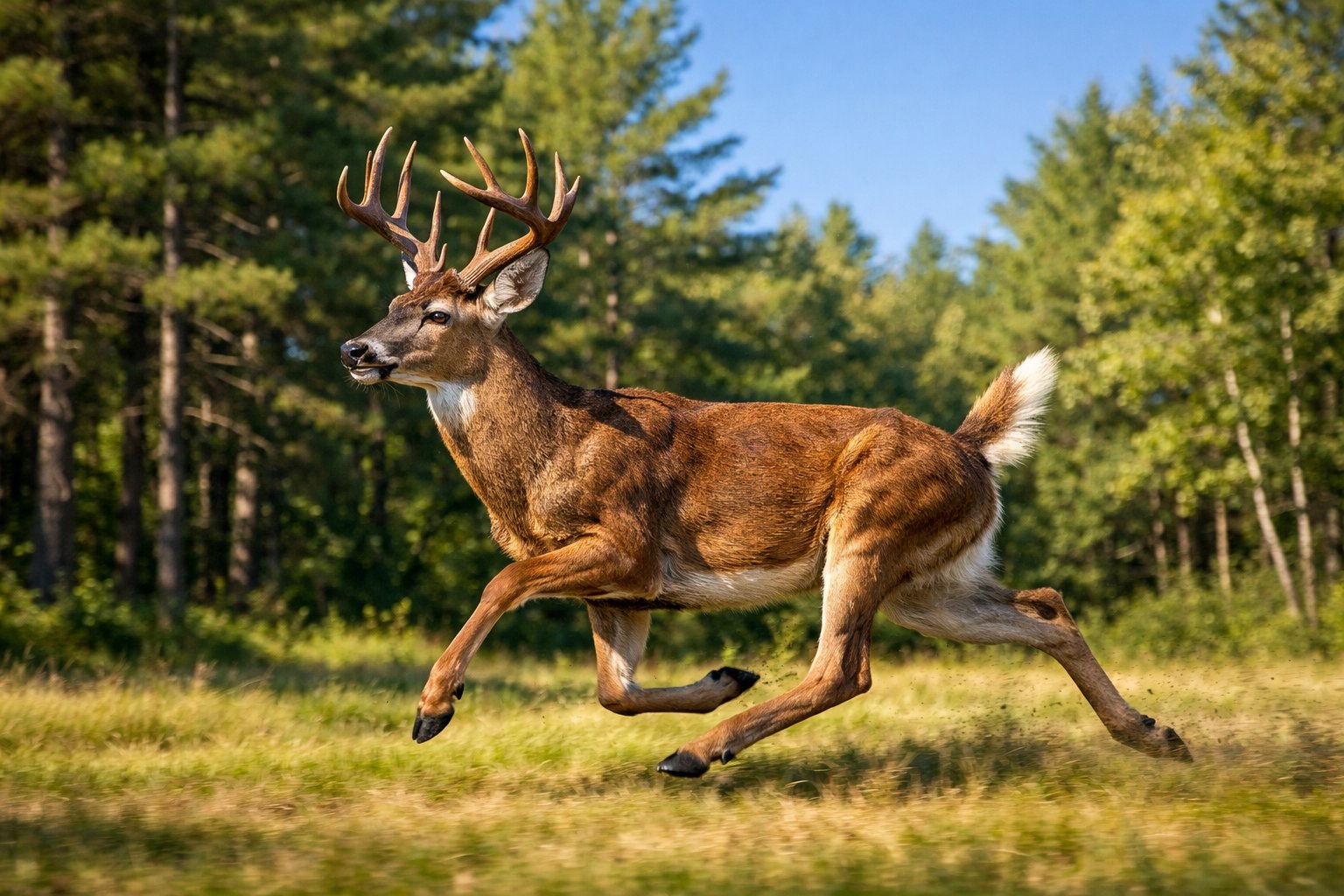
Let’s dig into why those speeds matter. There’s more to it than just numbers—speed helps deer survive, but how long can they keep it up?
Which species actually run the fastest? And what about the body features that make deer so quick?
We’ll check out the traits and conditions that help them dodge predators and avoid roads. Speed, stamina, and strategy all play a part in a deer’s survival.
How Fast Can Deer Run?

Deer don’t just run—they use bursts of speed, sharp turns, and tricky terrain to get away from danger. Their speed depends on species, age, and the ground under their hooves.
Most deer hit about 30 mph, but the fastest can approach 50 mph.
Typical Running Speeds and Sprint Durations
Most adult deer can sprint between 30 and 45 miles per hour, but only for a short time. In everyday escapes, you’ll see them at 30–35 mph, but they push closer to 40–45 mph in extreme situations on open ground.
They can’t hold those speeds for long. Usually, a deer only manages a few seconds—maybe up to a minute—at full sprint before it has to slow down.
Younger, healthy deer take off faster and leave older or injured ones behind. Thick brush, deep snow, or steep hills slow them down a lot.
Deer don’t rely on long chases. Instead, they zig-zag and leap to lose predators.
Top Speeds by Deer Species
White-tailed deer can reach up to about 45 mph in a sprint. Mule deer aren’t far behind, often hitting 40–45 mph on open land.
Elk and moose, despite their size, can manage 35–45 mph in short bursts. Roe deer and red deer in Europe usually top out around 30–40 mph.
Smaller deer get up to speed quickly but don’t reach the same top speeds as the big ones. Leg length, body size, and muscle power play a huge role in these differences.
Fastest North American Deer
Caribou (or reindeer) and some elk have some of the highest speeds in North America. Caribou can hit bursts near 50 mph.
White-tailed and mule deer both clock in around 45 mph when conditions are right. Moose, surprisingly, can sprint in the high 30s to low 40s mph—even with all that bulk.
If you just want a quick rundown: caribou ~50 mph, white-tailed and mule deer ~45 mph, elk and moose ~35–45 mph, and most other deer species somewhere between 30 and 40 mph.
Comparing Deer Speed to Other Animals
Deer leave humans in the dust—a top sprinter manages about 27 mph at best. Coyotes and wolves can reach 35–43 mph, so deer rely on quick bursts and dodges to get away.
Birds of prey and pack predators use different strategies, focusing on stealth or teamwork more than pure speed.
Cheetahs and horses easily outrun any deer, but deer have the edge in maneuvering through thick brush. Have you ever watched a deer sprint and suddenly change direction? Those sharp turns and stops matter more than straight-line speed when something’s chasing them.
What Influences Deer Speed and Survival?

Let’s look at what really shapes a deer’s running ability and survival odds. We’ll cover body traits, predators, and how deer use speed alongside moves like zig-zags and hiding.
Key Factors Affecting How Fast Deer Run
Body size and leg length make a big difference. Larger species like elk and caribou usually reach higher top speeds than smaller deer.
Muscle condition and age change things, too. A healthy young buck takes off faster and keeps up speed longer than an old doe.
Terrain changes the game. On open fields, deer can hit 30–40 mph, but in forests or rocky spots, they have to stick to quick bursts and sharp turns.
Weather and deep snow slow them down, no surprise there.
Motivation matters. When a deer senses a predator, it’ll give everything it’s got for a short sprint. Most of the time, though, they walk or trot to save energy.
Predators and the Importance of Speed
Predators push deer to rely on their speed. Wolves hunt in packs and use teamwork to wear prey out.
Coyotes sneak up and then chase; deer escape by sprinting and making sharp turns. Bears don’t chase for long, so deer usually use short bursts and cover to get away.
Speed lowers the odds of getting caught, but it’s not a guarantee. On open ground, a fast sprint can leave a lone predator behind.
In thick cover, agility and smart path choices matter more. Predators look for weaknesses, like age or injury, and pick their tactics to take advantage.
How Deer Use Speed, Agility, and Evasion Tactics
Deer mix quick bursts of speed with sharp turns and big jumps. Their bounding gait helps them move fast and leap right over things like logs or even fences.
Ever watched a deer take off? You’ll notice it zig-zags all over the place. That move really throws off predators and gives the deer a fighting chance to get away.
Deer don’t just rely on running, though. They often freeze and blend in with their surroundings. If you spot one standing totally still, it’s probably trying to stay hidden.
But when danger gets too close, deer suddenly sprint away. They usually head straight for thick brush, rocky cliffs, or even water—anywhere that makes it harder for a predator to follow.


