
When a deer looks at you, it mostly picks up on movement, shape, and a few colors—though not quite the way you do. Deer spot you best at dawn and dusk, catch motion way faster than humans, and can’t really tell reds from greens—so honestly, it’s your movement, not your jacket color, that gives you away.
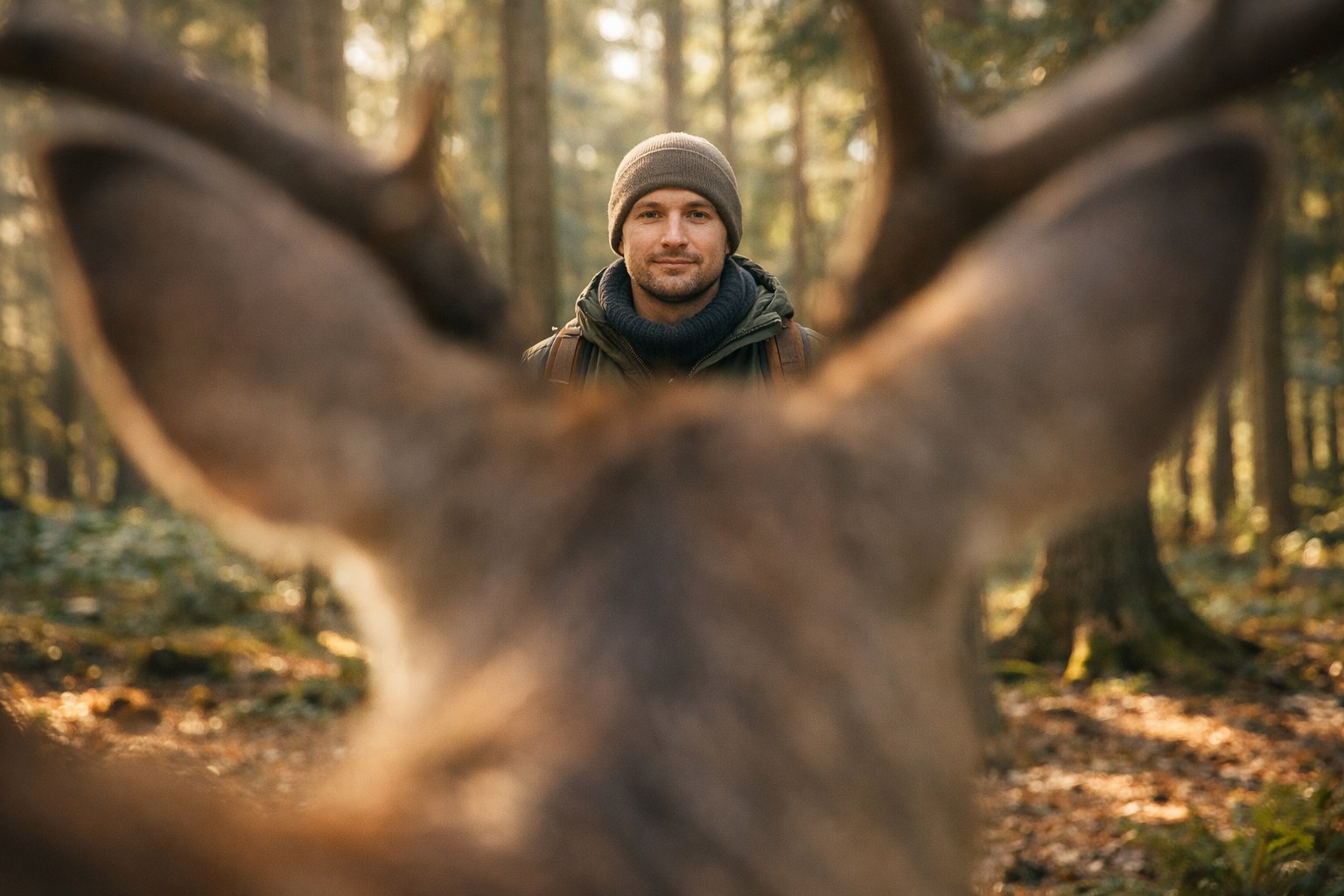
Their wide-set eyes give them a nearly panoramic view. That’s why they seem so bold at twilight—they see well in low light. The way they see color also changes how you appear to them.
If you’re curious about what a deer’s stare really means, or how to tell if it’s nervous or calm, you’re not alone. Let’s dig into what deer actually see and how to read their body language.
What Deer See When They Look at You

Deer notice motion first, judge distance up close pretty badly, and their color vision is limited compared to yours. Their eyes prioritize wide coverage, low-light seeing, and picking up movement quickly.
Field of View and Peripheral Vision
You might show up anywhere in a deer’s nearly 300-degree field of vision. Since their eyes sit on the sides of their head, they see much more of the world at once.
They only get about 25–50 degrees of binocular vision where both eyes overlap. That’s the zone where they judge depth best, but most of the time, they’ll spot you from the sides. Their retinas pack in rod photoreceptors, especially at the edges, so they’re extra sensitive to movement out there.
This setup means they trade sharp detail up front for a huge warning system on the sides.
Color Perception and Dichromatic Vision
Colors look pretty different to a deer. They use two types of cone cells, so their world is mostly blues and yellows.
If you’re wearing a red jacket, it doesn’t stand out to them the way it does to us. Blues and grays blend in more. The cones are packed near the center of their vision, so they see some color contrast there, but it’s not like our color vision.
This limited color range helps you guess which clothes are more likely to catch their eye, and which might not.
Low-Light and Night Vision
Move around at dawn or dusk, and a deer will probably spot you before you notice it. Their eyes have way more rod cells than ours, and they also have a tapetum lucidum—a reflective layer that ramps up their low-light vision.
Your outline and any movement stand out because rods are great at detecting contrast and motion in dim light. Their pupil opens wide to let in extra light.
That’s why deer seem so active at twilight, and why they get startled by headlights or flashlights.
How Deer Detect Motion
Deer pick up on motion before almost anything else. Their high rod count and special retinal wiring make them super sensitive to even tiny movements.
They process movement faster than detail. If you stand still, they might not realize you’re there. But shift a little, or let something reflect light, and you’ll probably get their attention.
Peripheral vision and quick motion-detection work together to make moving things way more interesting—and suspicious—than anything just sitting there.
Why Deer Stare at You: Interpreting Behavior and Body Language

Deer use stillness, sound, scent, and tiny movements to figure out what you are and if they should run. Check out their ears, tail, and posture to see if they’re curious, nervous, or about to bolt.
The Freeze Response and Threat Assessment
When a deer freezes and stares, it’s checking if you’re a threat. Freezing keeps them hidden and gives them a chance to use their nose and ears too.
If you stay still, the deer might relax. But if you move or make a sound, it’ll often dash away.
Look for tense muscles, a raised head, and ears pointed right at you—those are signs it’s on high alert. If it shifts its weight to the back legs, it’s ready to run.
This freeze-and-check move is classic deer behavior, and it’s the reason for that “deer in headlights” look when your car suddenly lights up the road.
Deer Stomp, Alertness, and Non-Verbal Communication
A stomp, a snort, or a tail flick—they all send a message. One stomp usually warns other deer and tells you it senses something’s off.
If it stomps more, raises its tail, and snorts, it’s basically saying, “Back off.” Ears forward mean it’s focused on you, while rotating ears show it’s listening for other things.
When a deer flashes its white tail, that’s a pretty strong alarm. These non-verbal cues let you read their mood fast—no words needed. See stomping or a flared tail? It’s smart to back away slowly and avoid sudden moves.
Curiosity, Caution, and Decision Making
Sometimes deer will come closer to check out new objects, smells, or people. But they do it cautiously—small steps, head tilts, sniffing the air.
You might notice them chewing even when they’re not eating. That’s a sign they’re investigating, not relaxing.
Their decision to run depends on a mix of things. Wind direction and your scent matter a lot. If you’re downwind, the deer may stare longer.
Any movement can reset their threat assessment, so even a little gesture might send them running. In areas where deer see people a lot, they might stare longer, but that doesn’t mean you can walk right up to them.
Respecting Deer and Safe Human Interactions
Give deer plenty of space and let them decide what to do next. Don’t try to feed, touch, or trap them.
If you spot a fawn nearby, the mother might stand her ground, stare you down, or even act a bit aggressive to keep her baby safe. It’s best to back off and give them extra room.
When you drive through deer-crossing areas, slow down. Only use your horn if you really need to nudge a deer away from the road.
In parks or your own yard, try securing gardens and pet food so you don’t accidentally invite deer closer.
Curious about what deer body language means? You might want to check out this guide on decoding deer behavior and stares.


