
You might think deer just disappear after dusk, but honestly, they’re still out there doing their thing. At night, deer feed, move between bedding and feeding spots, drink, and even socialize. They usually shift their main activity to low light to dodge people and predators. Let’s dig into what they get up to, when it happens, and why their routines sometimes change.
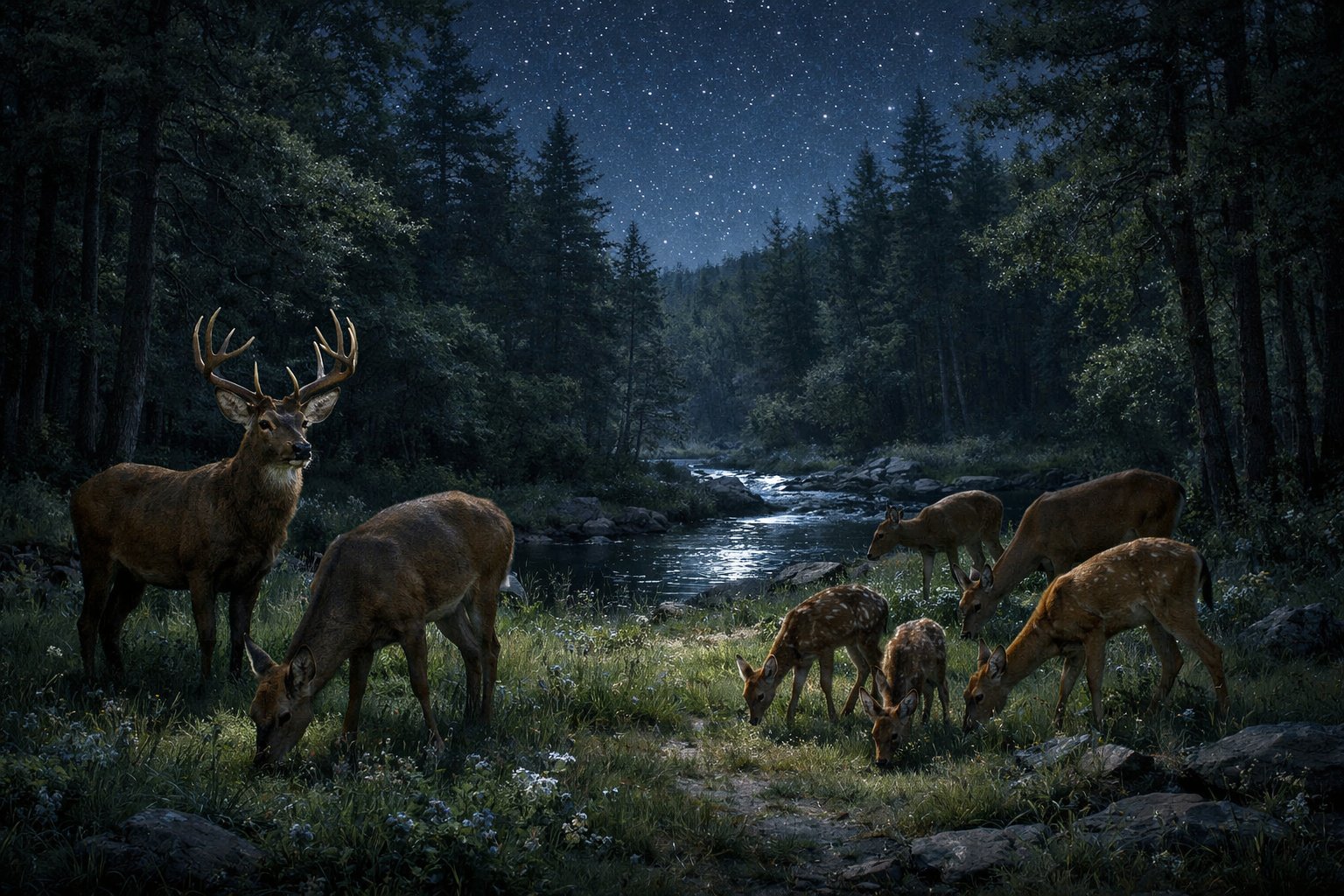
You’ll see how twilight, weather, hunting pressure, and food supply all shape what deer do at night. I’ll keep things practical, so whether you’re hoping to spot deer or just want to know what’s happening on your land, you’ll get something useful here.
Nighttime Deer Activity and Behavior

Deer change up their routines to find food, stay safe, and move between beds and feeding areas. You’ll find out if they like night or twilight better, what they actually do after dark, and how their senses help them move around in low light.
Are Deer Nocturnal or Crepuscular?
Most deer stick to crepuscular habits, so they’re busiest at dawn and dusk. Still, you’ll spot them at night—especially if people or predators make daytime risky. In suburbs or on farmland, deer often lean into nighttime movement since humans usually head inside after dark.
The season and weather can flip this pattern. On hot summer days, deer feed more at night to avoid the heat. During the rut, bucks wander more after dark, searching for does. If hunters or dogs are around, deer quickly switch to being more nocturnal in those spots.
Key Nocturnal Activities: Feeding, Moving, Socializing
Feeding pretty much tops the list at night. You’ll catch deer munching on grasses, shrubs, acorns, and sometimes raiding gardens when it’s dark. They go for high-energy foods in the fall—acorns, for example—and softer growth in spring.
They also move between bedding and feeding areas at night. If you look, you might spot well-worn trails and road crossings after the sun goes down.
Socializing happens, too. Does and fawns usually stick together in small groups, while bucks roam more and spar during the rut. These groupings change where deer decide to feed and rest.
Adaptations for Night Vision and Senses
Deer have this cool feature behind their retinas—called a tapetum lucidum—that boosts their night vision. That’s why their eyes shine in headlights; the layer bounces light back through the retina. It helps them catch movement, even if they can’t see every detail.
Their hearing and smell are also pretty sharp. Big, swiveling ears let them pick up subtle sounds, and they rely on a keen nose to catch scents from people or predators. These senses let deer feed and move at night with less risk, but sudden noises or lights still make them bolt.
Factors Influencing Nighttime Deer Behavior

What deer do at night depends on food, temperature, human activity, and how safe they feel. These things decide when deer move, where they rest, and how long they stay put.
Environmental and Seasonal Triggers
Cold nights, less daylight in winter, and plant growth cycles all shape deer movement. In winter, deer spend more time foraging at night since days are short and they need extra food to keep warm. Spring and summer bring fresh greens, so deer might feed at dusk and into the night when it’s cooler and plants are easier to digest.
Heat drives deer to feed at night, too. On hot days, they avoid the midday sun to stay cool and save energy. Rain or snow can make them stick closer to home and use nearby food. During the rut, bucks often change their schedules, sometimes wandering more at night while searching for does.
Human Activity and Predator Avoidance
When people are around—whether it’s hunters, cars, or just general noise—deer learn to stay active at night to avoid trouble. Hunting season pushes deer to feed in the dark, and even things like poaching or lots of foot traffic can make them change their habits.
Predators matter, too. In areas with coyotes or wolves, deer use darkness and thick cover to stay hidden and move quietly. They’ll pick routes with lots of brush between feeding and bedding areas to stay safe. Night movement helps them dodge humans, but it can mean more risk from predators that hunt after dark.
Role of Bedding Areas and Sleeping Patterns
Bedding sites give deer a safe spot to rest and chew their cud. You’ll often spot beds hidden in thick brush, tucked into young conifer stands, or along drop-offs that block the wind.
Deer don’t stay bedded for long. They usually rest for short periods, then get up to feed, giving their rumen time to process food.
Doe groups and fawns stick close to food, bedding in hidden places nearby. That way, they don’t have to travel far and can stay out of sight.
At night, deer rarely sleep for hours at a stretch. Instead, they take several short naps.
Bucks in rut barely rest—they’re too busy searching for mates. Pregnant does, on the other hand, pick the safest, quietest spots so they can save energy.
If you want to influence deer movement, you can manage your land with this in mind. Leave quiet corridors leading to bedding areas, and keep patches of cover close to food sources so deer can avoid risky crossings.


